
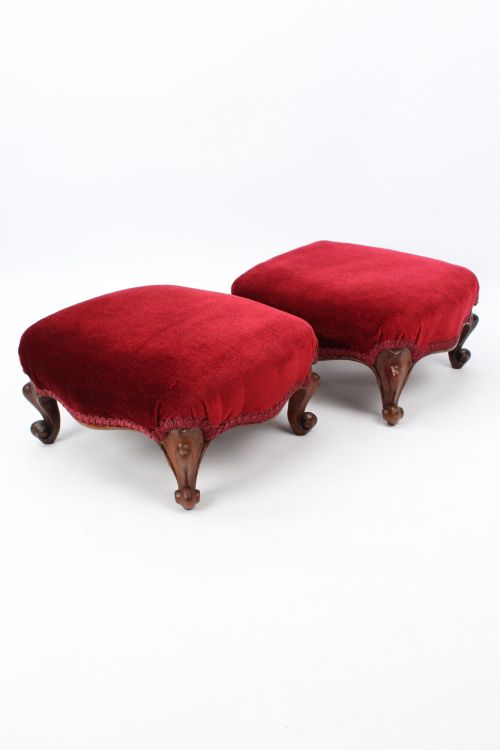
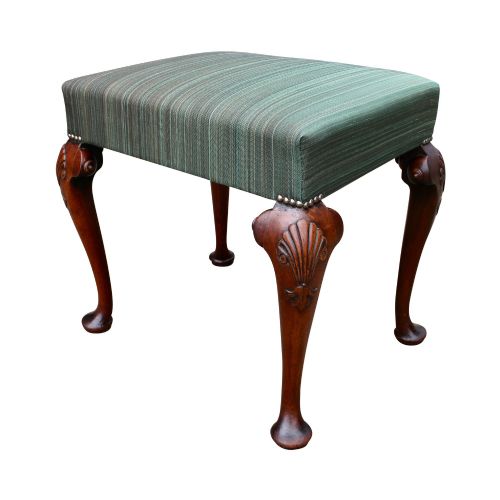
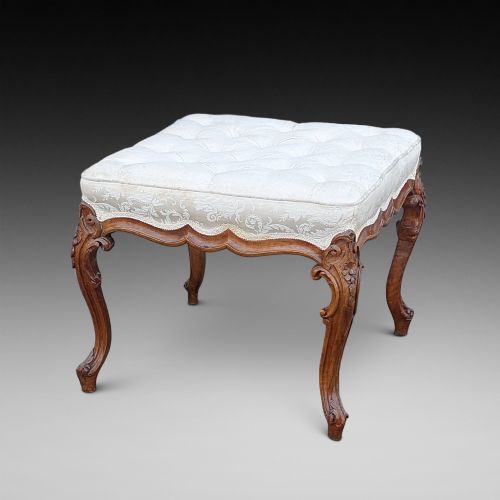
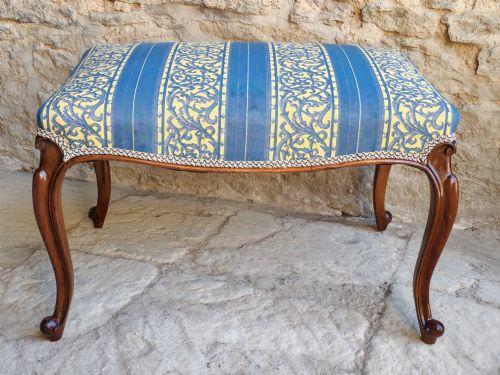

Victorian Walnut Footstool
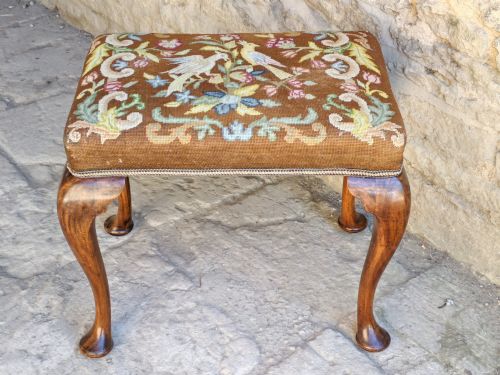
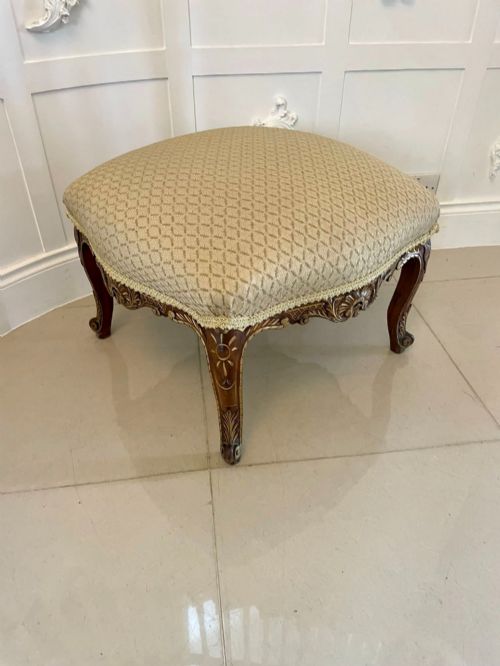
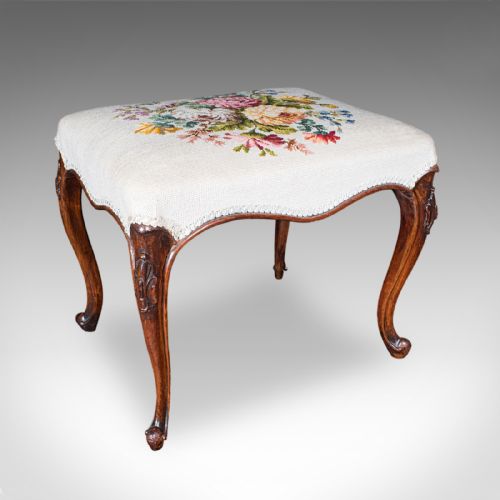
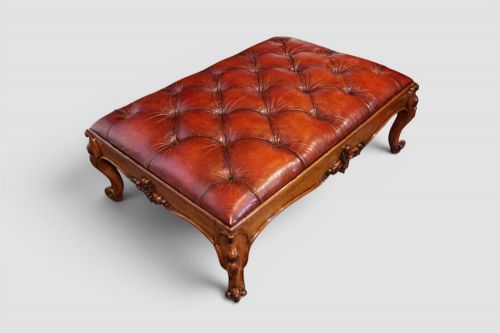
A victorian walnut footstool brings rich timber and tactile upholstery together in a low form designed for comfort beside the hearth or armchair.
Victorian Walnut Footstool
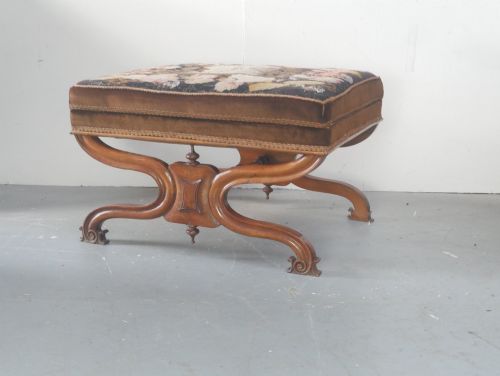
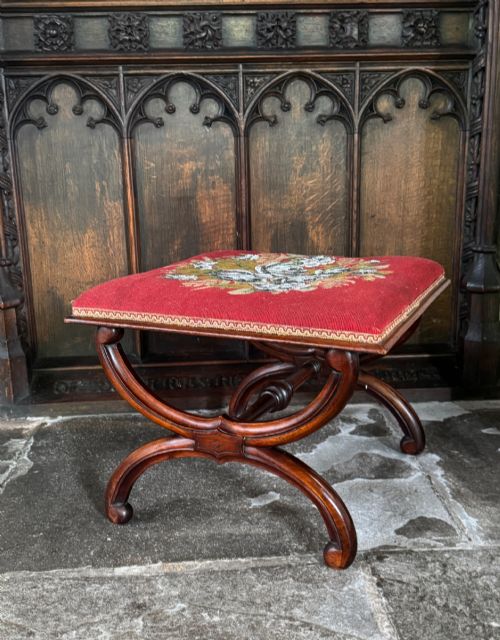
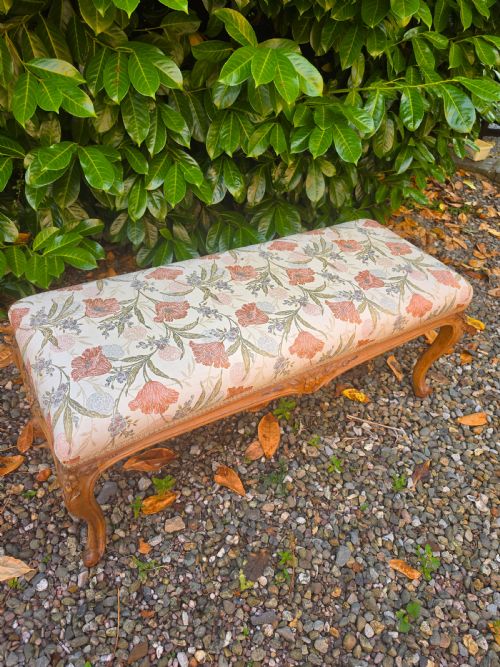
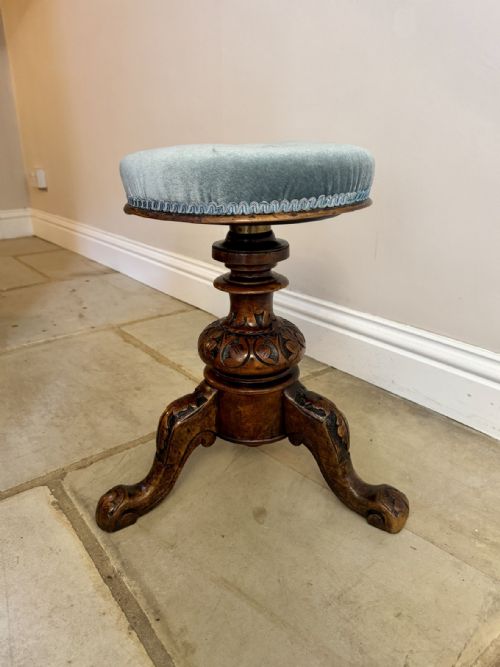
A victorian walnut footstool appears in various configurations, from small circular pads and low fireside hassocks to long fender stools and X-frame supports designed to sit before a drawing room sofa or library chair.
Makers of the nineteenth century built these low seats to complement larger salon suites or for specific domestic tasks like needlework and resting tired feet after long journeys.
On this page, pieces span the middle and late decades of the nineteenth century, reflecting revival tastes including Queen Anne, Rococo, and Scottish Baronial idioms alongside plain utilitarian domestic forms.
Timber and Textile Construction
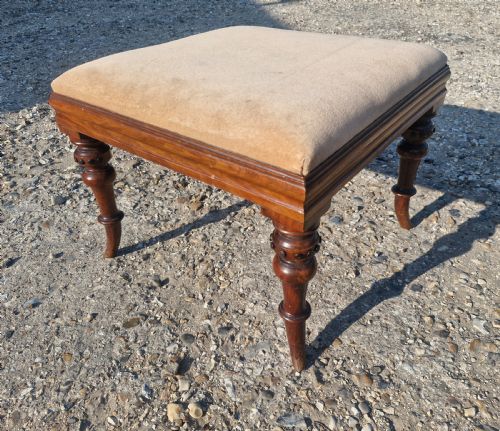
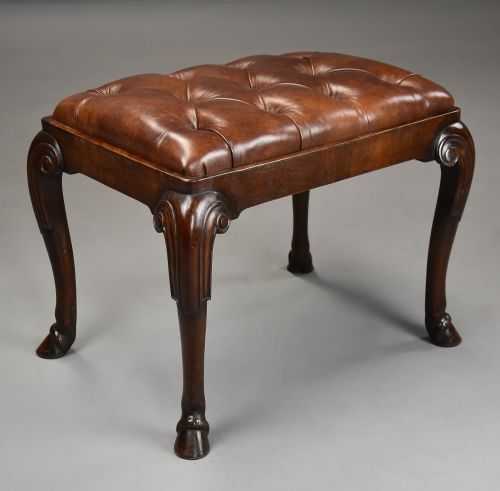
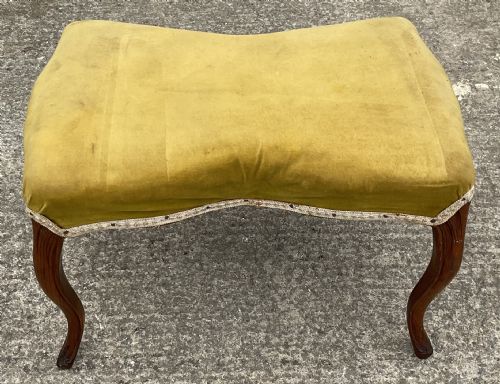
The wooden frames utilise solid walnut or burr veneers shaped into cabriole legs, spiral turnings, or carved rails, often joined with traditional cabinetmaking joints beneath the upholstery.
Upholstery defines the upper surface, combining wool, velvet, tapestry, needlepoint, or hand-dyed leather stretched over stuffing and secured with brass or iron tacks.
Victorian Walnut Footstool Retail Price Guide 2026
Typical asking prices for victorian walnut footstool among the pieces listed under this phrase on Sellingantiques today, from the lower quarter to the upper quarter. They describe what is for sale here now, not the wider market.
Assessing Craftsmanship
Quality rests in the depth and crispness of the hand-carved ornament on the walnut frame, where fluid cabriole legs and defined mouldings separate bespoke pieces from simpler workshop output.
The integrity of the upholstery ground, whether needlework, beadwork, or crewel embroidery, alongside the preservation of original fabric or sympathetic restoration, dictates the aesthetic standard of the piece.
The Victorian Walnut Footstool Glossary
- Cabriole leg
- A furniture leg that curves out and then narrows inward, resembling an animal's leg. This popular nineteenth-century revival feature appears frequently on walnut frames.
- Needlepoint
- A type of canvas work embroidery using yarn in a counted stitch. It forms the decorative top on many nineteenth-century fireside stools.
- Fender stool
- A long, low seat designed to sit directly in front of a hearth fender. These pieces accommodated multiple people warming themselves by the fire.
- Tunbridge ware
- Small decorative woodwork featuring intricate mosaic patterns created from tiny pieces of naturally coloured woods. It decorates inlaid circular tops on specific examples.
- X-frame
- A structural furniture base formed by intersecting curved or straight wooden members. This classical form provides robust support for upholstered seats.
Victorian Walnut Footstool: Frequently Asked Questions
What is a fender stool used for?
A fender stool was built long and low specifically to sit immediately in front of the fireplace hearth. Families used them to sit close to the fire for warmth during colder months.
Today, these longer pieces function well placed at the foot of a bed or repurposed as low coffee tables in a living space.
How do I tell an early Victorian stool from a late one?
Early examples often display simpler lines or robust proportions associated with the 1840s and 1850s, sometimes incorporating William IV or early revival design elements. Later pieces from the 1870s and 1880s tend to lean into specific revival styles like Queen Anne with slender cabriole legs or elaborate carved details.
Examining the turning styles, foot designs, and any inlaid marquetry helps narrow down the decade of production.
Are needlepoint tops original to the stools?
Many nineteenth-century pieces retain their period needlework, tapestry, or beadwork covers, which were often stitched by hand at home. These textiles show age through natural fading and wear of the wool threads.
Some listings feature recently reupholstered covers using antique fabric or matching period styles to ensure structural usability.
How do I care for antique walnut wood?
Walnut benefits from minimal intervention, requiring only occasional dusting with a soft, dry cloth to protect the polished surface. Avoid placing wooden furniture near direct heat sources or in strong sunlight, which can dry out the timber and fade the finish.
Applying a traditional beeswax polish helps maintain the lustre of the grain without building up heavy chemical residues.