



Victorian Triple Mirror
When you want a victorian triple mirror, you are looking at large architectural wall pieces and fitted wardrobe doors designed to anchor a room.
Victorian Triple Mirror
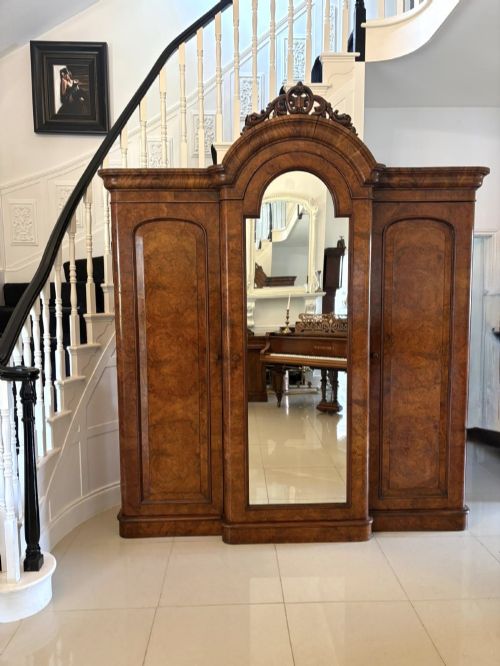
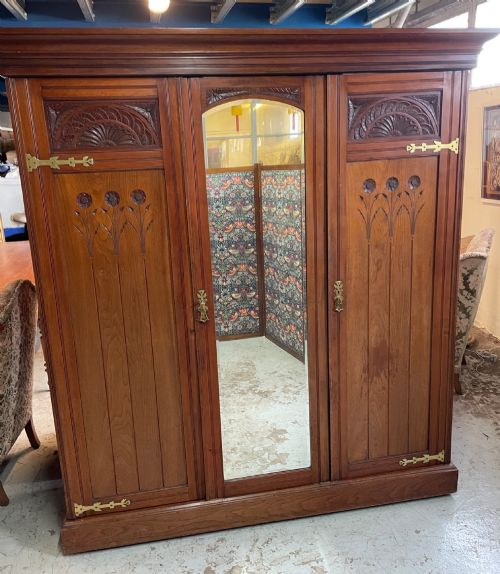
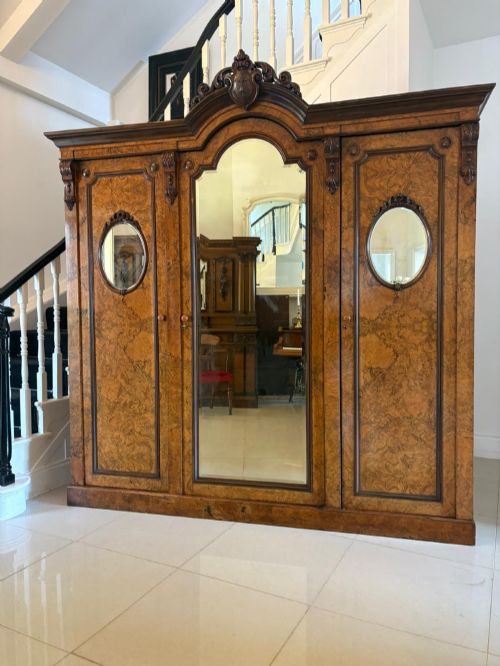
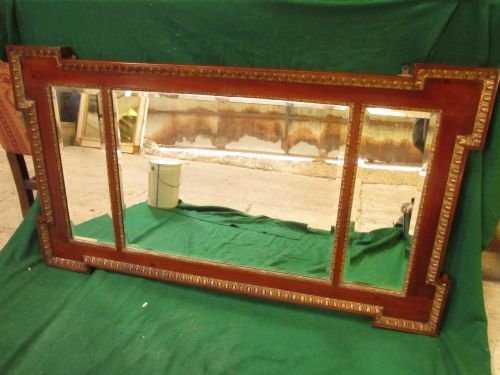
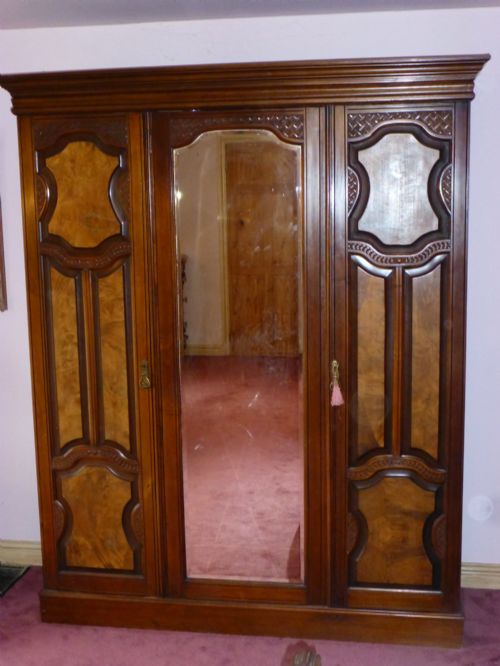
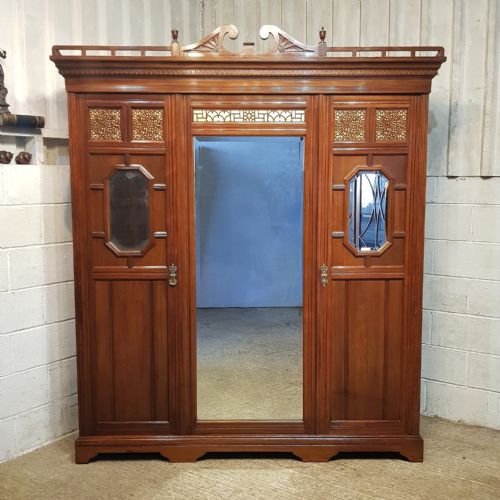
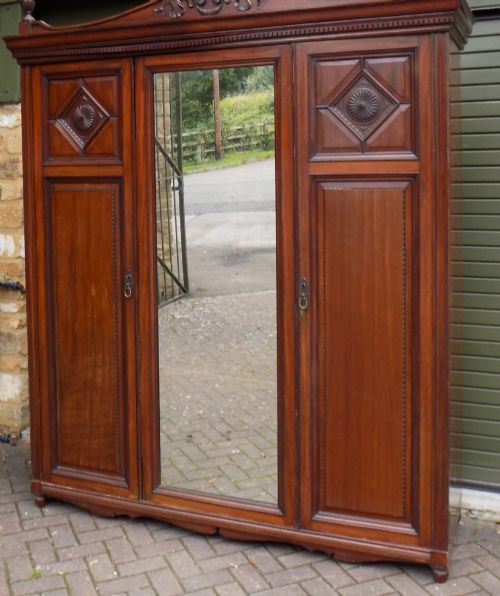
A victorian triple mirror typically appears either as a substantial overmantel glass designed to sit above a fireplace or as the mirrored central and side panels integrated into large bedroom wardrobes.
The evidence shows these items spanning the nineteenth century, produced in styles ranging from plain mahogany frames to ornate giltwood and gesso pieces.
Buyers meet these items as freestanding architectural mirrors or as sections of compactum wardrobes and dressing chests featuring three distinct glazed sections.
How they were made
Cabinet makers utilised dense hardwoods such as mahogany, walnut, and burr walnut, alongside softer timbers like pine and ash for internal carcases.
Overmantel mirrors and ornate frames relied on carved wood, giltwood, and moulded gesso to achieve elaborate decorative surfaces.
Mirrored glass plates were set into multiple sections, often held by wooden margins or dividing bars to create the characteristic triple configuration.
Victorian Triple Mirror Retail Price Guide 2026
Typical asking prices for victorian triple mirror among the pieces listed under this phrase on Sellingantiques today, from the lower quarter to the upper quarter. They describe what is for sale here now, not the wider market.
Some wardrobe doors double as sneaky full-length mirrors so nobody ever leaves the house with a crooked collar.
What varies in quality
The standard of carving and the selection of timber veneers, particularly figured burr walnut and rich mahogany, dictate the visual depth of the piece.
The execution of giltwork and the preservation of the original mirror glass plates separate standard domestic examples from finer commissions.
Joinery techniques, such as integrated dismantling systems for large wardrobes, reflect the original maker's investment of time and skill.
Holland and Sons
The Victorian Triple Mirror Glossary
- Compactum
- A large multi-section wardrobe combining hanging space, drawers, and linen slides. This form maximises bedroom storage in a single footprint.
- Overmantel mirror
- A wide glass frame positioned directly above a mantelpiece. These items visually expand room dimensions and reflect light.
- Giltwood
- Timber coated with gold leaf or metallic paint over a prepared gesso ground. This finish provides a bright reflective surface.
- Gesso
- A plaster-like mixture applied to wood frames and carved into decorative reliefs. It forms the base for subsequent gilding.
- Triptych
- An artwork or mirror divided into three panels. The outer sections often hinge or angle inward.
Victorian Triple Mirror: Frequently Asked Questions
How do I install a large overmantel mirror?
These heavy wooden frames require secure anchoring directly into wall studs or masonry to support the significant weight of the timber and glass plates.
Professional installation ensures the piece remains stable and safe above a fireplace mantel.
Did wardrobes always come with fitted mirrors?
Not all nineteenth-century wardrobes included glass panels, but triple configurations frequently utilised mirrored doors to serve a dual purpose in dressing rooms.
Plain timber panels appeared alongside reflective surfaces depending on the specific room requirements.
What is a compactum wardrobe?
A compactum is a multi-functional bedroom unit that integrates hanging compartments, drawers, and sliding trays behind three doors.
These pieces offer comprehensive storage while maintaining a unified architectural facade.
How do I identify the period of a mirror frame?
Stylistic cues such as heavy Rococo revival curves, ebonised details, or Aesthetic Movement linearity help date the construction.
Secondary woods and backboards also provide clues to the manufacturing decade.