


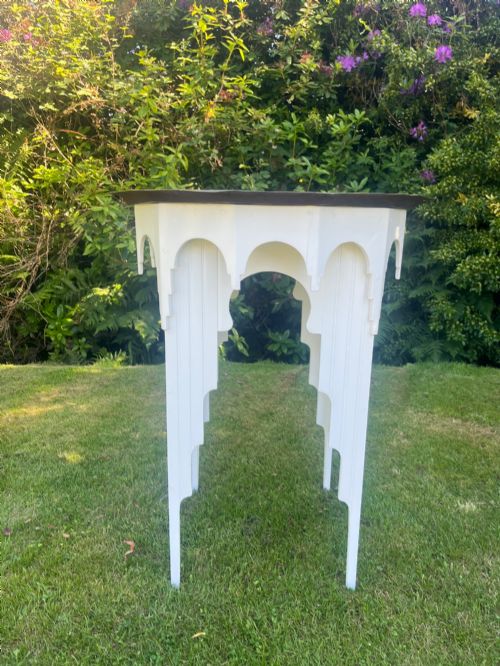
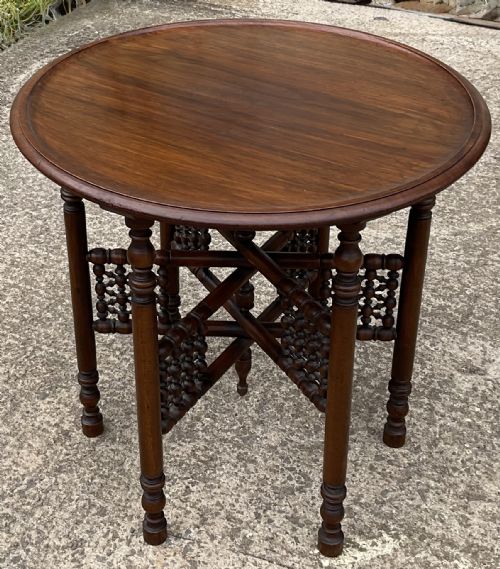
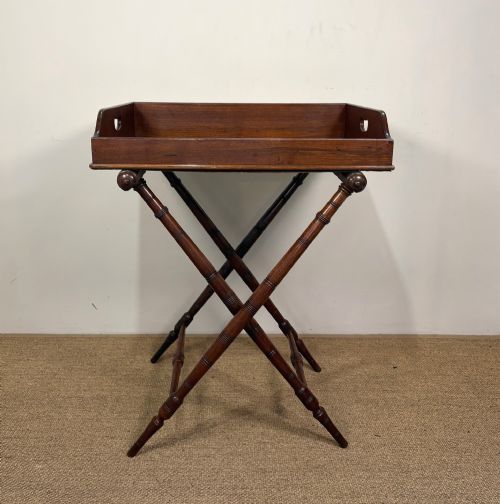
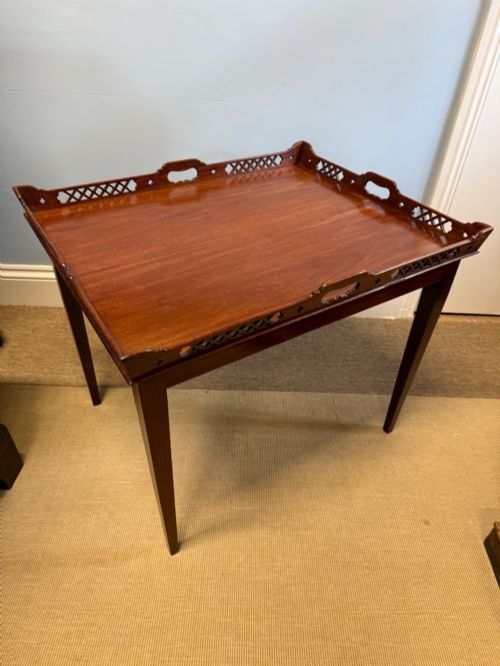
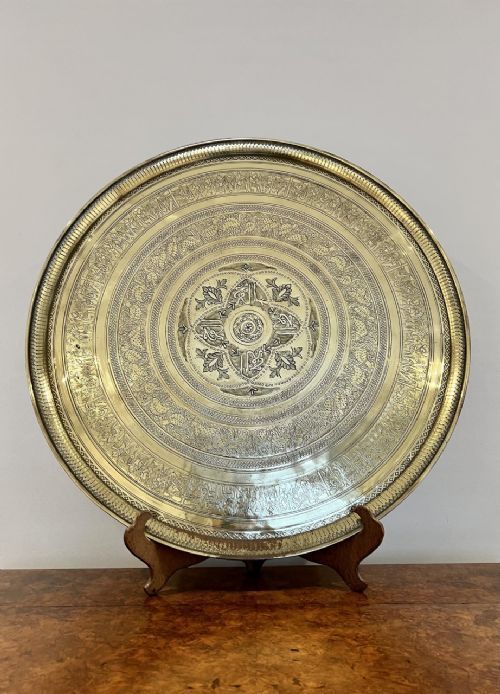


Victorian Tray Top Table
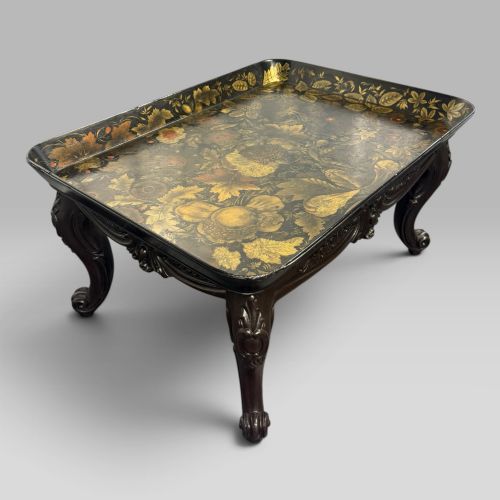
These pieces unite a raised rim for service with a stable stand, making a victorian tray top table a practical choice for holding tea or display.
Victorian Tray Top Table
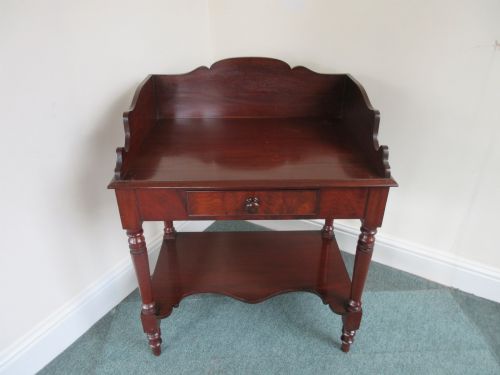
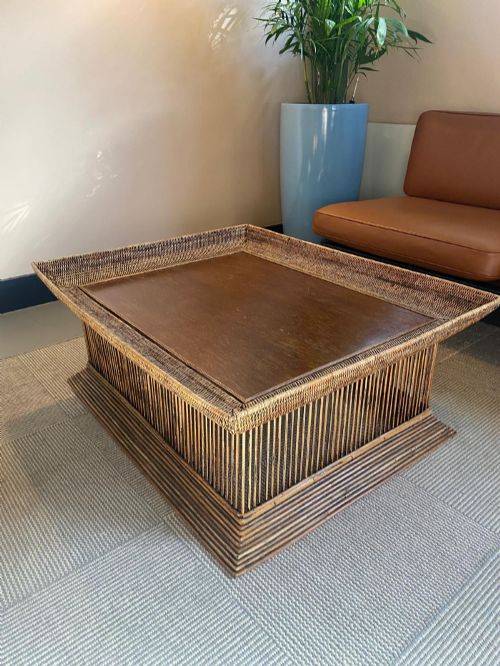
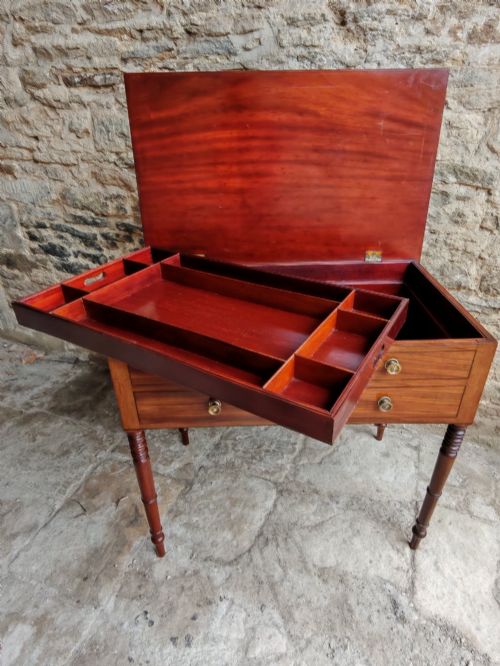
A victorian tray top table combines a portable serving surface with a fixed or folding base, spanning formats from side tables to bedside stands. The form adapts easily to varied rooms through designs like folding butlers trays, coffee tables, and occasional stands.
Mahogany forms the most common timber found in these pieces, alongside oak, walnut, and satin birch. Tables often feature raised edges or shaped rims designed to prevent items from sliding off during service.
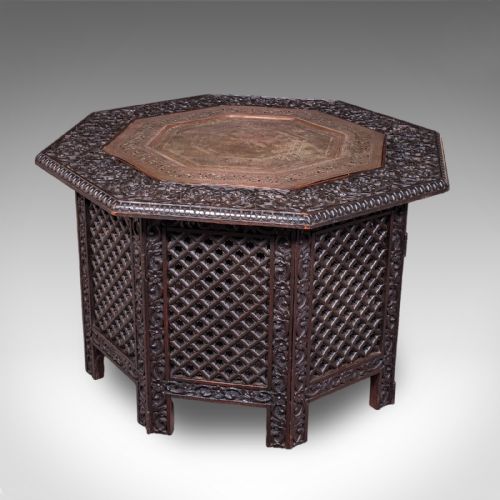
Makers drew on diverse global traditions, producing English country designs alongside Anglo-Indian, Moorish Revival, and Chinoiserie styles. This international influence brings varied ornamentation to the standard domestic table.
How they were made
Carpenters constructed the wooden frames from hardwoods like mahogany, oak, teak, and walnut, often employing folding stands for portability. Timber surfaces received polished finishes, while campaign or coaching variants utilised hinges for compact storage.
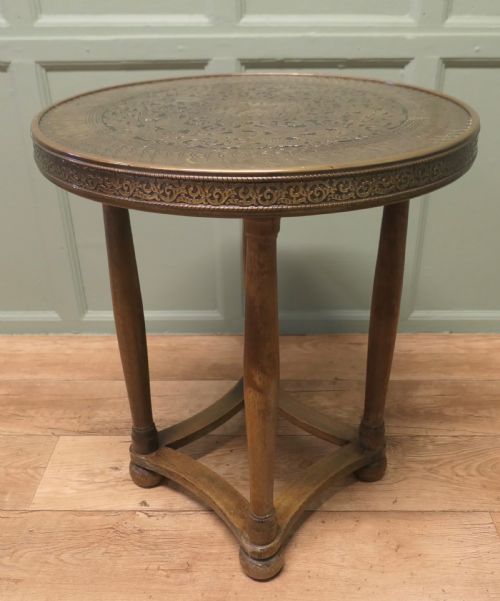
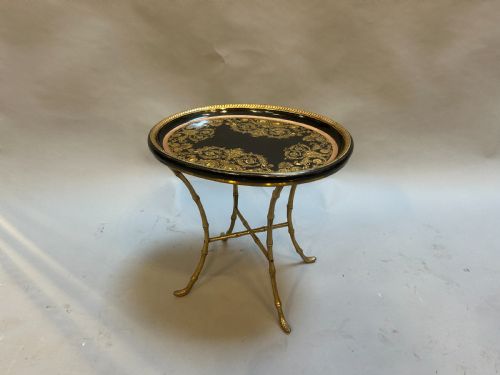
Metal elements played a significant role, with craftsmen incorporating engraved brass, copper tops, and mixed metal insets into wooden frameworks. Papier-mâché and lacquer techniques created glossy, painted surfaces often enriched with mother of pearl inlay.
Decorative detailing ranged from hand-painted Chinoiserie motifs to carved Indian hardwood and intricate Mamluk Revival patterns. These diverse methods combined structural utility with rich surface decoration.
Victorian Tray Top Table Retail Price Guide 2026
Typical asking prices for victorian tray top table among the pieces listed under this phrase on Sellingantiques today, from the lower quarter to the upper quarter. They describe what is for sale here now, not the wider market.
The archive reveals regional influences spanning English country, Anglo-Indian, Moorish Revival, and Chinoiserie design traditions across the nineteenth century.
What varies in quality
Construction methods establish the baseline of a piece, separating sturdy, well-joined frames from simpler utility items. The precision of the joinery on folding stands and the stability of the mounted tray affect daily utility.
Surface artistry distinguishes standard items from finer examples, particularly in hand-painted lacquer, inlaid mother of pearl, and engraved metalwork. The depth of carved detail in wooden frames and the richness of polished timber finishes further mark the scale of craftsmanship.
The Victorian Tray Top Table Glossary
- Butlers tray
- A portable wooden tray with hinged or side handles, traditionally lifted off its stand for carrying. These items often feature shaped rims to secure glassware and china during service.
- Chinoiserie
- European decorative style imitating Chinese artistic traditions, featuring hand-painted motifs on lacquered surfaces. This technique appeared frequently on papier-mâché and wooden tables.
- Campaign table
- Furniture designed for easy dismantling and transport during military travel or expeditions. These pieces typically include folding stands and durable hardwood construction.
- Mamluk Revival
- A 19th-century design movement drawing inspiration from Islamic art of the Mamluk Sultanate. Pieces in this style often incorporate intricate engraved brass and geometric metalwork.
- Papier-mâché
- A composite material made from paper pulp or layers of paper mixed with glue, pressed and dried into shape. It provided a smooth base for lacquer and mother of pearl inlay on Victorian trays.
Victorian Tray Top Table: Frequently Asked Questions
What is a tray top table used for?
These tables functioned primarily for serving tea, holding drinks, or displaying decorative items in reception rooms. The raised rim kept objects secure when moving the surface or using it for daily hospitality.
Over time, the form moved from service tasks to general domestic use as side, coffee, and bedside tables. Their versatile proportions suited them to hold lamps, books, and small personal belongings.
How do I identify the period?
Examination of the timber, hardware, and decorative style helps determine the age of a piece. Mid-to-late 19th-century examples often display solid mahogany construction, hand-cut joinery, and traditional polish finishes.
stylistic influences like Anglo-Indian carving or Moorish Revival brasswork typically point toward the later Victorian decades. Stamped makers' marks or labels, when present, provide more precise origins.
Are the trays detachable from the stands?
Many traditional designs feature a loose tray resting on a folding or fixed X-frame stand. This configuration allowed servants to carry the tray directly to the kitchen.
Other variations secure the top permanently to the base as a fixed side or coffee table. Both removable and fixed formats were common throughout the Victorian era.
How do I care for a lacquered tray top?
Lacquered and papier-mâché surfaces require gentle handling to protect the hand-painted decoration and glossy finish. Dusting with a soft, dry cloth preserves the varnish without causing abrasion.
Moisture and direct heat can damage historic finishes, so coasters and mats are recommended for protective use. Keeping the wood or lacquer away from extreme temperature fluctuations prevents warping.