





Gilt Black Pedestal Table
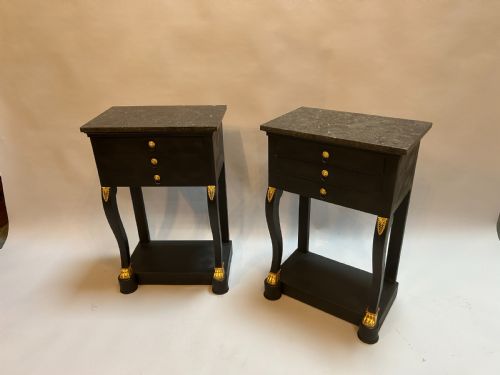
These gilt black pedestal table pieces combine dark ebonised surfaces with rich gold leaf details to anchor a room with classical or neoclassical weight.
Gilt Black Pedestal Table
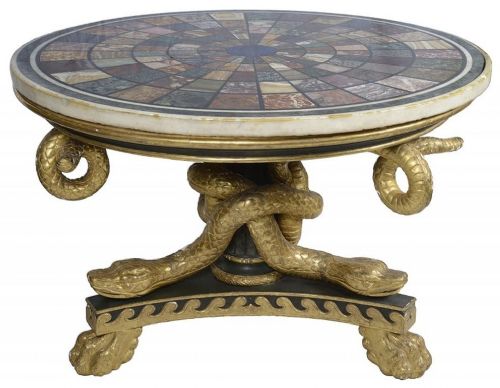
A gilt black pedestal table encompasses a wide range of antique occasional tables, centre tables, and writing tables spanning from the Georgian and Regency eras through the Victorian period and into the early twentieth century. These furnishings appear in styles such as French Empire, Aesthetic Movement, and Florentine Renaissance Revival, often featuring central pedestals or tripartite bases supporting circular or shaped tops.
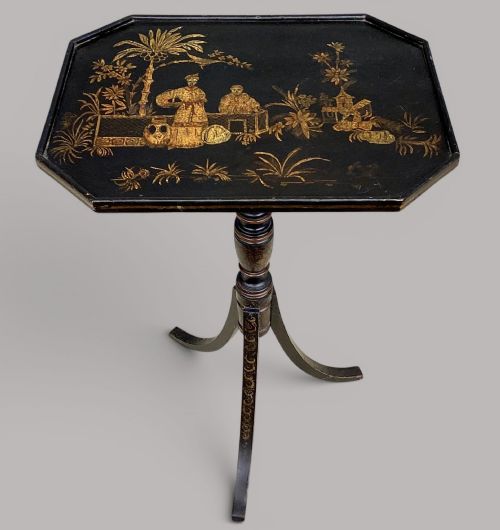
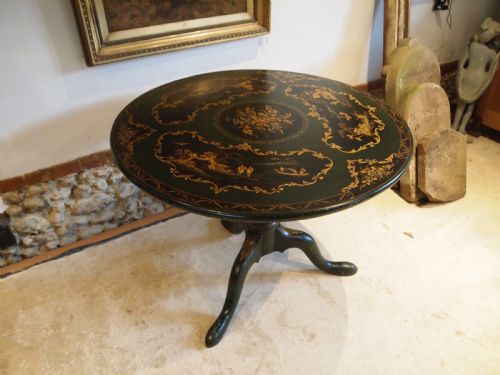
Buyers seeking a gilt black pedestal table will most frequently encounter nineteenth-century ebonised wood and lacquered pieces decorated with hand-painted motifs, Chinoiserie designs, or inlaid specimen marble. The selection on this page ranges from compact wine tables and bedside chests to large centre tables and plant stands.
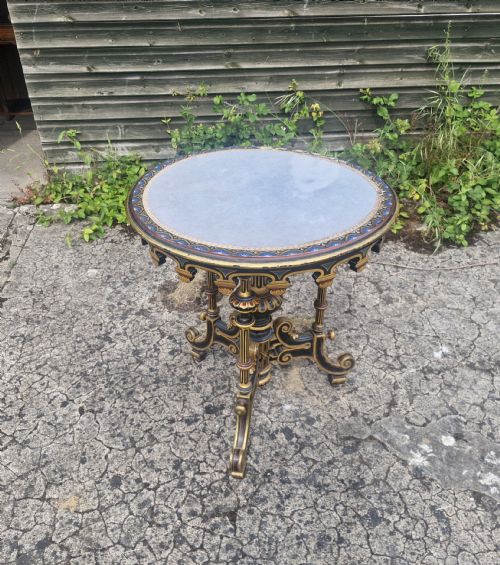
Regional variations span English Regency neoclassical designs, French Napoleon III ebony and gilt works, and Italian pietra dura inlaid pieces. Each maker interpreted the contrast between black finishes and metallic gilding through the lens of their specific period style, from heavy Victorian Gothic Revival to delicate Japanese-inspired Aesthetic movement stands.
Materials and construction
Wood serves as the primary structural material, heavily utilising ebonised finishes, lacquer, and paint to achieve a deep black surface that mimics costly exotic hardwoods. Artisans applied gold leaf and ormolu mounts to highlight carved details, mouldings, and structural edges.
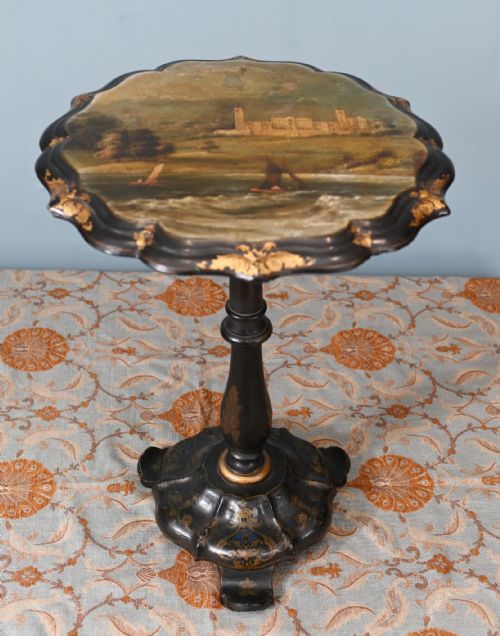
Surface decoration frequently involves hand-painting, papier-mâché, and intricate stone inlay such as specimen marble or pietra dura. Tilt-top mechanisms, tripartite bases, and turned pedestals require precise joinery to support heavy stone or decorated wooden tops.
Listings feature periods spanning from Georgian and Regency to Victorian, alongside materials such as marble, gold leaf, and ebonised wood.
Markers of distinction
The sophistication of the surface decoration determines much of the distinction among these tables, separating simple painted finishes from meticulous hand-painted Chinoiserie scenes and fine pietra dura stone inlay. The crispness of the gilt work and the depth of the ebonised finish reflect the original artisan's skill.
Structural integrity rests on the stability of the central pedestal and the quality of the timber beneath the black finish. Superior examples display balanced proportions, substantial specimen marble tops, or authentic period ormolu mounts rather than later replacements.
The Gilt Black Pedestal Table Glossary
- Ebonised wood
- Timber treated with stain, dye, or paint to imitate expensive ebony. This dark finish became particularly fashionable during the Victorian and Aesthetic periods.
- Pietra dura
- An artistic technique using cut and fitted polished coloured stones to create geometric or pictorial inlays. It appears on high-status nineteenth-century centre tables.
- Ormolu
- Gilded bronze mounts applied to furniture for decoration. This technique adds metallic brilliance and highlights structural corners or bases.
- Specimen marble
- Tabletops assembled from numerous distinct varieties of polished marble arranged in geometric patterns. These showcase the collector's taste for geological specimens.
Gilt Black Pedestal Table: Frequently Asked Questions
How do I clean an ebonised and gilt table?
Dust gently with a soft, dry cloth to prevent scratching the delicate gold leaf and black painted surfaces. Avoid commercial liquid polishes or harsh chemical cleaners that can degrade antique lacquer and ebonised finishes.
Keep these tables away from direct sunlight and excessive humidity to protect the wood movement and the adhesion of the leaf. Professional conservation is recommended for any deeper cleaning or restoration.
Where should I place a pedestal table?
These tables work well as central focal points in a room, or as occasional surfaces beside seating areas where their decorative bases remain visible. Centre tables suit larger open spaces, while wine tables and plant stands fit tighter corners.
Ensure the floor is level, particularly with heavier marble-topped examples resting on tripartite pedestals. Their dark tones pair effectively against lighter walls to create strong visual contrast.
What is a tilt top table used for?
Tilt-top tables feature a mechanism that allows the surface to pivot vertically when not in use, enabling the piece to stand flat against a wall to save floor space. Historically, domestic spaces required versatile furniture that could be cleared quickly for other activities.
Today, they serve as occasional tables that still retain their functional pivoting hardware. Collectors appreciate the clever engineering and the opportunity to display the decorated tabletop surface.
How do I identify an Aesthetic period table?
Aesthetic movement pieces from the late nineteenth century often combine ebonised wood surfaces with Japanese-inspired motifs or minimalist geometric forms. They reflect a shift toward art for art's sake, moving away from heavy Victorian ornamentation.
Look for contrasting gold highlights, simplified structural lines, and decorative hardware that references Asian design. These pieces bridge traditional Victorian craftsmanship with modern design sensibilities.