



Victorian Toy Horse
A victorian toy horse brings the distinct charm of nineteenth-century playrooms into a modern interior.
Victorian Toy Horse
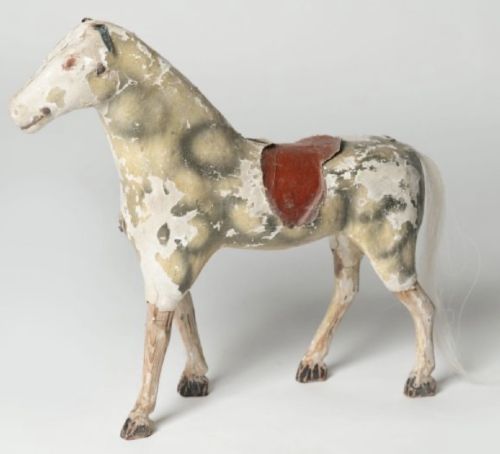
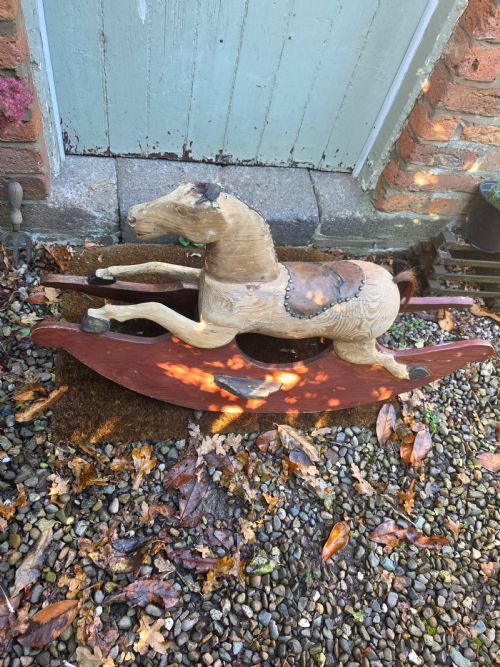
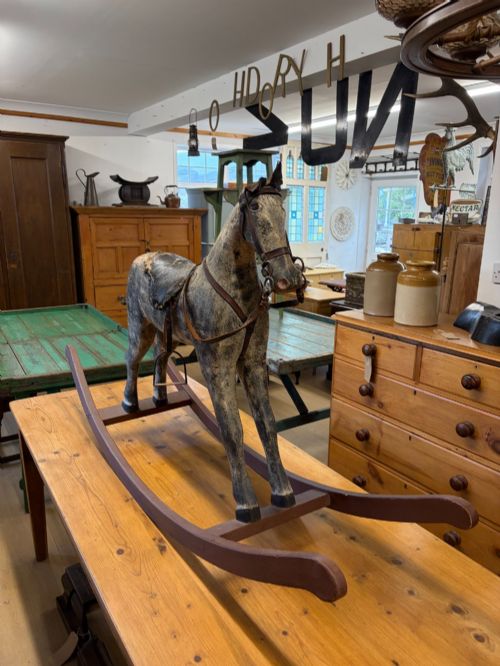
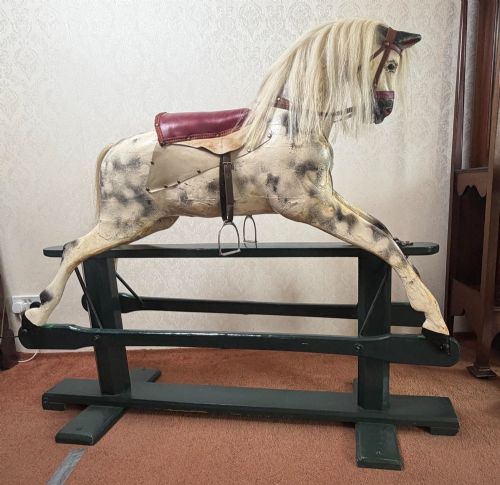
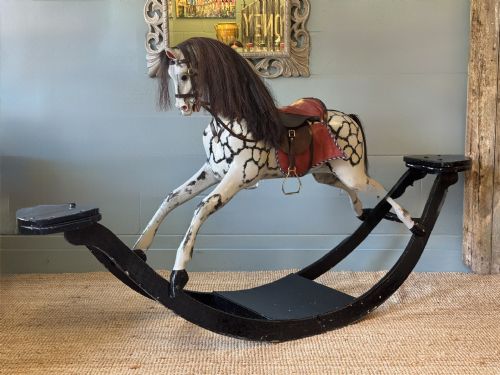
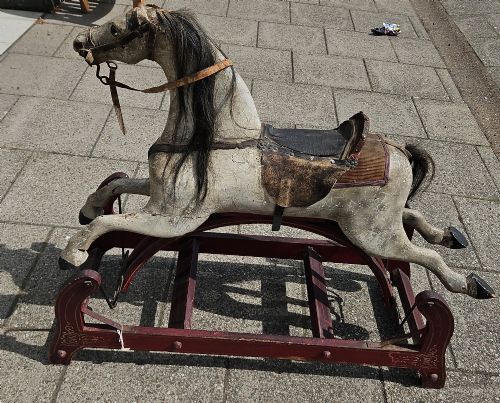
When you search for a victorian toy horse, you encounter carved wooden playthings designed to rock, roll or be pulled along floors by children. The pieces on this page span rocking horses, pull-along toys, and ride-on wheeled alternatives from the nineteenth century and early decades of the twentieth century.
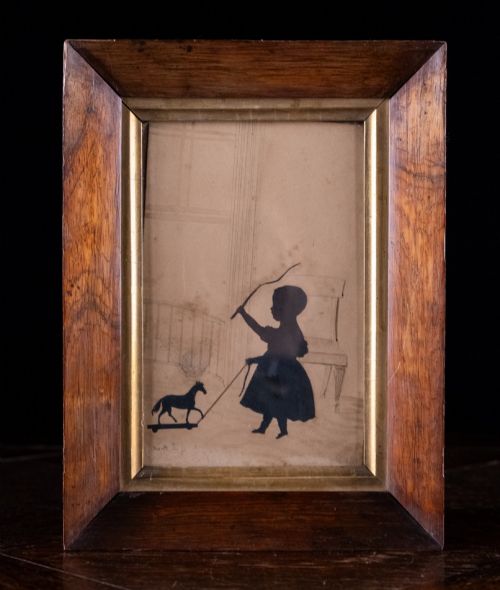
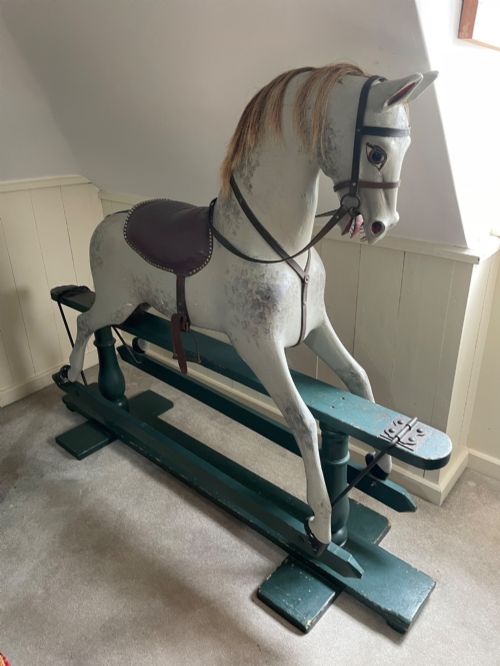
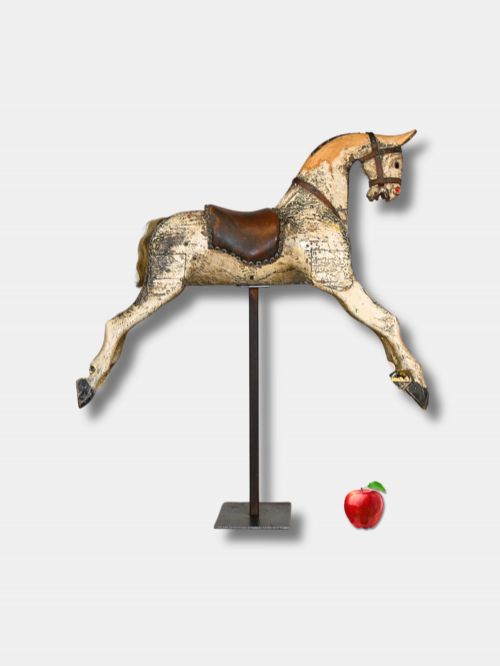
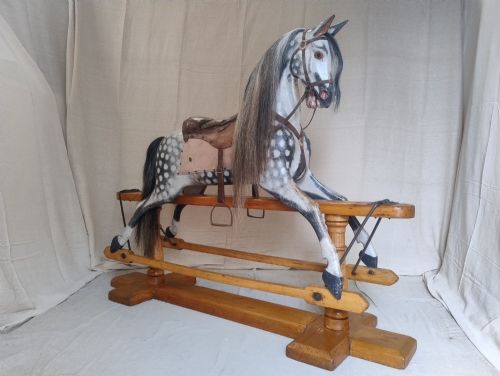
The most common form you meet is the wooden rocking horse mounted on curved wooden rockers or safety stands, often retaining layers of early paint or original tacked leather and horsehair mane details. Alongside these standard rocking formats, the selections include push-along toys and decorative silhouettes capturing the relationship between children and horses.
Materials and construction
Makers shaped these toys primarily from solid wood and pine, carving bodies and heads before mounting them onto sturdy pine rockers or iron and metal chassis components. Structural integrity relied on traditional joinery to withstand rigorous childhood play.
Surfaces were finished with applied paint, sometimes featuring dappled brushwork, and dressed with genuine horsehair for manes and tails. Details like glass eyes and leather tack brought realism to the carved forms.
Victorian Toy Horse Retail Price Guide 2026
Typical asking prices for victorian toy horse among the pieces listed under this phrase on Sellingantiques today, from the lower quarter to the upper quarter. They describe what is for sale here now, not the wider market.
Listings include timber and iron constructions featuring pine bodies, glass eyes, and horsehair manes across the nineteenth and early twentieth centuries.
What separates examples
The distinction between ordinary and exceptional examples rests in the survival of original paint surfaces and the complexity of the carving. Traces of early dappling, untouched leather tack, and authentic horsehair elevate a piece well above stripped or heavily restored alternatives.
Maker attribution and structural completeness also define the upper tier. Documented makers bring historical weight, while original rockers, stands, and hardware ensure the piece retains its intended form and mechanical balance.
G & J Lines of London·F.H.Ayres·Collinson
The Victorian Toy Horse Glossary
- Rocking horse
- A carved wooden toy mounted on curved wooden rockers or a swing frame, designed for children to ride. These objects form the majority of the toys listed on this page.
- Pull-along toy
- A smaller wooden horse mounted on a platform with iron or metal wheels, pulled by a child via a cord or handle. They date across the nineteenth and early twentieth centuries.
- Horsehair
- Natural hair utilised for the manes and tails of traditional carved horses. Its survival in good condition indicates minimal intervention.
- Dappled
- A painted spotted finish applied to the body of a wooden horse to simulate grey horse markings. This decorative technique appears on many large nineteenth-century examples.
Victorian Toy Horse: Frequently Asked Questions
What is a victorian toy horse?
A victorian toy horse is a nineteenth-century or early twentieth-century wooden plaything, typically carved as a rocking horse or mounted on wheels for a child to ride or pull.
These objects were standard fixtures in period nurseries, built to endure active play while serving as decorative focal points.
How were they used?
Children rode them for amusement, pushed them along nursery floors, or pulled them via attached cords during daily play routines.
They functioned as primary toys before the advent of mass-produced plastic entertainment, encouraging balance and imaginative games.
How do I live with one?
Place a sturdy rocking horse or pull-along in a spacious room where its carved form and painted surface can be appreciated away from direct sunlight.
Keep them clear of modern radiators to protect historic pine timbers and horsehair from drying out.
How do I spot original paint?
Examine the surface for multiple thin layers, craquelure, and wear patterns consistent with age rather than uniform modern brushstrokes.
Original paint often shows subtle fading and gentle patination rather than flat, opaque colour.