

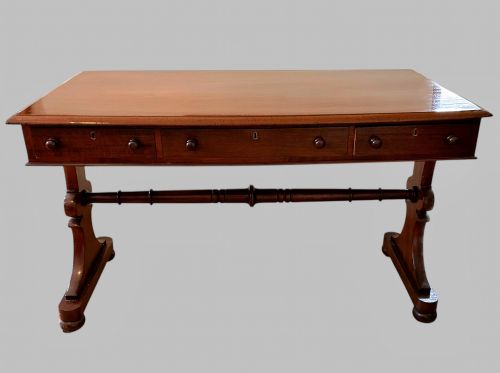
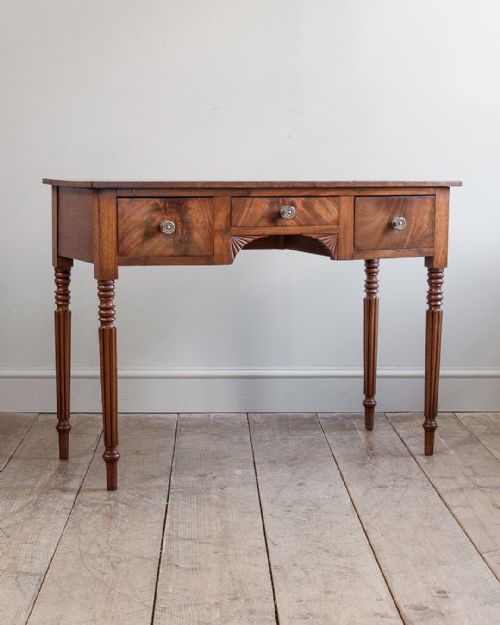
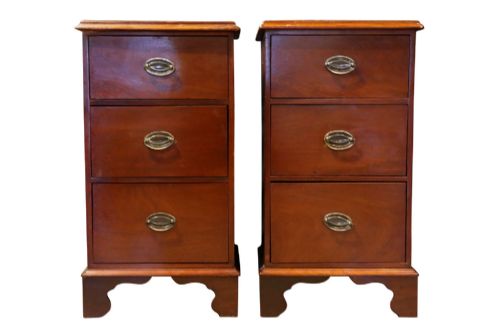
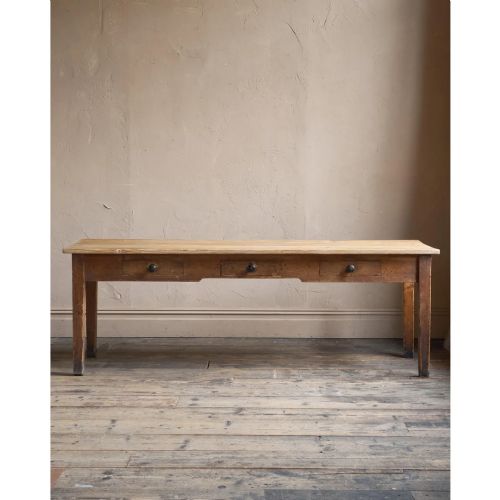
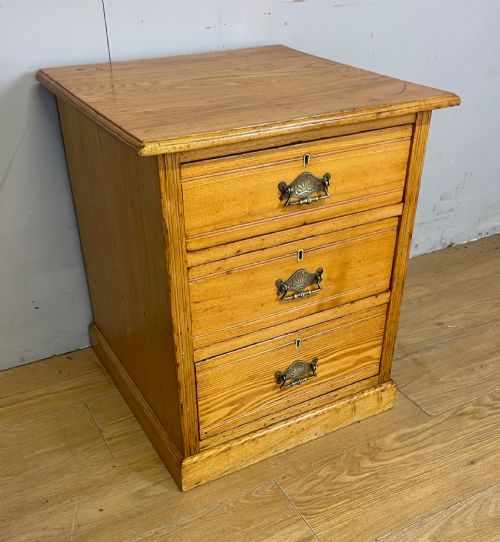
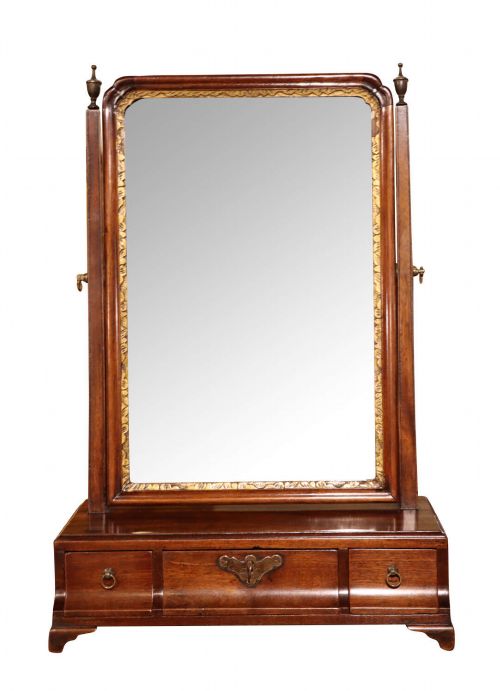
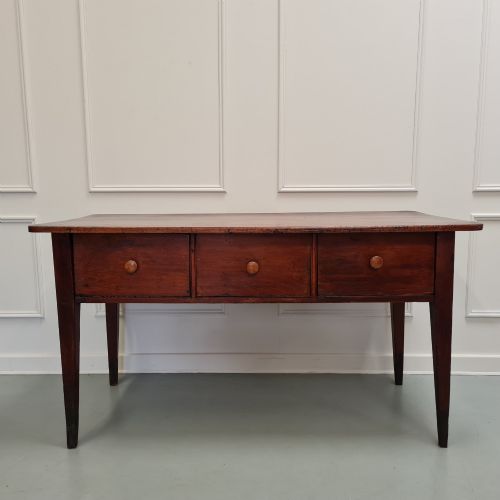


Victorian Three Drawer Table
A victorian three drawer table provides useful surface space and compact storage, uniting period character with everyday utility.
Victorian Three Drawer Table
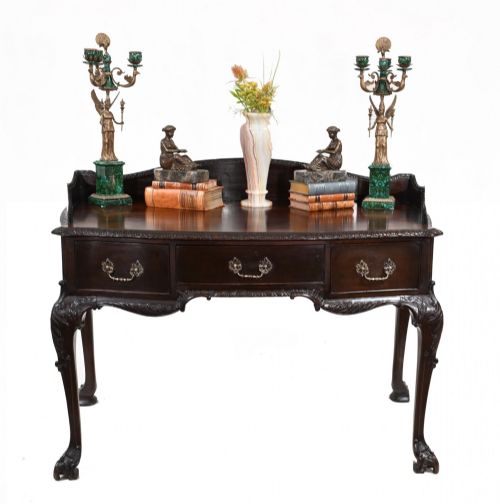
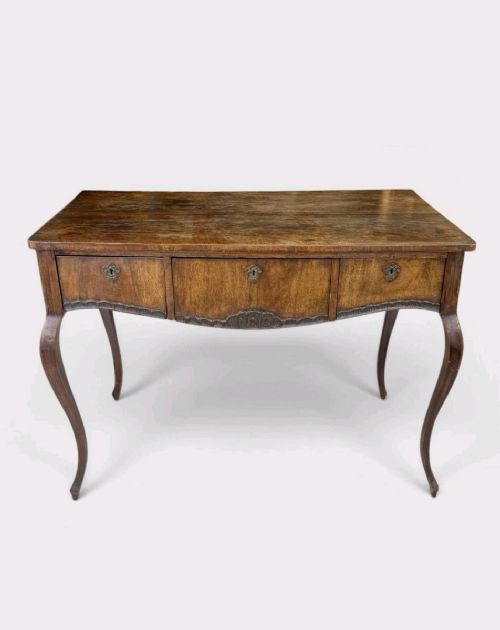
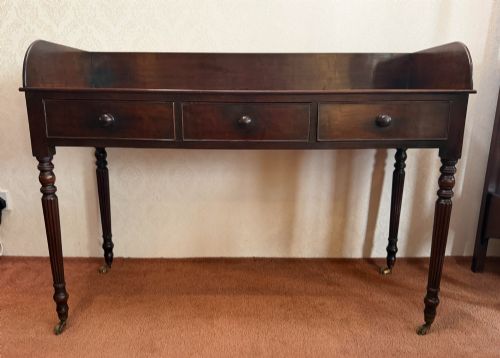
A victorian three drawer table encompasses various forms such as writing desks, library pieces, serving tables, and bedside chests originating from the nineteenth century. These items typically feature three horizontal drawers arranged beneath a timber top, serving practical functions in bedrooms, libraries, and reception rooms.
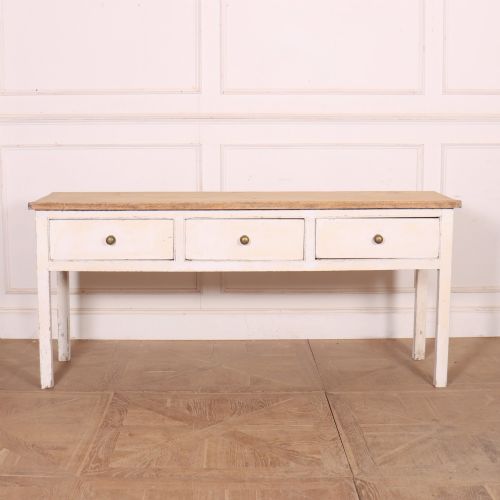
The versions most commonly met on this page are constructed from mahogany or pine, reflecting the dominant cabinet-making materials of the period. Pieces range from formal library writing tables to simpler country house and scullery variants.
Examples span different decades of the nineteenth century, including early Victorian and late nineteenth-century productions, alongside related styles like Georgian and Regency. Each piece demonstrates the adaptability of the three-drawer format across diverse domestic settings.
How they were made
Construction relies heavily on timbers such as mahogany, pine, and oak, often shaped into solid tops and drawer frames. Cabinet-makers utilised brass handles, iron fittings, and glass elements alongside wood to complete each piece.
Joinery techniques standard to the period ensured structural integrity, while decorative finishes included hand painting, flame mahogany veneers, and burr walnut details. Surface treatments varied from plain polished wood to painted country pieces.
Victorian Three Drawer Table Retail Price Guide 2026
Typical asking prices for victorian three drawer table among the pieces listed under this phrase on Sellingantiques today, from the lower quarter to the upper quarter. They describe what is for sale here now, not the wider market.
Listings feature nineteenth-century periods alongside oak, mahogany, pine, and brass materials.
What varies in quality
The grade of timber selection fundamentally sets pieces apart, with figured flame mahogany and burr walnut representing finer cabinet work compared to utilitarian pine or ash. The choice of secondary woods and the precision of the drawer construction indicate the maker's intent.
Carved detailing, such as shaped supports and turned feet, alongside the integration of brass mounts or original hardware, elevates certain examples above standard utility furniture.
The Victorian Three Drawer Table Glossary
- Dresser base
- A lower sideboard or console used for storage and serving, often fitted with multiple drawers across the front. These pieces form a significant category within nineteenth-century furniture.
- Lowboy
- A small side table with drawers, typically standing on four tall legs. This form provides compact surface space and concealed storage.
- Flame mahogany
- A veneer cut from the fork of the mahogany tree to produce a distinctive, flamy pattern. It appears on finer Victorian surfaces.
- Pine
- A softwood used extensively in English country furniture and scullery tables. It is often painted or left in its natural state.
Victorian Three Drawer Table: Frequently Asked Questions
What rooms suit a victorian three drawer table?
These tables adapt well to bedrooms as bedside chests or dressing surfaces, and to studies as writing desks.
Larger variants function effectively as serving tables or console surfaces in dining areas and hallways.
Are these tables suitable for daily use?
Solid timber construction and functional drawer space make these items practical for modern storage needs.
Routine maintenance involves standard wood care to protect the historic polish and timber surfaces.
What is the difference between a writing table and a serving table?
Writing tables usually incorporate kneeholes or a flat top optimised for stationery and paperwork.
Serving tables provide a wider surface intended for dining rooms and side service rather than seated writing.