

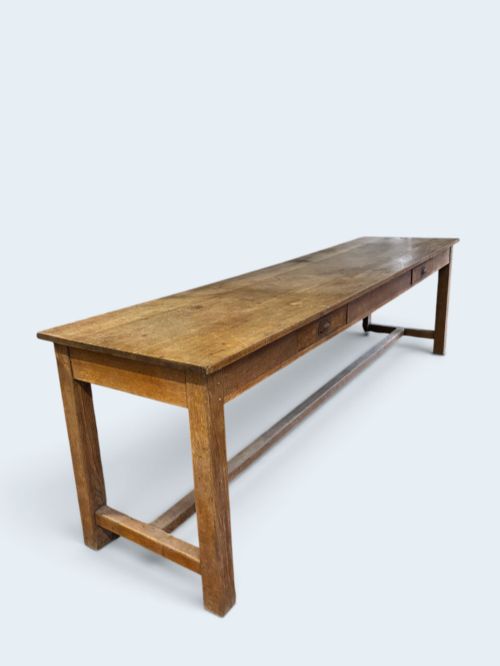
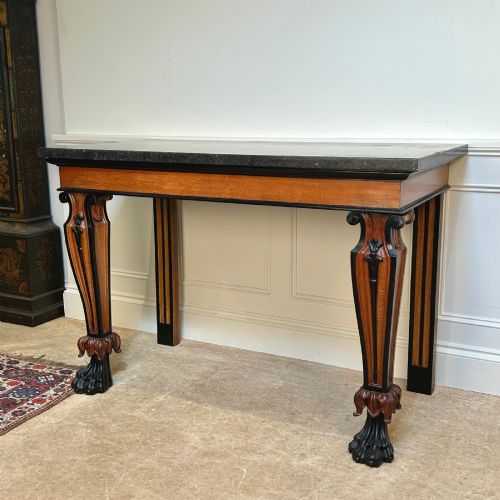
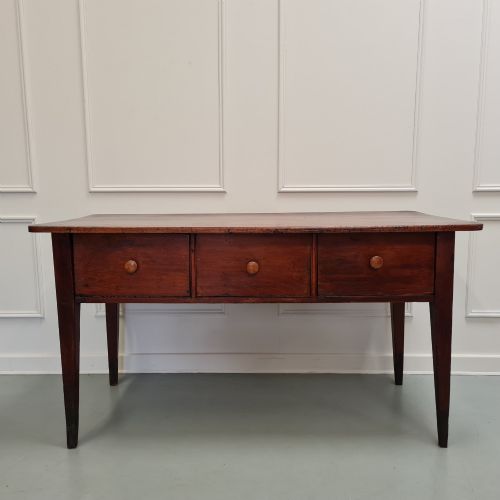
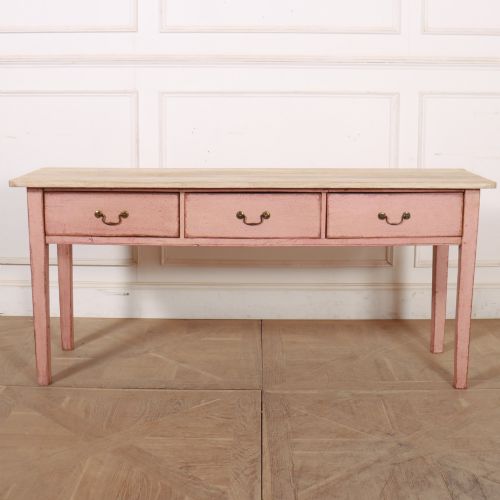
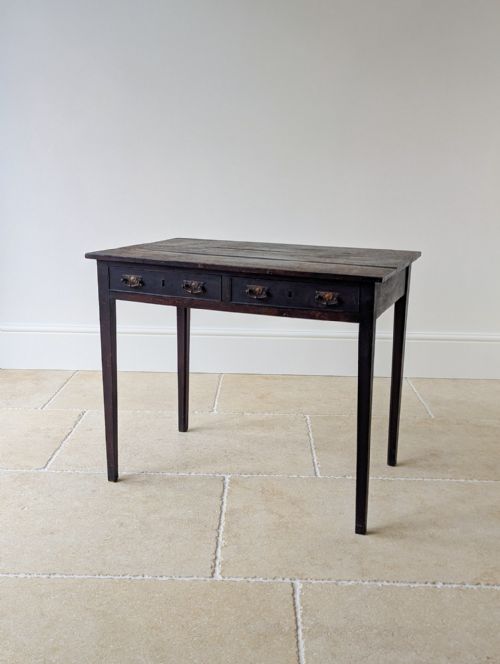
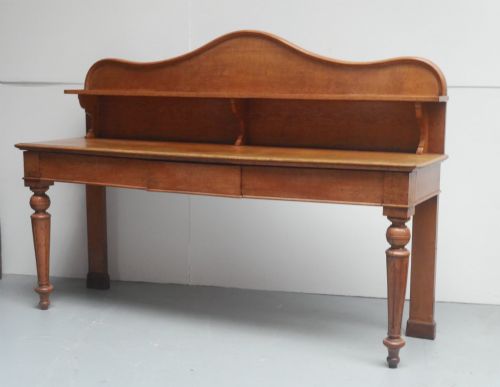
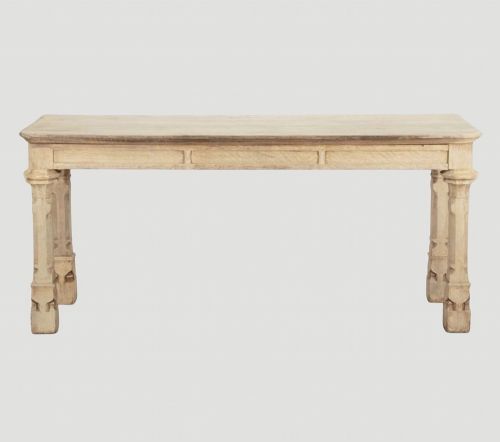


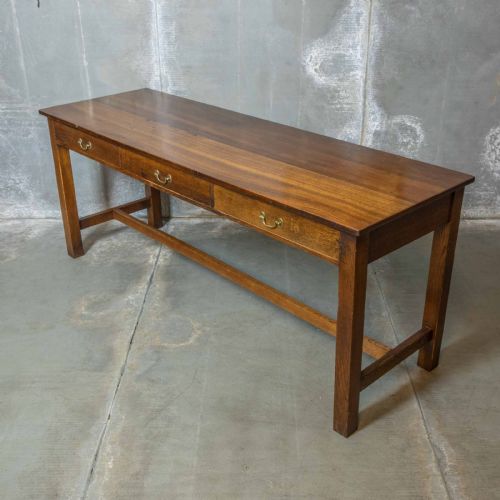


Country House Serving Table
A country house serving table is a substantial piece built for heavy domestic use, and these examples bring timeless utility to any interior.
Country House Serving Table
A country house serving table provides a commanding surface designed for large-scale dining rooms and halls. When searching for a country house serving table, buyers encounter substantial forms intended to anchor a room.
The pieces on this page span the Georgian, Regency, Victorian, and Edwardian eras, running through to the early twentieth century. Forms range from traditional serving tables and console tables to dresser bases, sideboards, and potboard designs.
Woods such as oak, mahogany, walnut, pine, and sycamore dominate the construction, often complemented by marble and brass details. These surfaces reflect decades of domestic service in large residences.
How they were made
Makers utilised solid timbers like oak and mahogany, often combining robust framing with traditional joinery to support heavy loads. Painted wood finishes and bleached oak treatments appear across various periods, showing practical adaptations to interior tastes.
Metal elements such as iron and brass provide structural reinforcement and functional hardware, including handles and fittings. Marble inserts offer durable, cool surfaces suited to food preparation and presentation.
Country House Serving Table Retail Price Guide 2026
Typical asking prices for country house serving table among the pieces listed under this phrase on Sellingantiques today, from the lower quarter to the upper quarter. They describe what is for sale here now, not the wider market.
Listings feature woods spanning oak, mahogany, walnut, pine, sycamore, and painted finishes.
What varies in quality
The grade of timber and the integrity of the original construction dictate the standing of each piece. Heavier proportions and sound structural joinery distinguish better examples from simpler utilitarian items.
The Country House Serving Table Glossary
- Potboard
- An open lower shelf beneath a serving table or dresser base, traditionally used for storing pots and serving vessels. This practical addition provides extra stability to the lower frame.
- Console table
- A table designed to stand against a wall, frequently secured with brackets if the proportions demand extra support. These pieces often function interchangeably as serving tables in grand hallways.
- Dresser base
- A lower cabinet structure featuring drawers and cupboards, serving a similar function to a sideboard. They offer enclosed storage alongside a broad top surface.
- Dumb waiter
- A tiered serving table designed to hold dishes and utensils near the dining table. These multi-level pieces allow for service without constant servant attendance.
- Refectory table
- A long, narrow dining or serving table historically used in communal dining halls. Their sturdy construction makes them robust enough for heavy domestic service.
Country House Serving Table: Frequently Asked Questions
What is a country house serving table used for?
These tables were originally built to hold heavy dishes, silver, and food service items during large meals in grand residences. Today, they function well as sideboards in dining rooms or display consoles in spacious hallways.
Their generous proportions provide ample surface area for lamps, books, and decorative objects, making them practical focal points in modern interiors.
How do I identify a Georgian serving table?
Georgian serving tables typically feature classical proportions, solid mahogany or oak construction, and restrained decorative carving. Look for hallmarks of the period such as straight or cabriole legs and traditional joinery.
Many examples from this era show functional additions like potboards or drawers designed for domestic service.
Are these tables suitable for everyday use?
These pieces were constructed from durable hardwoods like oak and mahogany to withstand generations of heavy domestic activity. Their sturdy frames make them well-suited to daily demands in contemporary homes.
Routine care and appropriate placement away from direct heat sources will keep the timber surfaces stable and intact.
What is the difference between a console and a serving table?
Console tables are generally shallow and designed to stand flush against a wall, sometimes requiring wall fixings for stability. Serving tables tend to be deeper and heavier, built to hold large quantities of food and tableware.
In country houses, the terms often overlapped depending on where the furniture stood and how the household used it.