




Antique Pot Board Table
An antique pot board table provides sturdy, low-slung storage that anchors a room with timber character.
Antique Pot Board Table
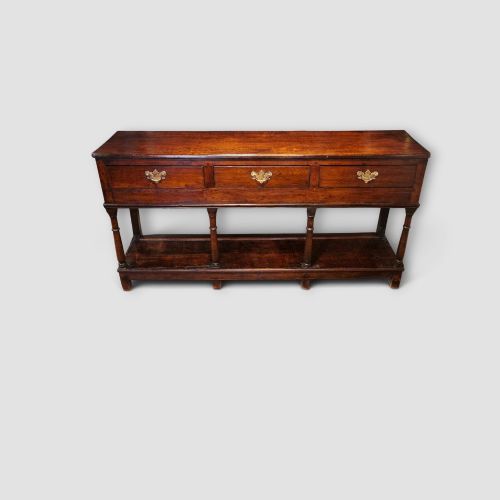
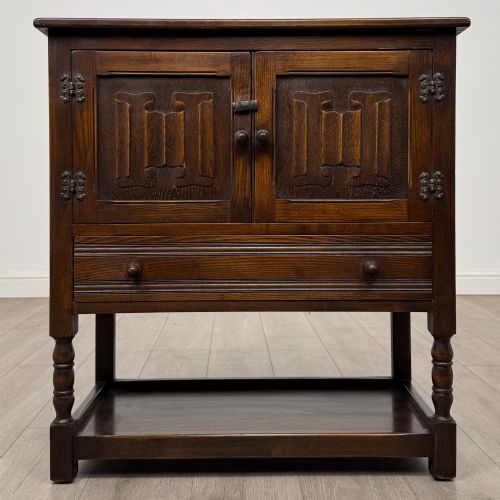
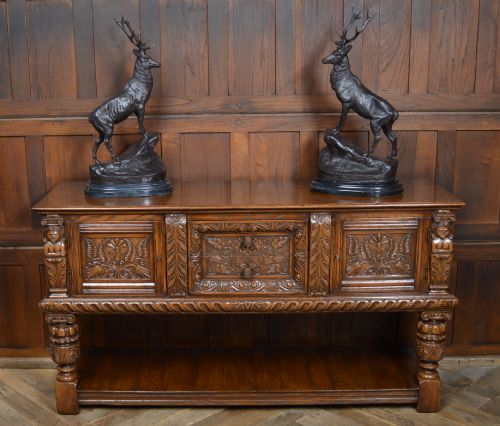
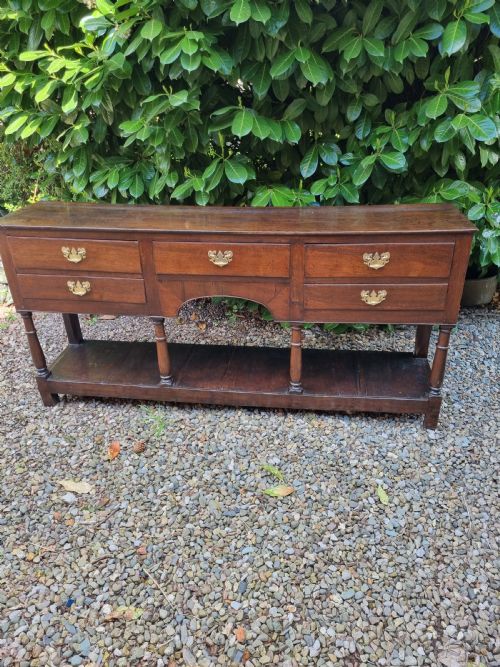
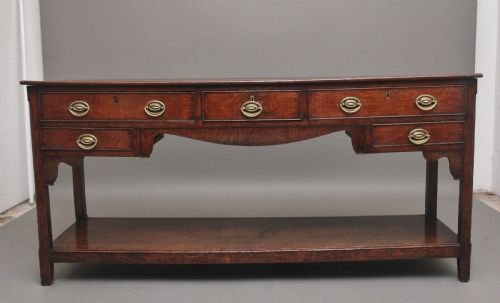
An antique pot board table is fundamentally a heavy-topped serving surface or dresser base underpinned by a low lower shelf known as a pot board. These items appear across Georgian, Victorian, and Edwardian periods, alongside later twentieth-century interpretations.
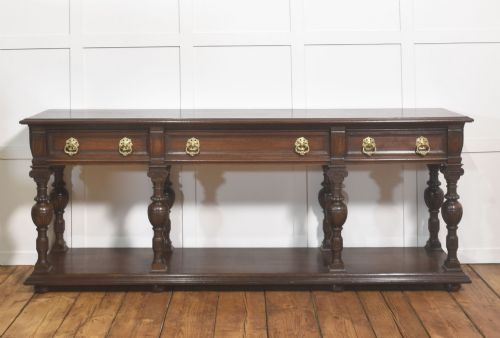
The form spans straightforward Welsh vernacular farmhouse pieces and more formal Jacobean revival styles. Oak forms the dominant timber here, accompanied by pine, painted softwood, and occasional mahogany examples.
Buyers most commonly encounter eighteenth and nineteenth-century oak dresser bases and console tables featuring this characteristic low shelf. The lower platform originally kept kitchen pots and heavy utensils off damp stone floors.
How they were made
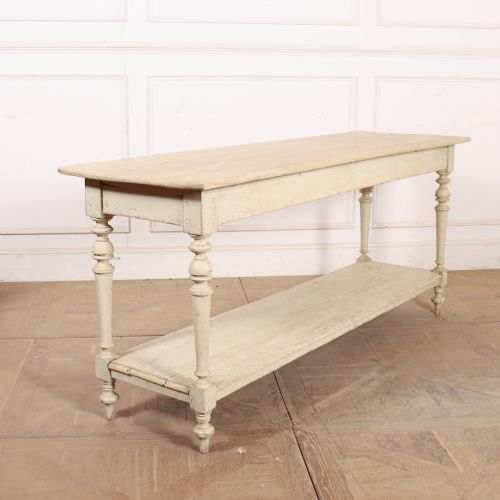
Makers constructed these tables primarily in solid oak and pine, utilising sturdy mortise and tenon joinery to support heavy daily use in kitchens and halls. Iron and brass hardware appears on drawers and cupboards, while painted softwood finishes feature on French country variants.
Surfaces show the hand of the maker through pegged joints, hand-planed timber boards, and structural layouts designed to bear weight without racking. Bleached and polished finishes highlight the natural grain of the hardwood.
Listings feature periods spanning the eighteenth century through to the Edwardian era and the nineteen-twenties, constructed primarily in oak and pine.
What varies in quality
Quality rests in the integrity of the timber, the proportion of the lower pot board relative to the top, and the untouched nature of the surface patina. Earlier eighteenth-century examples exhibit deeper patination and more honest construction wear than later revival pieces.
The relationship between the upper boards and the supporting base dictates visual balance, with finer proportions commanding greater attention from collectors. Original drawer configurations and untouched timber surfaces separate vernacular utility from later reproduction work.
The Antique Pot Board Table Glossary
- Pot board
- The lower shelf fitted between the legs of a dresser base or table, traditionally used for storing pots. This lower tier provides structural rigidity to the overall frame.
- Dresser base
- A low sideboard fitted with drawers and frequently a pot board beneath. These pieces served as working surfaces in historic kitchens.
- Vernacular
- Objects built by local tradesmen using regional traditions rather than high-style metropolitan designs. These items prioritise utility and local timber availability.
- Patina
- The surface sheen and colour acquired by wood through age, light exposure, and handling. This condition marker develops naturally over centuries of use.
Antique Pot Board Table: Frequently Asked Questions
What is a pot board table used for?
These tables function well as serving surfaces in dining spaces or as console tables in hallways. The lower shelf offers open storage for baskets, books, or large ceramics.
Historically, the lower board kept utilitarian kitchen items off damp floors. Modern interiors utilise this low platform for display and storage.
How do I date an antique pot board table?
Dating relies on timber selection, tool marks, construction methods, and hardware styles. Eighteenth-century examples often feature pegged oak frames and hand-planed boards.
Later Victorian and Edwardian revival pieces display more uniform machining and different secondary woods. Comparing joinery details against documented periods clarifies the timeline.
Are these tables made of solid oak?
Solid oak is the predominant timber found in these listings, though pine, painted softwood, and mahogany also appear. Vernacular pieces frequently employ local hardwoods for framing.
Secondary timbers may line drawer interiors or form internal bracing. Examining the grain pattern across joints confirms solid construction.
How do I care for an antique oak surface?
Maintain timber surfaces by applying natural beeswax sparingly and buffing with a soft cloth to preserve the finish. Avoid placing tables near direct heat sources or in damp environments.
Protect the wood from standing water and harsh chemical cleaners. Regular dusting keeps the historic patina stable.