





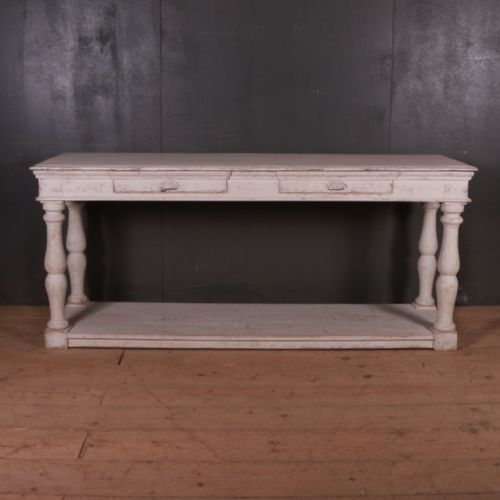
Painted Timber Server Table
A painted timber server table brings honest utility and time-softened charm to a room, offering sturdy surface space rooted in centuries of practical craft.
Painted Timber Server Table
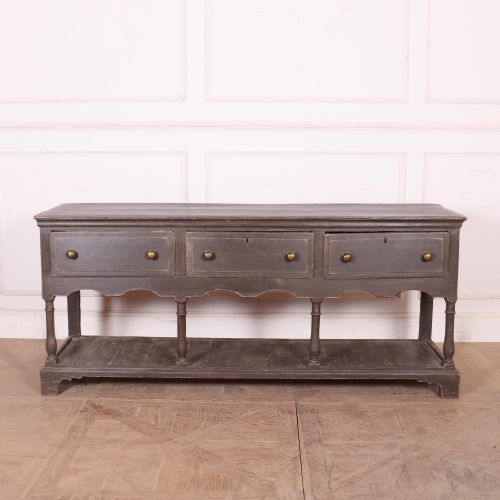
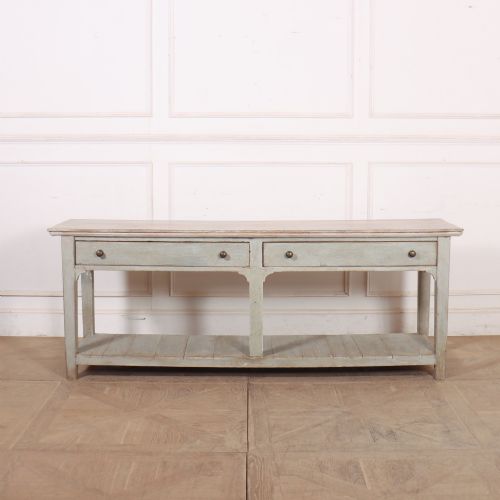
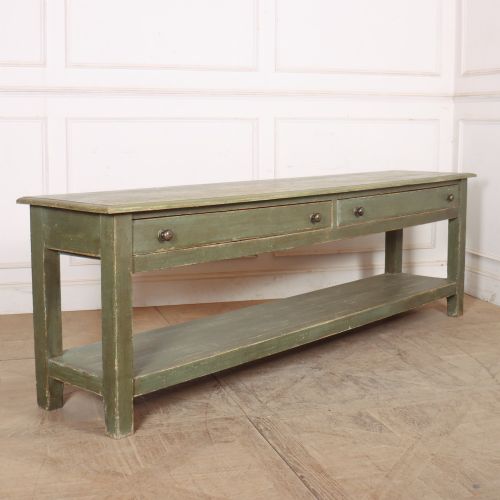
When you search for a painted timber server table, you encounter robust foundational furniture designed for heavy domestic service in kitchens, halls and dining spaces. The pieces listed here span the eighteenth and nineteenth centuries, taking the form of dresser bases, serving tables, console tables, prep tables and drapers tables. These are substantial pieces meant to anchor a room, carrying the history of daily use in their proportions and surfaces.
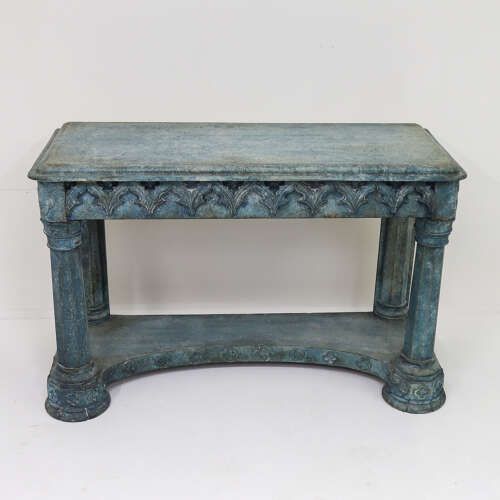
The versions you are most likely to meet on this page lean heavily towards English and French country house traditions, alongside rustic farmhouse and Gothic Revival expressions. You will find potboard dresser bases with open lower shelves, console tables with drawers, and long serving tables designed for preparation and display. Their origins range from English country workshops to French provincial settings, reflecting regional domestic needs across the decades.
Makers built these servers to work hard, whether holding heavy earthenware in a scullery or serving meals in a country house. Over time, many of these functional timbers received coats of paint, creating the layered, weathered patinas that define the category today. Examining the form reveals a direct relationship between utilitarian purpose and the sturdy proportions that collectors prize.
How they were made
Surface treatments define much of the character in these listings, with layered paint applications applied over timber frames. Over decades of use, these painted surfaces accrued wear, chipping and softening that reveal the underlying wood. The combination of structural timber and aged paintwork creates the tactile, organic quality inherent to these antique servers.
Object forms span from nineteenth-century Welsh and English potboard dresser bases to French drapers and console tables.
What varies in quality
The distinction between ordinary utility and superior quality rests in the integrity of the proportions and the honesty of the accumulated patina. A finer server possesses balanced dimensions, whether long and low or upright and imposing, maintaining structural harmony alongside practical utility. The way paint wears naturally over the timber surface also separates a well-lived-in antique from a heavy-handed later restoration.
Details such as integrated potboards, original drawer configurations and regional stylistic touches like Gothic Revival elements elevate certain examples above standard workshop pieces. The weight of the timber, the depth of the potboard shelf and the integration of drawers all contribute to the presence of the individual table. Quality here is measured by how truthfully the piece communicates its age and working history.
The Painted Timber Server Table Glossary
- Potboard
- A low open shelf positioned near the floor between the legs of a dresser base or serving table, traditionally used for storing pots and pans. This practical feature distinguishes many country house servers from standard console tables.
- Dresser Base
- The lower portion of a kitchen or dining room dresser, featuring cupboards or drawers beneath a solid wooden working top. These versatile units served as standalone preparation tables and servers.
- Drapers Table
- A long, utilitarian counter-height table historically used in textile shops for folding cloth, valued today for its exceptional length and narrow proportions. These tables provide generous surface area without dominating room width.
- Console Table
- A table designed to stand against a wall, frequently supported by brackets or legs, often utilised in hallways or formal reception rooms for display. In nineteenth-century examples, these forms often adopted regional revival styles.
- Patina
- The surface sheen and texture developed on timber and paint over decades of handling, cleaning and exposure to light. Collectors value an untouched patina as a true record of an object's age.
Painted Timber Server Table: Frequently Asked Questions
What is a painted timber server table used for?
These versatile tables serve as sideboards in dining rooms, preparation surfaces in kitchens, or display consoles in hallways and living areas. Their sturdy construction and generous tops accommodate heavy daily use while adding architectural presence to a room.
Historically deployed for storing, serving and food preparation, modern interiors utilise them as media units, hallway drops or dining room servers. The addition of drawers and potboards provides practical storage alongside surface display space.
How do I care for antique painted wood furniture?
Protect antique painted surfaces from direct sunlight and extreme humidity fluctuations, which can cause timber to move and paint to flake. Dust gently with a dry, soft cloth and avoid chemical cleaning agents that might strip historic finishes.
Maintain stable indoor climates to preserve both the underlying pine or oak and the upper layers of paint. Gentle handling ensures the accumulated patina remains undisturbed for future generations.
How can I tell the age of a painted server?
Look to the construction methods, tool marks on the timber, and the nature of the paint layers to understand the period of manufacture. Eighteenth and nineteenth-century pieces exhibit hand-cut joinery and timber shrinkage consistent with age.
Examining the wear patterns around handles, edges and potboards reveals how the piece interacted with its environment over centuries. Genuine age shows in the natural integration of paint and wood through continuous handling.
What is the difference between a console and a server?
Console tables are typically lighter in construction and designed to be placed flat against a wall, occasionally secured for stability. Servers and dresser bases are heavier, often incorporating potboards, cupboards or deep drawers for utilitarian storage.
While both act as surface tables in domestic spaces, servers evolved from working kitchen and pantry environments. Consoles frequently carry more decorative stylistic elements, such as the Gothic Revival influences seen on certain nineteenth-century examples.