



Victorian Taxidermy Bird
Victorian taxidermy bird specimens capture natural history through preserved avians arranged inside glass domes, picture frames, and wooden display cases.
Victorian Taxidermy Bird
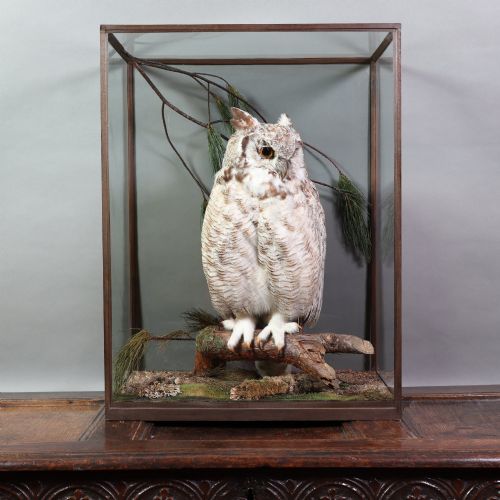
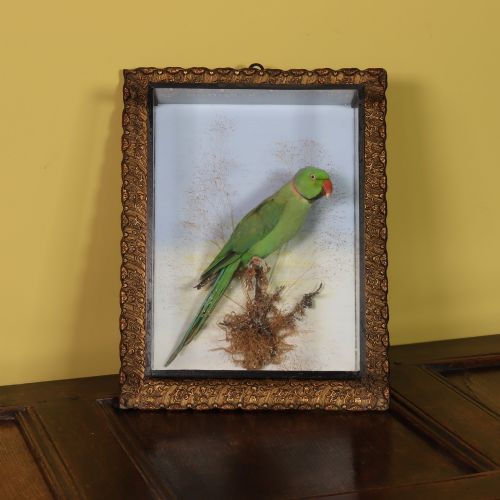
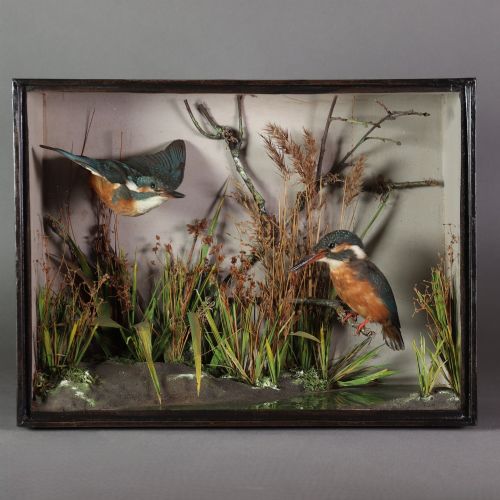
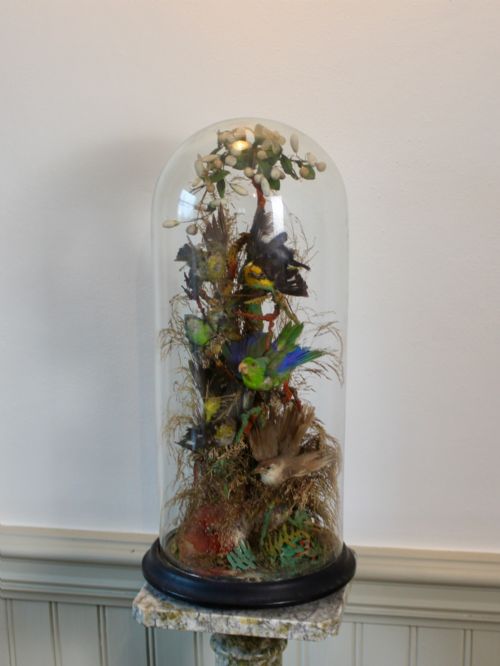
Victorian taxidermy bird pieces encompass preserved specimens arranged in glass domes, oak cases, ebonised wood frames, and dioramas depicting natural settings. These objects emerge from the nineteenth century and extend into the Edwardian era, reflecting a period passion for natural history and domestic display.
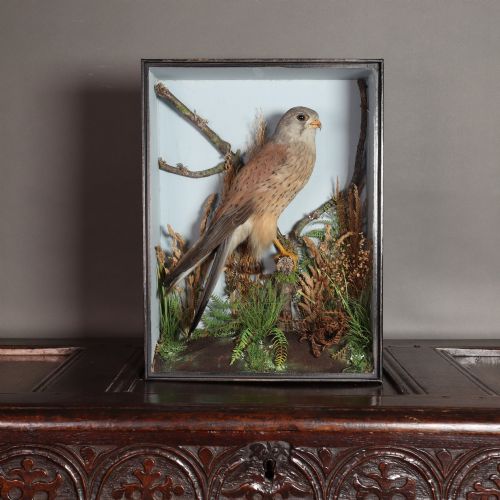
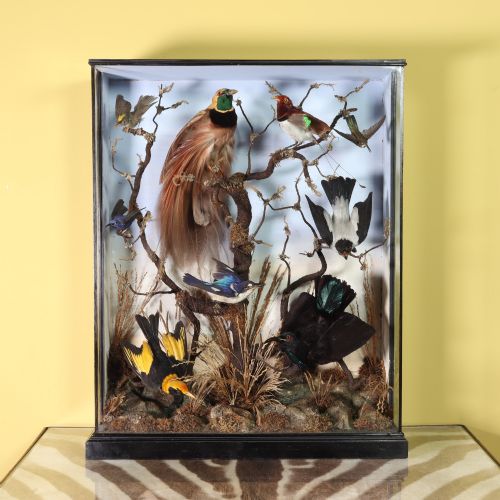
The pieces on this page range from single British birds such as kestrels, kingfishers, and owls to complex compositions of exotic tropical birds from South America, New Guinea, and India. Buyers frequently encounter framed pictures, flat-sided domes, and wall cases containing single specimens or multi-bird dioramas.
Makers and taxidermists from this tradition utilise preserved specimens alongside dried flora, moss, paper, and painted backgrounds to recreate lifelike habitats. These historical arrangements serve as decorative cabinets of curiosity and records of ornithological study from the Victorian age.
Materials and construction methods
Taxidermists constructed these displays using preserved bird specimens mounted on internal wires and supports, positioned amidst naturalistic elements such as moss, grasses, and paper foliage. Makers enclosed the arrangements within glass domes or fitted them into wooden cases made of oak, mahogany, and ebonised wood to protect the delicate feathers from dust.
Specialist workshops arranged complex multi-bird compositions inside large glass domes or glazed cabinets, often incorporating painted backdrops to simulate snow scenes or tropical habitats. The framing involved traditional joinery techniques using wood and glass, secured with original paper tapes and sealing methods typical of nineteenth-century workshop practice.
Several examples capture birds in unexpected theatrical poses, including snow scenes and courtship displays frozen in time under glass.
Distinctions in quality and execution
Quality in these specimens depends upon the anatomical accuracy of the mounting and the natural posture achieved by the taxidermist, separating stiff or clumsy forms from lifelike representations. The complexity and condition of the setting, whether a simple perch or an elaborate multi-bird diorama with preserved flora, dictate the standard of the piece.
The pedigree of the maker significantly influences the standing of an object, with documented works by established taxidermists commanding greater attention than unsigned or anonymous examples. The clarity and originality of the enclosing glass dome or display case, alongside the survival of contemporary trade labels, further determine the integrity of the piece.
J Griffiths of Burford·Rowland Ward Ltd·T. E. Gunn·William Bazeley & Sons·John Hancock·Henry Ward London·A Pollard·James Gardner·W.F. Homer London·Petherick of Taunton
The Victorian Taxidermy Bird Glossary
- Taxidermy
- The art of preparing, stuffing, and mounting the skins of animals for display. This practice reached a peak of popularity during the Victorian period for domestic interior decoration.
- Glass dome
- A blown glass cover placed over a circular wooden base to protect fragile specimens. These covers shield preserved birds from dust and atmospheric moisture.
- Diorama
- A three-dimensional scene depicting wildlife within a recreated natural habitat. These arrangements often incorporate painted backgrounds, moss, and twigs behind glass.
- Ebonised wood
- Timber treated with a dark stain or finish to imitate ebony. This material frequently frames Victorian display cases and domes.
- Fasciculus
- A botanical or biological collection arranged as a bundle or booklet. In taxidermy contexts, this term relates to historical groupings of specimens.
Victorian Taxidermy Bird: Frequently Asked Questions
What is the difference between a dome and a case?
A dome consists of a blown glass bell cover resting on a circular or oval wooden base, allowing a 360-degree view of the specimens. A case is typically a rectangular wooden box with a glazed front and sometimes glazed sides, designed for wall mounting or tabletop display.
Domes frequently house complex centrepiece arrangements with naturalistic grasses, while cases often frame single birds or paired specimens against painted backgrounds.
How can I identify the maker of a piece?
Look for paper trade labels pasted to the underside of wooden bases, inside the back of display cases, or affixed to the interior floor of the dome. These labels often feature the business name, address, and royal warrants or exhibition medals won by the taxidermist.
Absence of a label is common, as many Victorian practitioners did not sign every piece. In such cases, construction style, framing materials, and mounting techniques help attribute the work to a specific region or period.
Were these birds collected ethically?
Victorian collecting practices reflected nineteenth-century scientific and natural history interests, where acquiring specimens for study and display was standard practice. Taxidermists sourced birds through local gamekeepers, expeditions, and international trade without modern conservation restrictions.
Today, these historical artefacts serve as records of ornithological history and Victorian decorative art. They are appreciated as antiques rather than items reflecting current ethical frameworks regarding wildlife.