

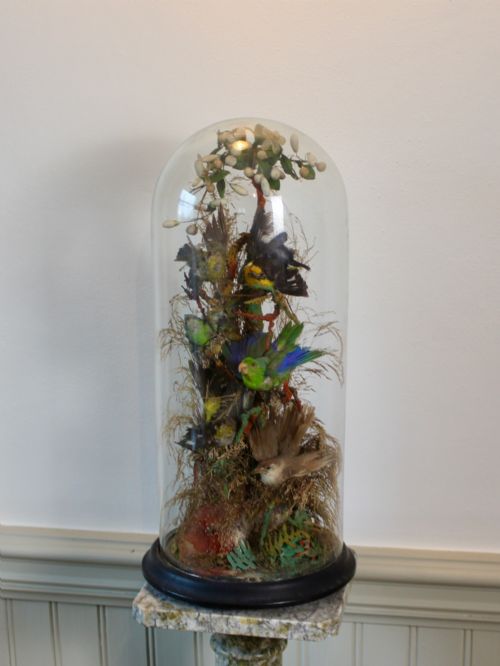


Curiosity Cabinet Bird Display
These curiosity cabinet bird display pieces bring Victorian natural history directly into the home with preserved specimens mounted in glass cases and domes.
Curiosity Cabinet Bird Display
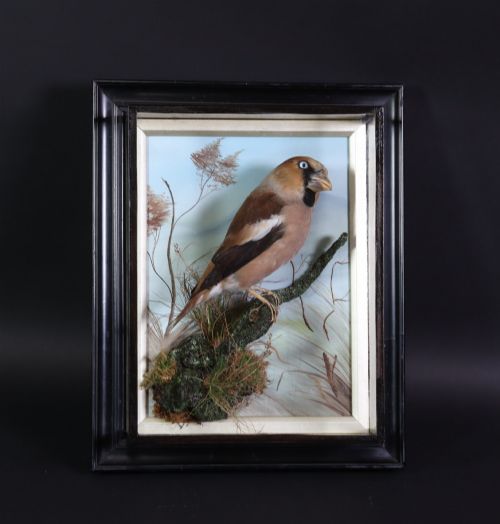
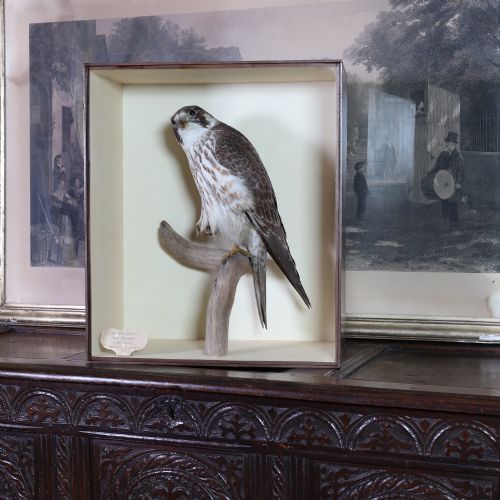
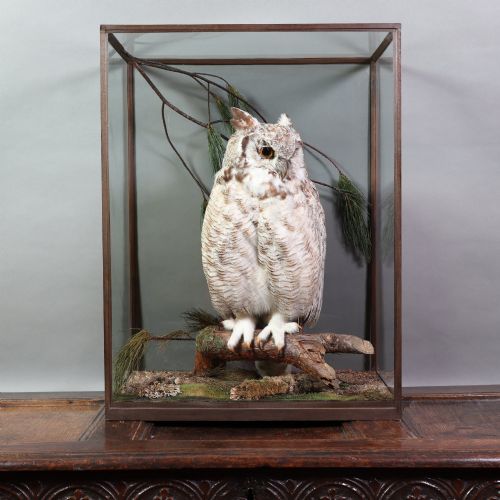
A curiosity cabinet bird display brings Victorian natural history into a room through preserved specimens, ranging from single subjects to complex multi-species compositions. These pieces take the form of glazed wooden cases, flat-sided domes, and tall glass domes designed to protect fragile avian specimens while offering a clear view from all sides.
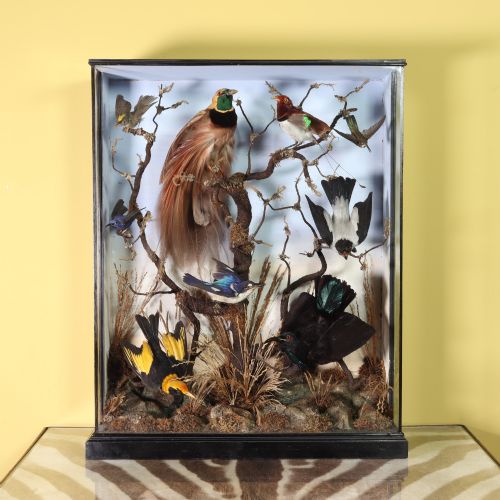
Buyers encountering this selection will most frequently find Victorian taxidermy works dating from the late nineteenth century into the early twentieth century. Common arrangements present single birds such as hawks, owls, and parrots, alongside elaborate pairings and multi-bird groups incorporating exotic plumage from regions such as South America and Australia.
Materials and Construction
The construction of these displays relies heavily on ebonised wood and standard timber frames fitted with glass panels or blown glass domes. Interior settings frequently integrate botanical materials, moss, and flora to recreate natural habitats for the preserved specimens.
Taxidermists utilised specialised mounting and preservation techniques to shape bird skins over anatomical forms, securing postures that appeared lifelike. Cases were sealed tightly to protect the delicate feathers and botanical elements from dust and atmospheric degradation.
Curiosity Cabinet Bird Display Retail Price Guide 2026
Typical asking prices for curiosity cabinet bird display among the pieces listed under this phrase on Sellingantiques today, from the lower quarter to the upper quarter. They describe what is for sale here now, not the wider market.
Snow buntings caught in the act of standing together inside a flat-sided dome prove that Victorian birds appreciated a good view.
Distinguishing Quality
The distinction between standard works and master taxidermy lies in the anatomical accuracy of the bird pose and the botanical arrangement of the interior habitat. Superior pieces display natural feather alignment, convincing facial expressions, and composition that reflects the specific bird behaviour in the wild.
Enclosure quality also dictates the standing of a piece, separating simple pine frames from ebonised timber cases with heavy bevelled glass or blown domes. Master practitioners integrated natural lighting angles and balanced botanical elements to complement the plumage colour.
Bill Cox of Liverpool·Cullingford of Durham·Rowland Ward Ltd·Henry Ward London·A Pollard·James Gardner
The Curiosity Cabinet Bird Display Glossary
- Taxidermy
- The art of preparing, stuffing, and mounting the skins of animals for display. In these pieces, it involves preserving avian specimens with arsenic or chemical agents to prevent decay.
- Dome
- A blown glass cover placed over a circular base to protect taxidermy specimens. Flat-sided versions provide clearer viewing angles without distortion.
- Ebonised wood
- Timber treated with a dark stain or finish to imitate ebony. This dark framing material enhances the bright colours of exotic bird plumage.
- Specimen
- An individual animal preserved for scientific study or display. Avian specimens in these cases include native British birds and imported tropical species.
- Composition
- An artistic arrangement of multiple taxidermy subjects within a single enclosure. Compositions often group species by geographical origin or seasonal pairing.
Curiosity Cabinet Bird Display: Frequently Asked Questions
How do I display a bird dome safely?
Place glass domes and wooden cases away from direct sunlight and strong heat sources to protect delicate feathers and natural pigments from fading over time. Position them on stable, level surfaces where accidental knocks are unlikely to disturb the glass or internal mounts.
Keep the environment dry to prevent moisture from damaging the preserved botanical materials, moss, and paper linings inside the enclosure. Clean the exterior glass gently with a soft cloth, avoiding harsh sprays that might seep into the sealed joints.
What species appear in these displays?
Victorian cabinets and domes contain a wide variety of British, European, and exotic avian species gathered during the nineteenth century. Common British and European subjects include owls, falcons, jays, snow buntings, and hawfinches mounted in individual or paired arrangements.
More ambitious compositions feature tropical specimens imported from New Guinea, South America, and Australia, including birds of paradise and parrots. These mixed displays highlight Victorian fascination with global natural history and exploration.
How can I tell the period of a case?
Dating relies on construction methods, framing styles, and the specific paperwork or maker signatures found on the interior or exterior. Late nineteenth-century pieces often utilise heavy ebonised wood frames and hand-blown glass domes with visible surface irregularities.
Twentieth-century examples frequently feature simpler timber framing and machine-rolled glass panels. The specific taxidermy style and mounting materials also offer clues to the decade of assembly.
Who were the notable taxidermists?
Prominent workshops and practitioners shaped the Victorian taxidermy trade, signing their work with trade labels attached to the base or backing paper. Notable names include Rowland Ward Ltd and James Gardner in London, alongside regional specialists such as Cullingford of Durham and Bill Cox of Liverpool.
Attributed works often reflect the signature mounting styles and interior botanical styling associated with these established nineteenth-century firms.