



Framed Bird Taxidermy Mount
Framed bird taxidermy mount examples bring interior natural history into domestic spaces through preserved specimens housed in glass cases and frames.
Framed Bird Taxidermy Mount
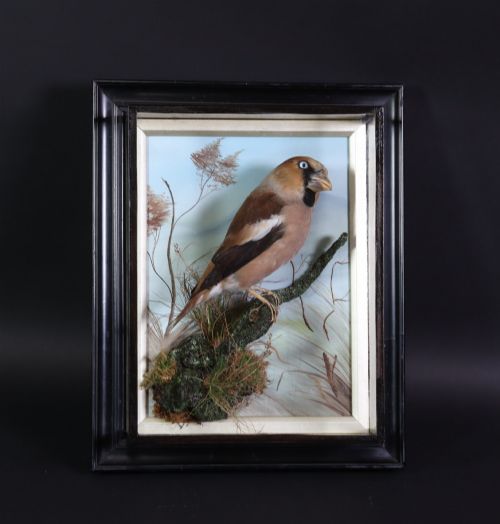
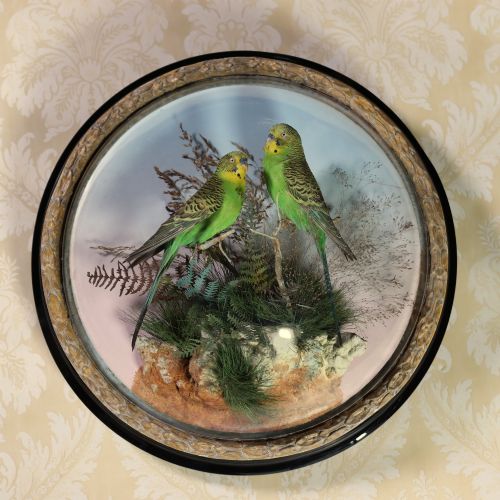
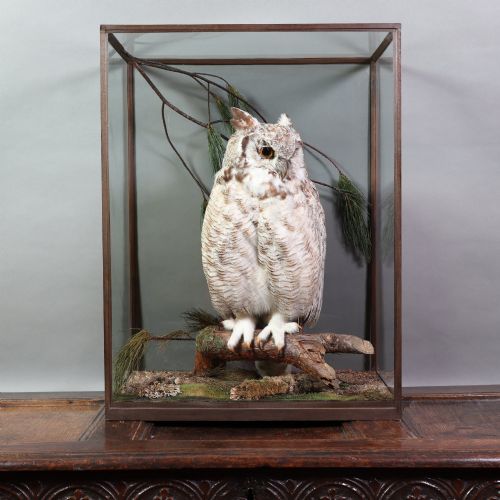
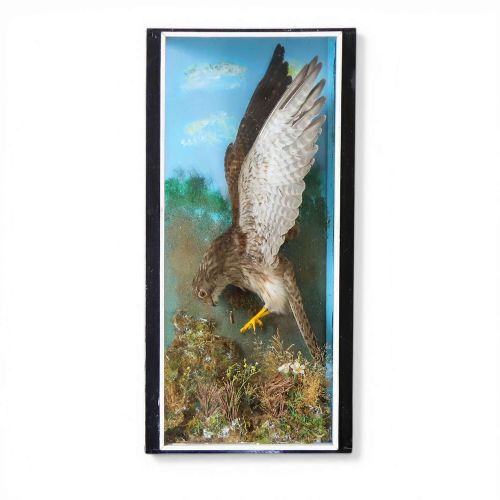
A framed bird taxidermy mount represents avian specimens preserved and arranged within protective wooden and glass enclosures. These pieces take the form of wall domes, picture frame cases, diorama boxes, and curiosity cabinet displays.
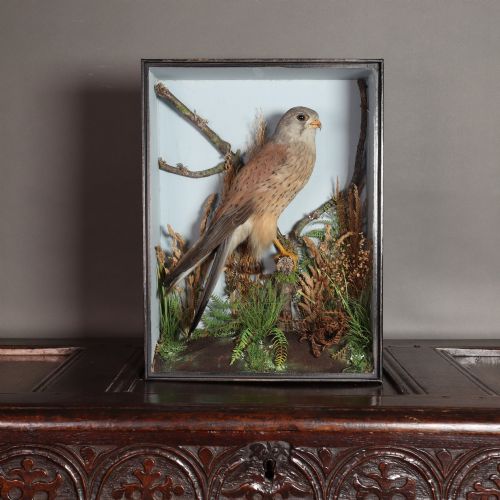
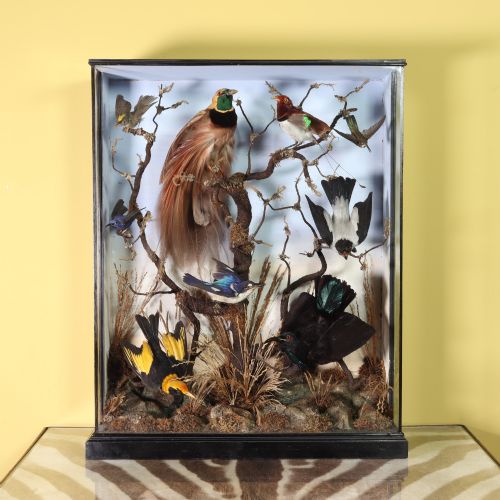
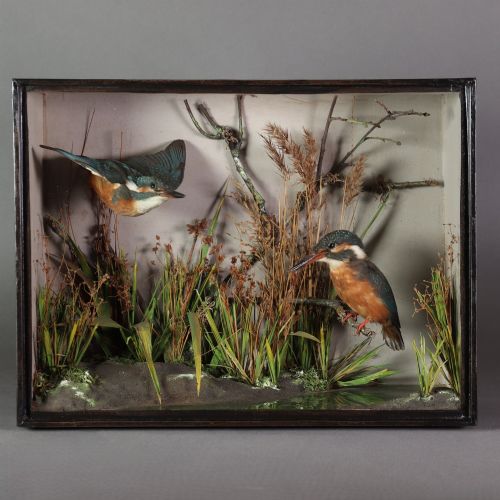
The selections encountered here originate primarily from the Victorian and early 20th-century periods, spanning the decades between 1870 and 1930. Specimens range from single subjects such as hawfinches and kestrels to complex pairs and multi-bird groupings set against painted or botanical backgrounds.
How they were made
Makers constructed the enclosures using timber such as ebonised wood alongside glazed fronts to protect the delicate plumage from dust and atmospheric damage. Paper, plaster, and botanical materials provided realistic internal terrain, creating snow scenes or naturalistic perches for the preserved specimens.
Taxidermists utilised specialised mounting techniques to shape bird skins over artificial bodies, arranging feathers to capture lifelike postures. Displays frequently incorporated painted wooden cases or wall domes to add depth behind the subject.
Framed Bird Taxidermy Mount Retail Price Guide 2026
Typical asking prices for framed bird taxidermy mount among the pieces listed under this phrase on Sellingantiques today, from the lower quarter to the upper quarter. They describe what is for sale here now, not the wider market.
Materials utilised across these listings include glass, wood, feathers, paper, preserved specimens, ebonised wood, botanical materials, and plaster.
What varies in quality
Quality rests upon the naturalism of the pose and the skill of the taxidermist in rendering the anatomical proportions of the bird accurately. Master practitioners achieved a vitality in the posture that lesser practitioners missed.
The construction of the surrounding case also defines the standard, with superior examples featuring ebonised wood frames, clean glass, and detailed internal botanical elements. Original labels and provenance from recognised practitioners distinguish notable specimens.
Bill Cox of Liverpool·P Spicer of Leamington Spa·Rowland Ward Ltd·T E Gunn·William Bazeley Sons
The Framed Bird Taxidermy Mount Glossary
- Taxidermy
- The art of preserving, stuffing, and mounting the skin of animals for display. In avian subjects, this involves recreating the living form using preserved feathers.
- Ebonised wood
- Timber treated with a dark stain or finish to imitate ebony. This material formed the dark, formal frames typical of late 19th-century mounting.
- Diorama
- A three-dimensional scene depicting wildlife in a simulated natural habitat. These settings often included painted backgrounds and preserved botanical materials.
- Wall dome
- A glazed enclosure designed to be mounted directly onto a wall. These circular or oval cases protected fragile specimens while offering a wide viewing angle.
Framed Bird Taxidermy Mount: Frequently Asked Questions
How do I clean a taxidermy case?
External glass requires standard glass cleaner applied to a cloth rather than the wood to prevent damage. Internal maintenance should be left undisturbed to protect the fragile feathers and mounting materials.
Dust accumulates gently on the outer frame over time. A soft dry cloth keeps the ebonised wood and glazing clear without risking the sealed interior.
Where should I hang these displays?
Wall-mounted frames and domes require positions away from direct sunlight and damp conditions. Ultraviolet light fades vibrant plumage and moisture degrades organic materials inside the case.
Stable indoor environments preserve the paper, wood, and feathers effectively. Placing displays at eye level allows the detail of the diorama work to be appreciated.
What is a picture frame case?
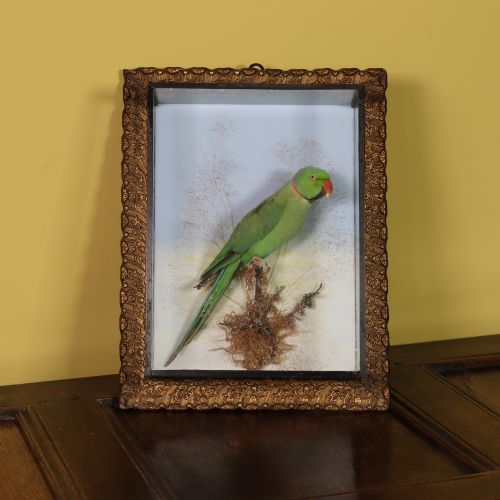
A picture frame case is a shallow wooden enclosure fitted with glass that hangs on a wall like a painting. It allows three-dimensional taxidermy mounts to be displayed flat against interior surfaces.
This format gained popularity in the late 19th century for domestic interiors. It protected specimens like the hawfinch and parakeet while occupying minimal floor space.
How do I identify a Victorian specimen?
Victorian examples frequently utilise ebonised wood frames, hand-painted backdrops, and traditional paper linings. The mounting styles reflect the natural history interests of the late 19th century.
Maker labels pasted to the reverse or interior provide definitive attribution. The materials and construction methods correspond directly to the decorative standards of the period.