



Natural History Cased Specimen
A natural history cased specimen brings the preserved beauty of the natural world indoors through Victorian and early twentieth century taxidermy, entomology, and shell displays.
Natural History Cased Specimen
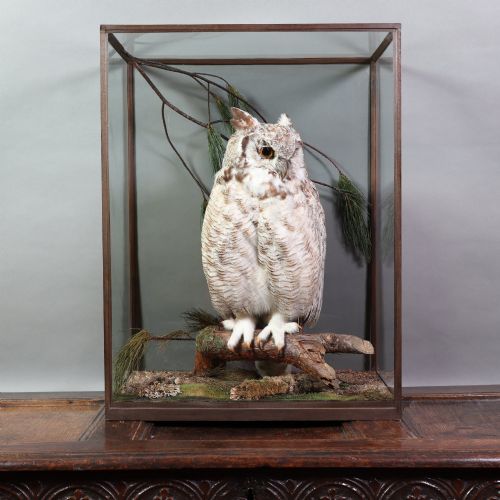
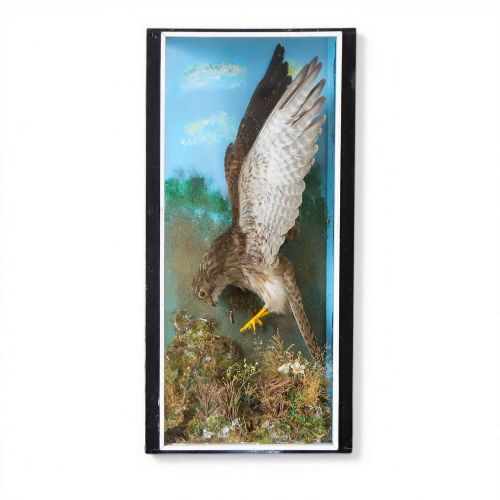
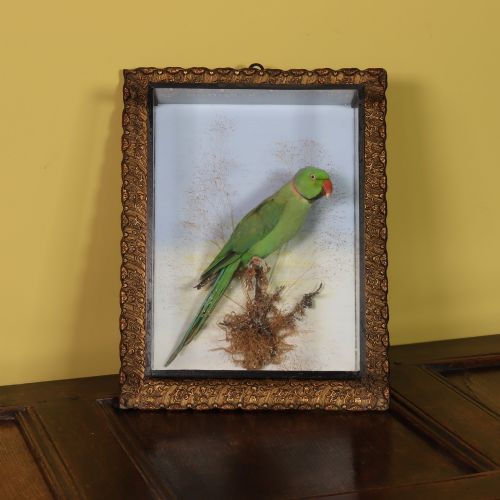
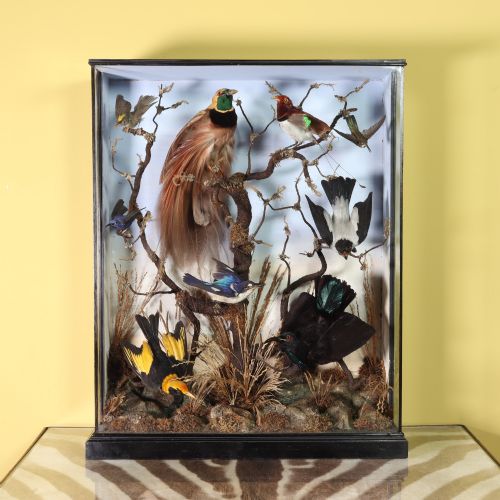
A natural history cased specimen represents the Victorian and early twentieth century fascination with domestic natural philosophy and interior display. These pieces range from solitary birds and fish to complex dioramas featuring multiple species arranged in painted or wood-framed glass cases.
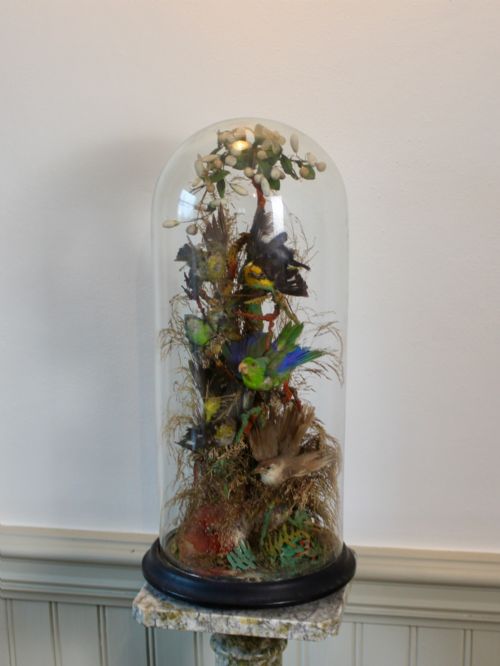
You will most frequently encounter Victorian and Edwardian examples on this page, spanning from the late nineteenth century into the 1930s and 1940s. Forms vary from glazed wooden display cases and picture frames to glass domes containing birds, mammals, fish, and insects.
Makers and taxidermists constructed these pieces to mimic natural habitats using preserved specimens, moss, feathers, and paper backgrounds. They serve as enduring curiosities that reflect period tastes for natural science and taxidermy art.
Materials and construction
Taxidermists utilised wood, glass, and paper to construct protective enclosures for fragile specimens. Wooden frames, mahogany cabinets, and oak cases house the preserved animals, while glass panes or domes shield the interior from dust and damage.
Makers arranged taxidermy specimens alongside natural elements such as feathers, moss, and preserved plants to recreate authentic habitats. Painted paper backgrounds often provided atmospheric depth behind birds and mammals.
Specialist firms mounted fish, birds, and mammals using internal armatures and taxidermy techniques before sealing them within airtight display cases.
Listings span from the Victorian era through the Edwardian period and into the 1940s, featuring glass, wood, feathers, and taxidermy specimens.
Judging quality and provenance
Quality rests heavily on the skill of the taxidermist and the preservation of the specimen's form and plumage. Works by prominent practitioners demonstrate superior anatomical accuracy and more lifelike compositions than anonymous provincial pieces.
The integrity of the original case, including undisturbed glass and well-maintained wood or painted surfaces, elevates a piece. Intricate dioramas with multiple balanced specimens command greater interest than single, plain mounts.
Documented provenance linking a case to a known workshop or named taxidermist provides a distinct measure of distinction. The complexity of the habitat simulation also separates standard examples from masterworks.
J Griffiths of Burford·Rowland Ward Ltd·William Bazeley And Sons·J Cooper And Sons·James Gardner·W F Homer·J Dobson
The Natural History Cased Specimen Glossary
- Taxidermy
- The art of preserving, stuffing, and mounting the skin of animals for display. It forms the core practice behind the specimens found in these cases.
- Diorama
- A three-dimensional scene depicting animals in a simulated natural habitat. These settings often include painted backgrounds and preserved foliage.
- Entomology
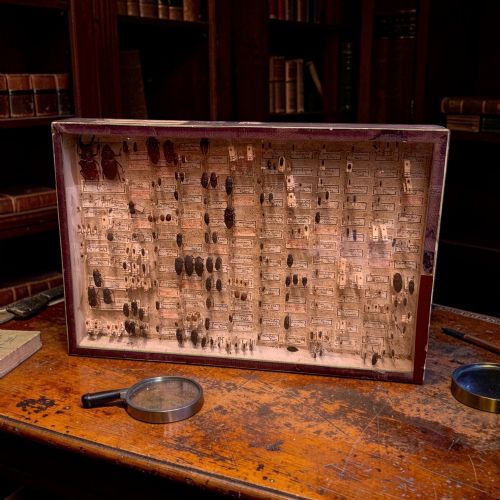
- The branch of zoology concerned with insects. Entomology cases display preserved butterflies, beetles, and other specimens in geometric arrangements.
- Dome
- A rounded glass cover placed over a base to protect a taxidermy arrangement. Domes offer a three-hundred-and-sixty-degree view of the preserved specimens.
- Provenance
- The chronological history of ownership and origin for an antique. Attributed provenance often connects a piece to a specific Victorian taxidermy firm.
Natural History Cased Specimen: Frequently Asked Questions
Were these pieces made as scientific specimens?
Most pieces on this page were created for domestic display in Victorian and Edwardian homes rather than strict scientific study. They served as decorative curiosities and expressions of natural history interests.
Some examples reflect the Victorian hobby of collecting and displaying British and exotic birds, fish, and insects within parlours and studies.
How do I identify the period of a case?
Examine the construction of the wooden frame, the type of glass, and any internal paper labels. Victorian cases often feature heavy mahogany or oak framing with hand-written identification labels.
Edwardian and later twentieth-century examples frequently adopt simpler painted cases and cleaner lines, reflecting shifting interior design trends.
What animals are most common in these displays?
Birds represent the most frequently encountered subjects, ranging from single jays and kestrels to complex compositions of colourful exotic species. Fish such as pike, trout, and tench also appear in dedicated curved-glass water cases.
Mammals like badgers and otters occur less frequently, usually presented in detailed floor or wall-hanging dioramas.