
Victorian Tapestry Chair
A victorian tapestry chair brings needlework and carved timber together into a functional seat spanning the nineteenth century.
Victorian Tapestry Chair
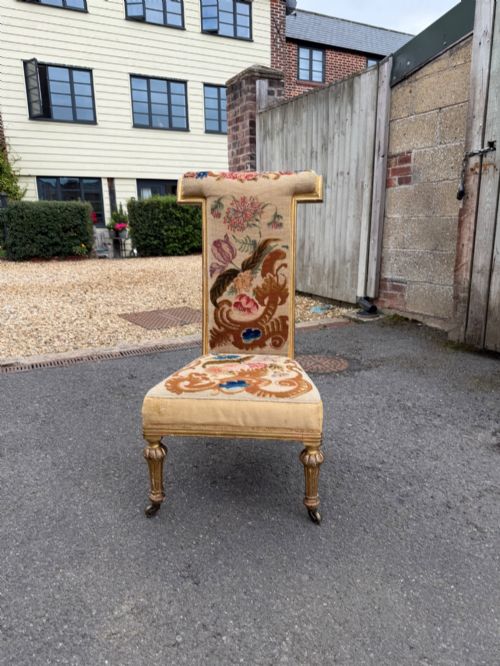
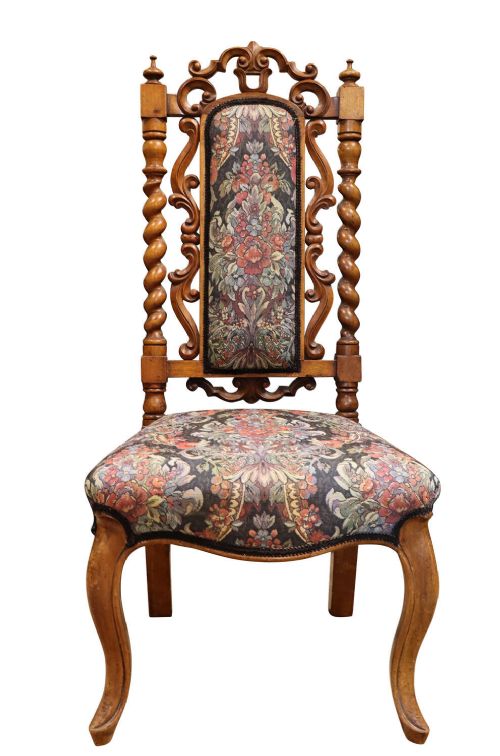
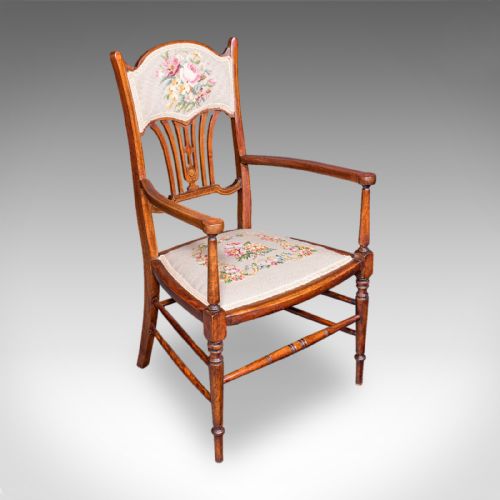
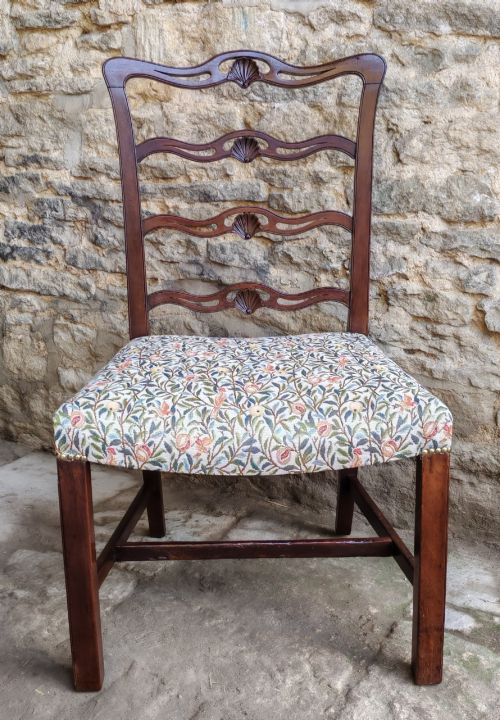
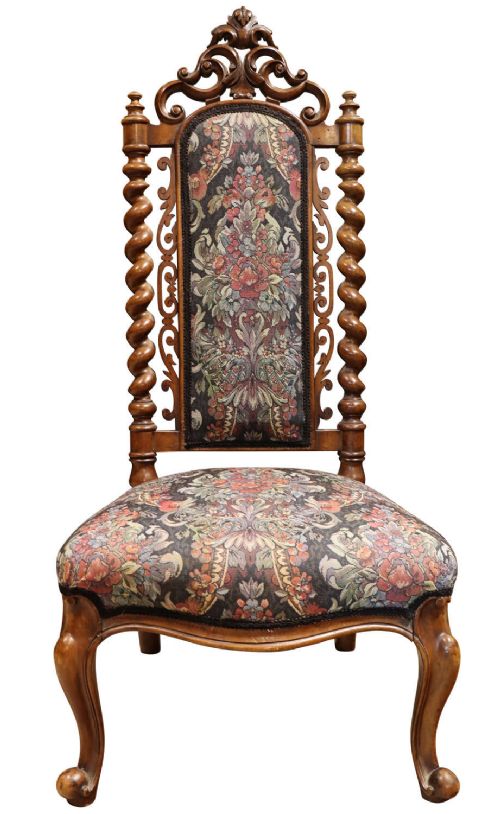
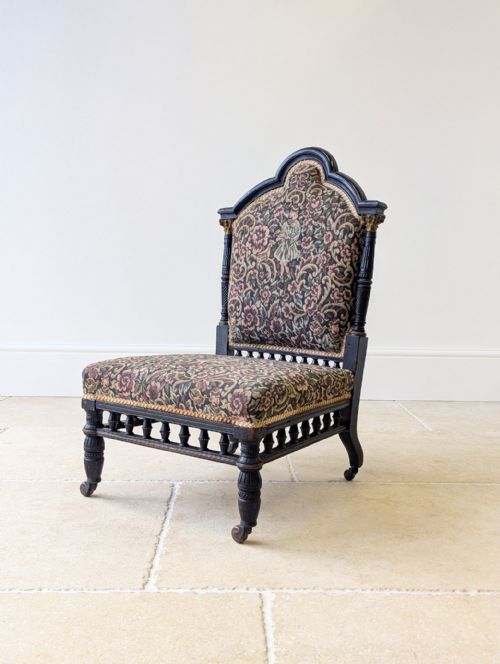
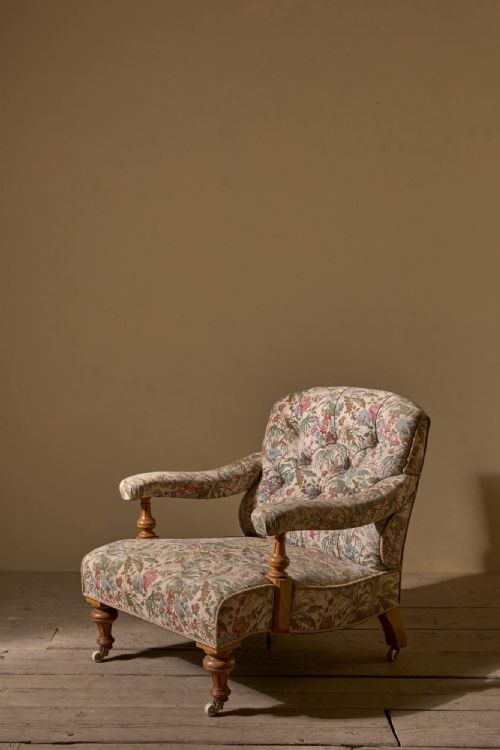
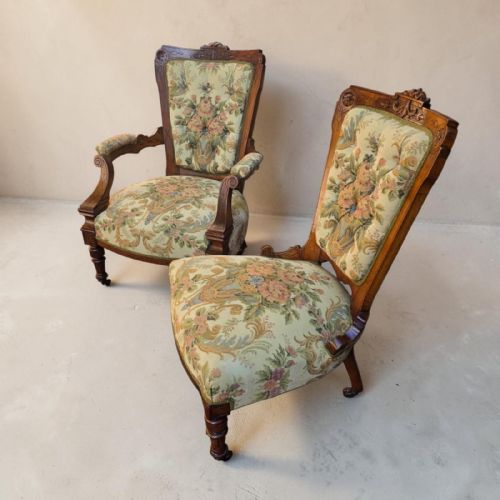
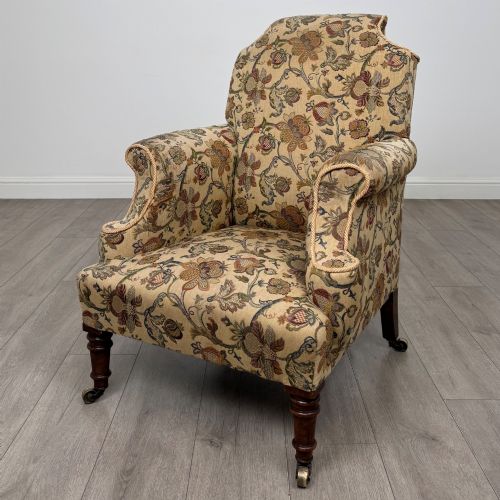
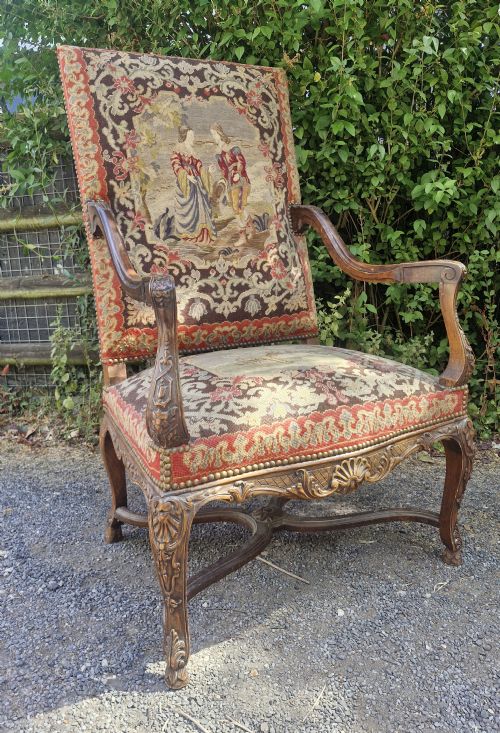
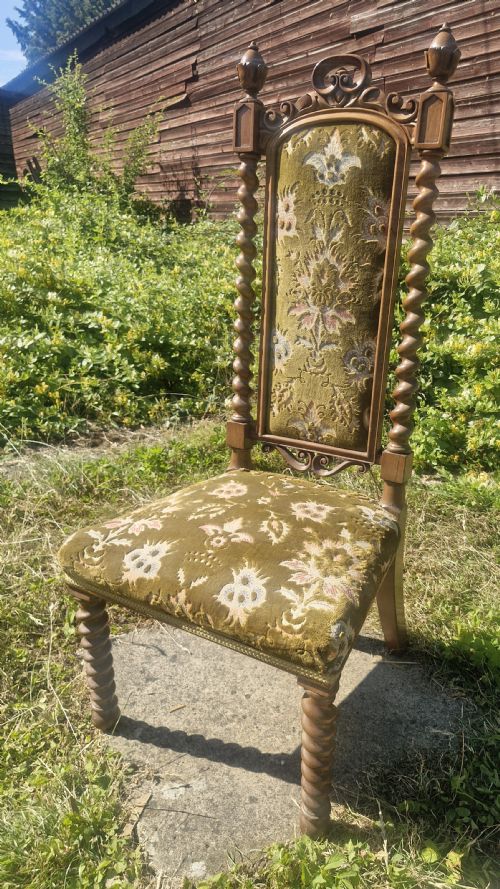
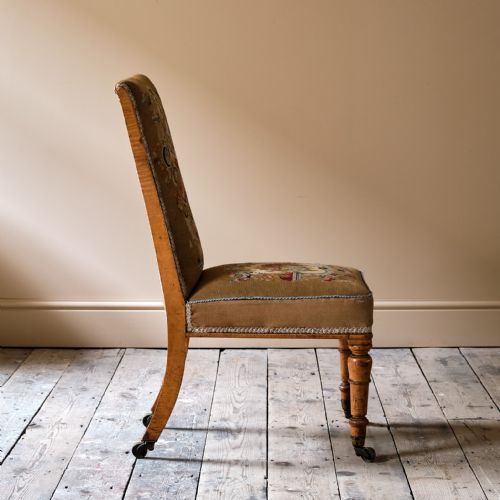
A victorian tapestry chair appears across various domestic forms, including nursing chairs, salon chairs, armchairs, and prie-dieu seats. These pieces originate predominantly from the nineteenth century, reflecting the tastes of the Victorian era.
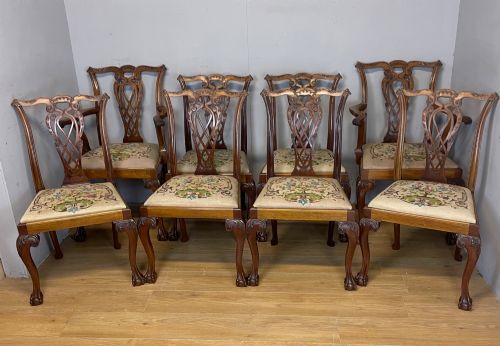
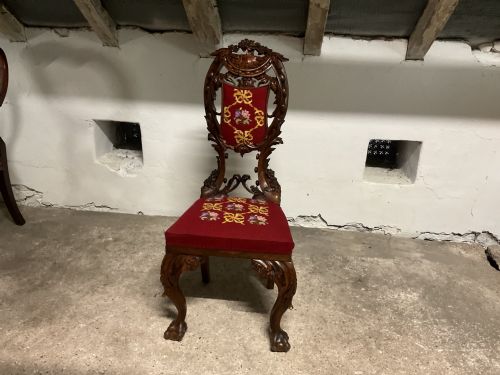
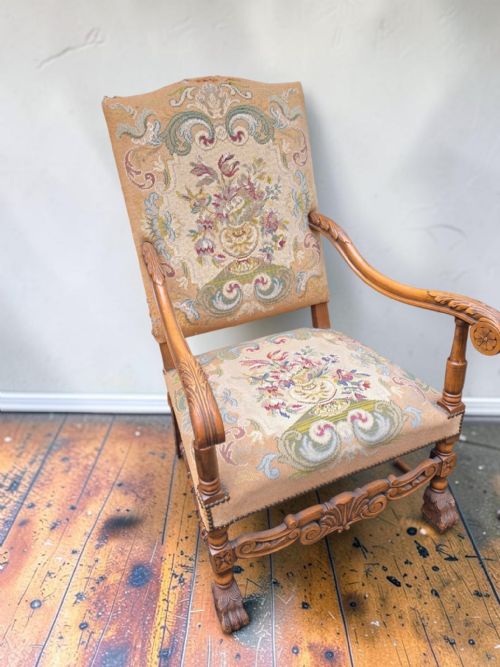
Makers utilised walnut, rosewood, and mahogany for the timber frames, often pairing them with needlepoint, petit point, or gros point covers. The examples span simple side chairs to elaborate open armchairs.
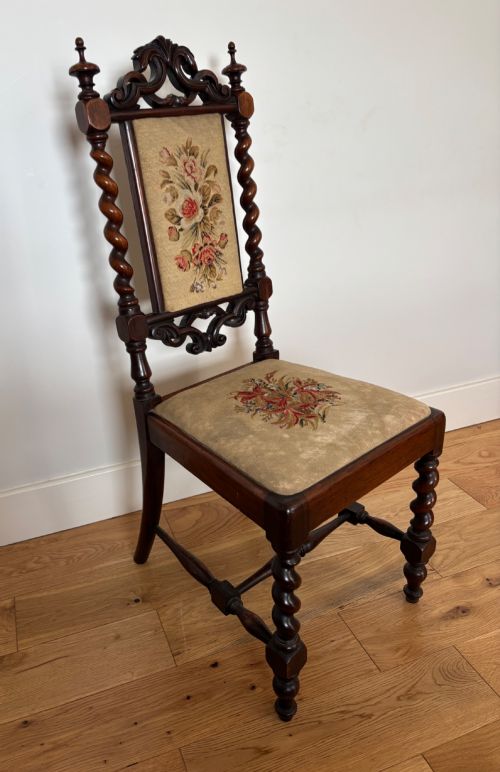
The selection includes revival styles such as Gothic, Chippendale, and Rococo alongside standard Victorian production. Each piece demonstrates the integration of textile work into everyday seating.
Materials and Construction
Frames rely on dense hardwoods like walnut, mahogany, and rosewood, shaped through carving, turning, and joinery. Walnut and rosewood dominate the finer salon and nursing chairs.
Upholstery consists of handworked wool tapestries, needlepoint, and textile fabrics stretched over padded foundations. These covers frequently feature floral or armorial motifs executed in woolwork.
Victorian Tapestry Chair Retail Price Guide 2026
Typical asking prices for victorian tapestry chair among the pieces listed under this phrase on Sellingantiques today, from the lower quarter to the upper quarter. They describe what is for sale here now, not the wider market.
Several miniature chairs scaled for children provide a charming domestic contrast to full-sized parlour seating.
Craftsmanship and Preservation
The distinction between tiers rests on the crispness of the timber carving and the complexity of the wood frame. Superior examples combine robust walnut or rosewood structures with deeply carved ornament.
The integrity and survival of the original handworked tapestry or needlepoint cover dictate the standing of the piece. Intricate petit point work and preserved wool surfaces elevate the textile component.
Howard and Sons·Warings
The Victorian Tapestry Chair Glossary
- Prie Dieu
- A low devotional chair featuring a high back designed for kneeling or seated prayer during the Victorian period.
- Nursing Chair
- A low-seated armchair constructed to allow comfortable infant feeding or sewing in domestic chambers.
- Petit Point
- A fine needlepoint stitch executed on single-mesh canvas, permitting detailed pictorial tapestry designs.
- Gros Point
- A coarse needlepoint stitch executed on canvas, utilised for durable and bold upholstery patterns.
- Slipper Chair
- An upholstered low-slung bedroom chair originally intended for ladies putting on footwear.
Victorian Tapestry Chair: Frequently Asked Questions
What is a victorian tapestry chair?
A victorian tapestry chair is a nineteenth-century seat featuring a timber frame upholstered with handworked wool needlepoint or tapestry.
These pieces encompass forms such as nursing chairs, armchairs, and side chairs constructed from walnut, mahogany, or rosewood.
How do I identify a prie dieu chair?
A prie dieu chair is distinguished by its particularly tall, narrow back and low seat designed for devotional use.
They frequently feature rosewood or walnut frames paired with original woolwork tapestry covers.
Are the tapestry covers original?
Many pieces retain their handworked needlepoint, petit point, or gros point covers dating from the nineteenth century.
Collectors look for signs of period woolwork and secure attachment to the timber frame.
Which woods were used for frames?
Cabinet makers utilised walnut, rosewood, and mahogany for fine salon and parlour seating throughout the Victorian era.
Oak and beech also appear on certain regional, Gothic revival, or hall chairs.