
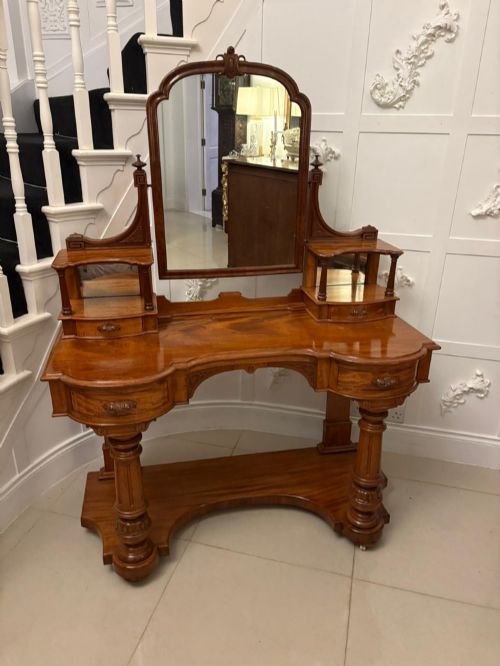
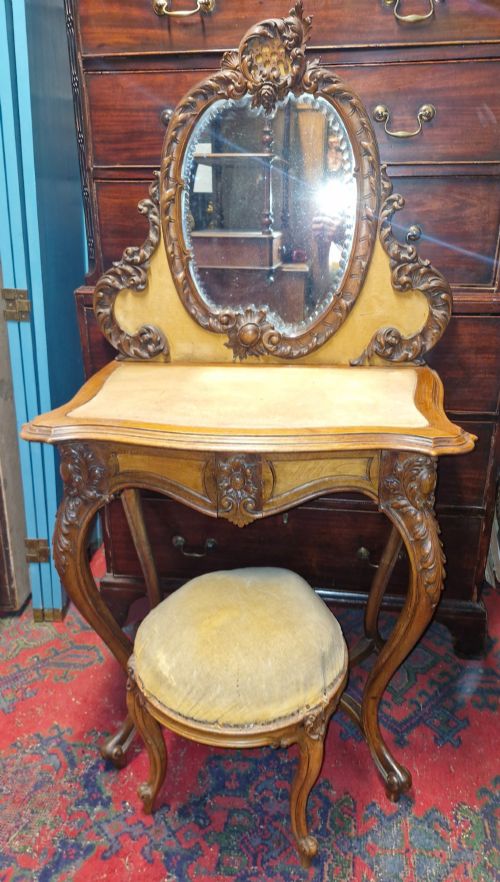
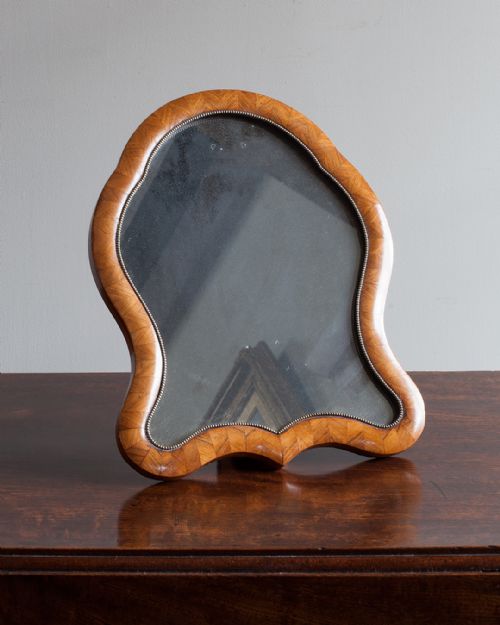
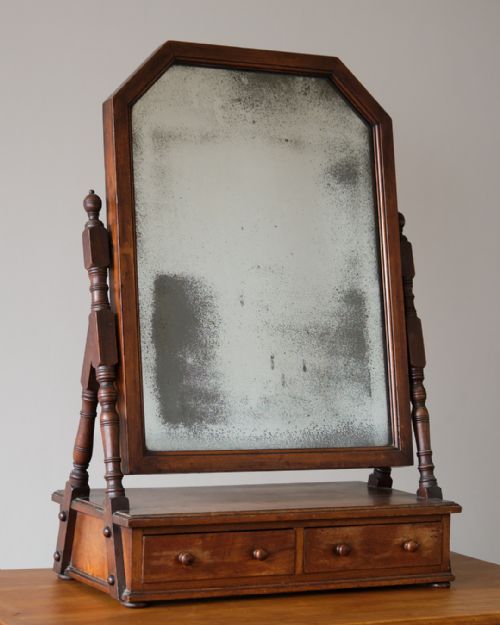

Victorian Table Toilet Mirror
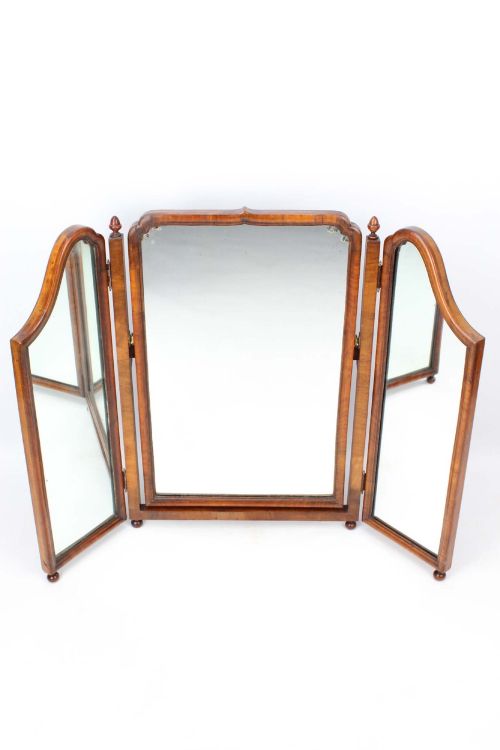
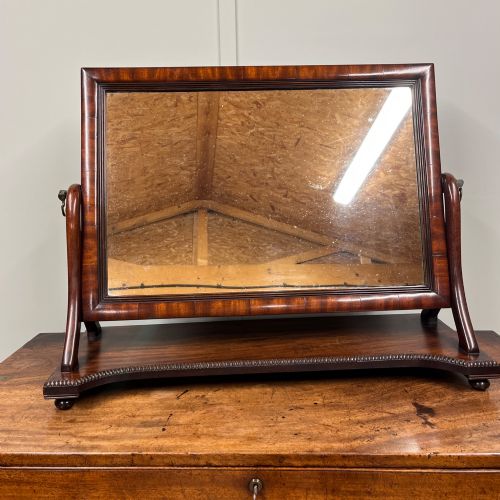
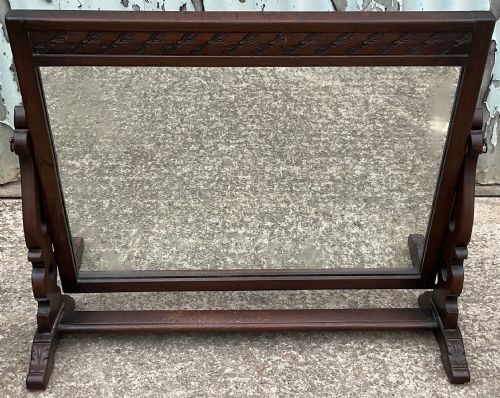
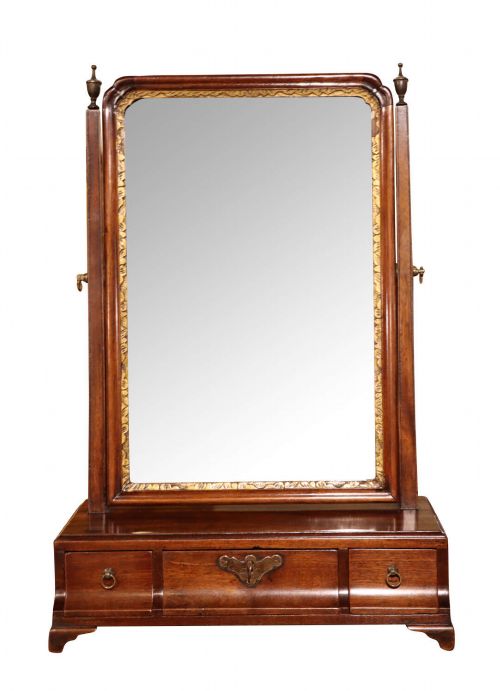
A victorian table toilet mirror sits on a chest or dressing table to tilt your reflection while holding small trinkets in its base.
Victorian Table Toilet Mirror
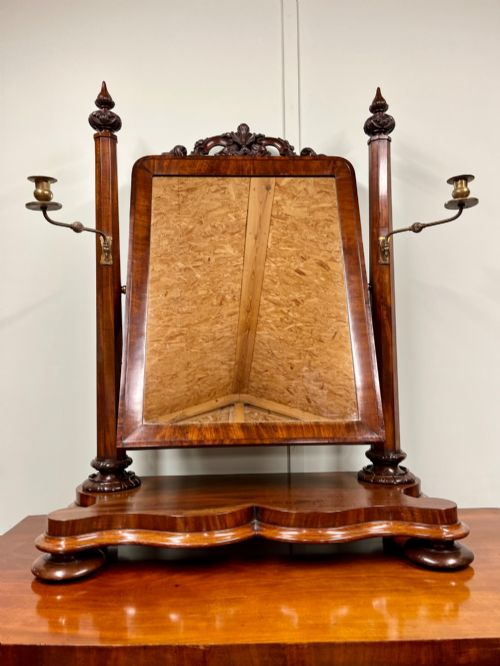
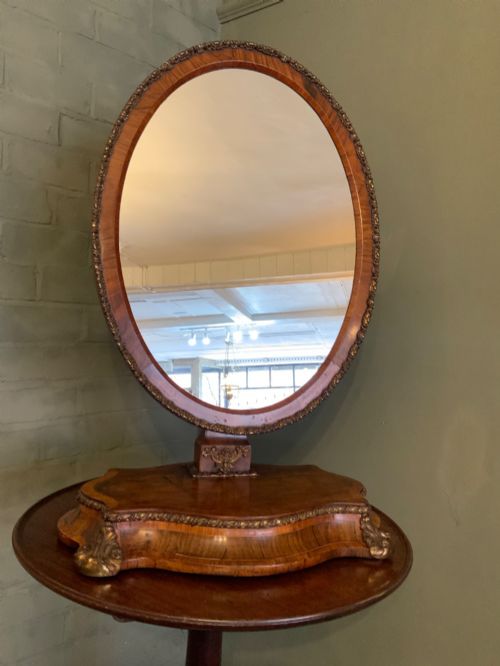
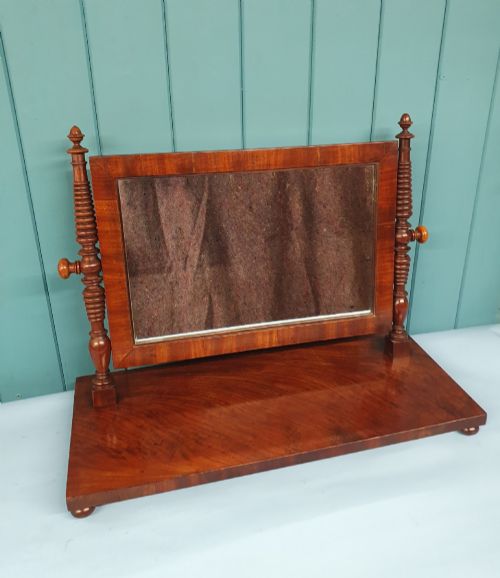
When you search for a victorian table toilet mirror, you encounter small desk and dresser glass frames designed for personal grooming. These items appear primarily in mahogany, walnut, and oak, dating chiefly from the nineteenth century.
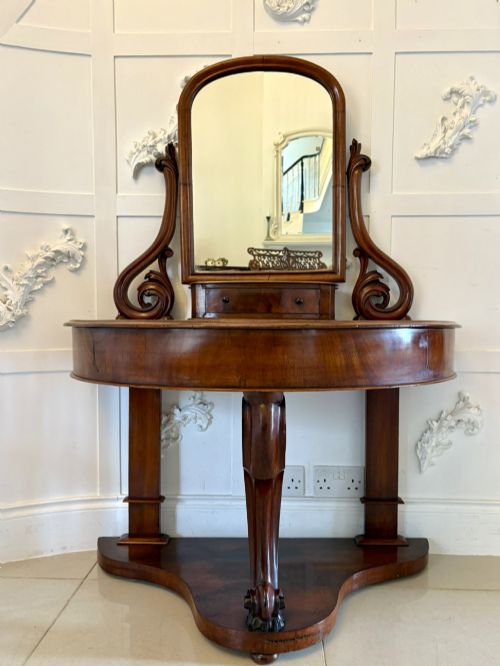
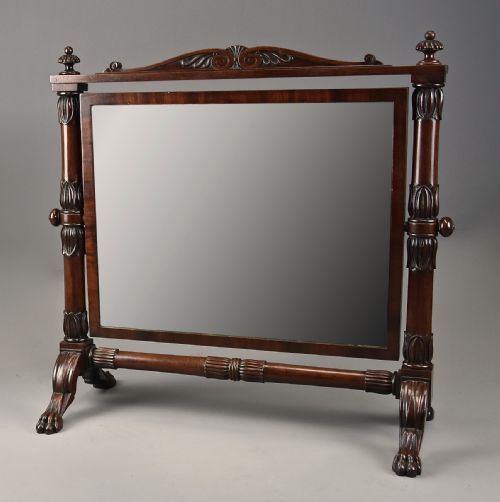
The format ranges from simple swing mirrors on serpentine boxes to complex swivel stands fitted with drawers and bureau compartments. Most examples stand upon a supportive wooden plinth or miniature chest that anchors the pivoting glass frame.
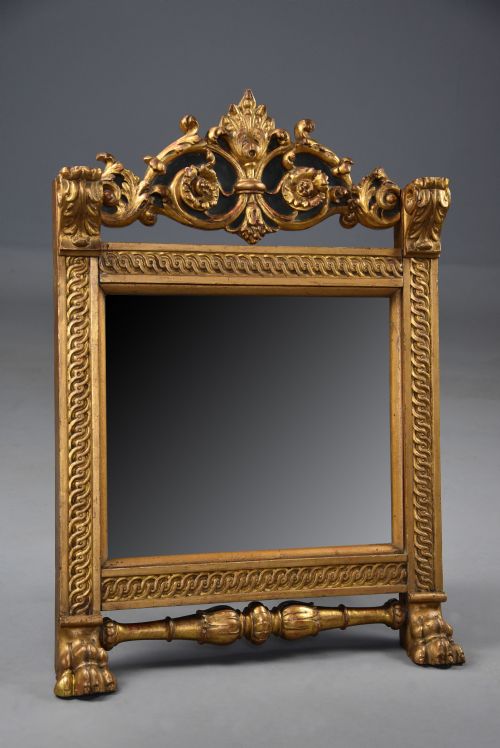
Alongside standard domestic toilet mirrors, you find specialised shaving stands and larger architectural table mirrors influenced by Regency, Rococo Revival, and Edwardian design. These objects served bedrooms and dressing rooms across Britain during the Victorian era and beyond.
How they were made
Cabinetmakers constructed the frames and stands using dense timbers such as mahogany, walnut, and kingwood, often applying flame grain veneers or hand-carved ornamentation. Brass pivots, hinges, and candle sconces allowed the glass to tilt while adding functional metalwork to the wooden architecture.
Smaller tabletop elements frequently integrated miniature drawers assembled with traditional dovetail joints to store jewellery and personal items. Surface finishes relied on polished french polish or paintwork, ranging from plain timber grains to ebonised chinoiserie decoration.
Some gentlemen's shaving stands include hidden compartments for razors and soap.
What varies in quality
The distinction between standard examples and superior pieces rests on timber selection and the crispness of carved details. Rich flame mahogany or figured walnut veneers paired with well-proportioned drawer boxes elevate an ordinary mirror into a refined furnishing.
Engineering of the swivel mechanism also marks the grade of construction. Robust brass side screws that hold the glass firmly at any angle without slipping demonstrate superior workshop practice compared to loose or replaced pivots.
Heal And Sons·Gillows
The Victorian Table Toilet Mirror Glossary
- Swing mirror
- A glass plate held within a frame that pivots between two upright supports. This allows the user to adjust the angle of reflection.
- Toilet mirror
- A small mirror designed to sit on a table or dressing chest. Historically used for personal ablutions and hair arrangement.
- Cheval mirror
- A full-length freestanding floor glass, though the term occasionally describes large adjustable table versions. These incorporate sturdy side frames resting on feet.
- Ormolu
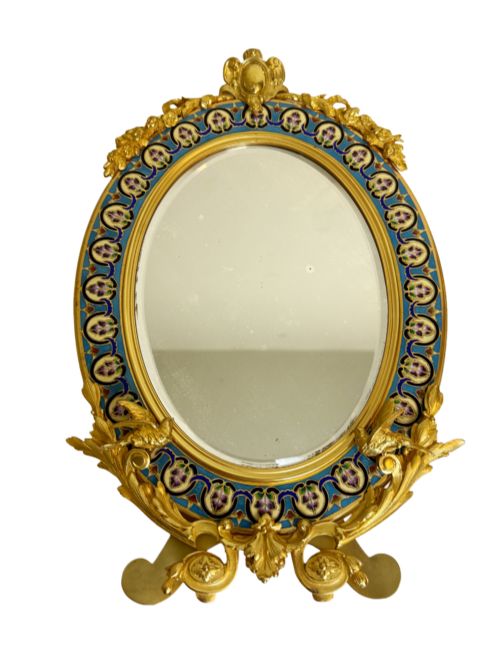
- Gilt bronze ornamentation applied to furniture and mirror frames. It provides metallic contrast against dark woods like mahogany and walnut.
Victorian Table Toilet Mirror: Frequently Asked Questions
Where should I place my mirror?
These mirrors suit dressing tables, chest tops, or sideboards where they provide a functional surface for daily grooming. Ensure the furniture underneath is deep enough to support the weight and footprint of the stand.
Keep them away from direct sunlight to protect wooden veneers and historical mirror glass from fading or silver degradation.
How do I adjust a loose swing mirror?
Most pivoting frames rely on threaded brass screw caps or tension nuts set into the upright arms. Tightening these fittings gently restores resistance so the glass stays in position.
Avoid over-tightening, as older wooden threads and brass components can strip if forced beyond their natural limit.
Are the mirror plates original?
Many nineteenth-century mirrors retain their original mercury or early silvered glass, which often displays soft grey specking and foxing. Replacement glass appears brighter and lacks this historical patina.
Examine the edges and back of the glass to assess whether the plate has been replaced during the lifetime of the piece.
What is the difference between a dressing mirror and a toilet mirror?
In period terminology, toilet mirrors typically refer to smaller tabletop pieces with or without drawers used for personal care. Dressing mirrors often imply larger formats associated with full dressing tables or floor-standing cheval designs.
In modern usage, the terms frequently overlap to describe any adjustable tabletop glass from the era.