


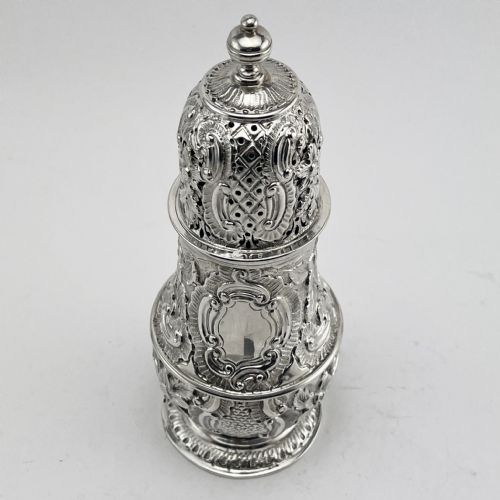


Victorian Sugar Sifter
A victorian sugar sifter brings the weight of nineteenth-century dining to the table, taking the form of cast casters, pierced spoons, and fitted cased sets.
Victorian Sugar Sifter
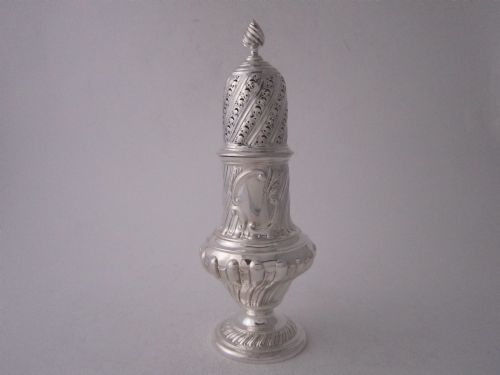
A victorian sugar sifter encompasses both individual spoons with pierced bowls and upright casters designed to sprinkle loose sugar over fruit or desserts. These items emerge from the nineteenth century, spanning decades from the eighteen-fifties through to nineteen-hundred.
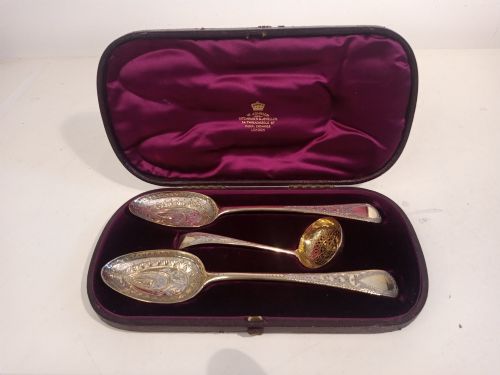
The selection on this page splits principally between handheld sifter spoons and taller sugar casters or shakers. Many appear alongside matching sugar bowls or within fitted presentation cases lined with velvet and silk.
Materials and technique
Silversmiths shaped these pieces predominantly from sterling silver, occasionally applying gold gilt finishes or utilising silver plate and brass. Workshops employed techniques such as piercing, casting, and repoussé to form intricate patterns like grape vines, cornucopias, and rococo scrolls.
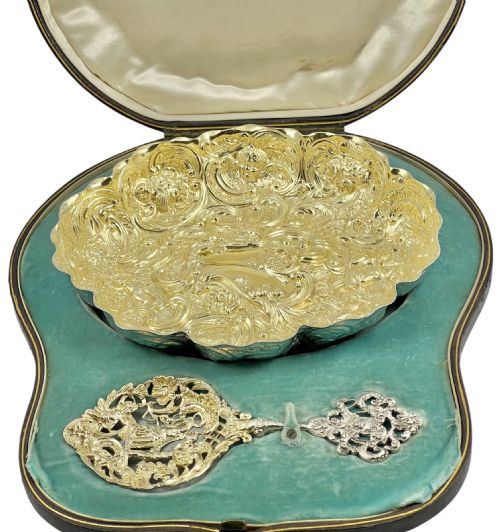
Cased sets integrate glass elements, such as cranberry glass bowls, alongside metal spoons fitted with specialised pierced heads. Import hallmarks and city marks stamped into the silver record the precise origins of manufacture.
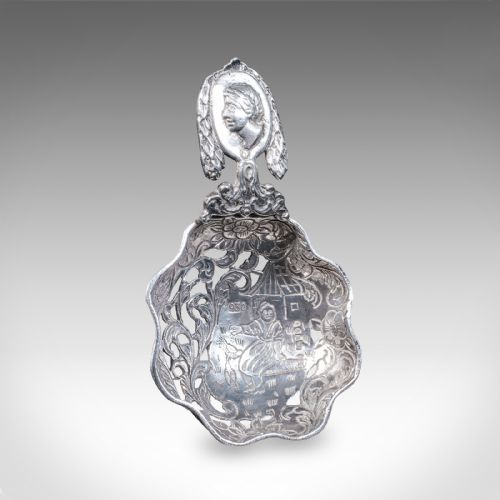
Keep an eye out for handles shaped like Diana the Huntress or figural terminals depicting tiny grapes.
Judgments of quality
Quality rests upon the crispness of the casting and the depth of the piercing on the bowl or lid. Pieces produced by recognised makers demonstrate superior weight in the silver and greater clarity in the chased or engraved details.
The integrity of fitted presentation cases and the matching of sets elevate certain examples above standard utilitarian pieces. Preservation of original gilding and unrubbed hallmarks further distinguish the finer specimens.
Horace Woodward & Co Ltd·Berthold Muller Hanau·Chawner & Co·Taylor & Perry·A B Savory & Sons·Martin Hall & Co·Francis Higgins
The Victorian Sugar Sifter Glossary
- Caster
- A container with a perforated top used for sprinkling sugar or spices onto food. These tall vessels often echo georgian or rococo revival styles.
- Sifter spoon
- A spoon featuring a wide, pierced bowl designed to lift fruit or lumps of sugar while leaving loose grains behind. Makers often decorated the terminals with figural or floral motifs.
- Silver gilt
- Sterling silver that has been coated with a thin layer of gold, providing a rich interior finish to bowls and casters. This technique was frequently applied in matched cased sets.
- Import hallmarks
- Official stamps applied by an assay office to foreign silver brought into the country for sale. These marks help identify pieces originating from workshops abroad.
- Albany pattern
- A nineteenth-century silver flatware design characterised by distinctive plant motifs and leaf-shaped terminals. It appears frequently on spoons produced during the period.
Victorian Sugar Sifter: Frequently Asked Questions
How do I use a sugar sifter?
A sifter spoon is held over fruit, desserts, or pastry to dust fine sugar through the pierced bowl. Upright casters are shaken directly over the dish to distribute loose grains evenly.
Most examples date from the nineteenth century and were intended for formal dining tables and afternoon tea service.
What is the difference between a sifter and a caster?
A sifter is typically a spoon with a wide, perforated bowl used for serving and dusting sugar simultaneously. A caster is a standing vessel with a pierced lid designed to hold and shake dry sugar.
Both forms belong to the broader category of nineteenth-century serveware associated with sweetened dishes.
Are cased sets original?
Many nineteenth-century spoons and bowls were sold together in fitted wooden boxes lined with velvet and silk. These presentation cases protected the silver and glass components during storage and transport.
Sets featuring matching hallmarked spoons and bowls indicate a cohesive purchase from the original retailer.
How can I tell the age of a silver sifter?
Assay office marks, date letters, and maker's stamps punched into the metal reveal the exact year and city of manufacture. Stylistic indicators like rococo revival scrolls or georgian revival lines also point to specific decades.
Comparative study of hallmarks remains the most reliable method for dating Victorian silver items.