
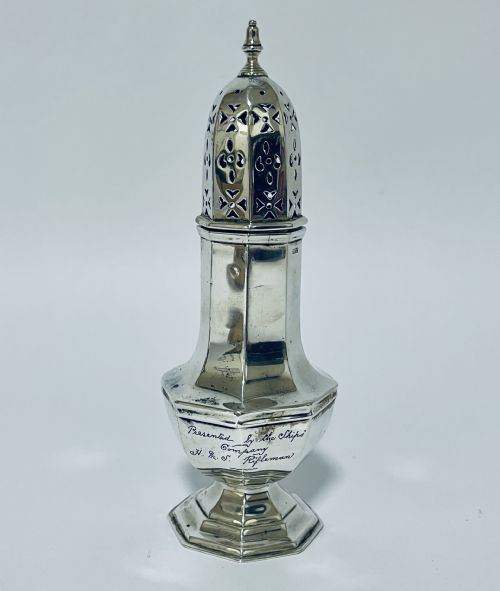


Engraved Silver Sifter
These engraved silver sifter pieces bring tactile period weight to the table, offering the refined gleam that collectors seek.
Engraved Silver Sifter
An engraved silver sifter encompasses sugar casters, spice sifter spoons, caddy spoons and sugar bowls that span the Georgian, Victorian, 1900 and 1910 periods. A buyer browsing this selection is most likely to encounter Victorian and Georgian examples, alongside pieces created in the Georgian style and Georgian revival manner.
The assortment includes solid sterling silver items alongside silver gilt and silver plate variants. Formats range from large nineteenth-century casters to delicate spoons intended for sugar and spices, reflecting domestic dining habits across multiple centuries.
How they were made
Makers utilised sterling silver and silver gilt, shaping metal through traditional silversmithing techniques to produce casters, bowls and serving spoons. Piercing and hand engraving define the decorated surfaces of these items, creating intricate patterns across bowls and caster tops.
London and provincial assay offices stamped these objects with hallmarks that record their origins. The combination of cast elements, pierced metalwork and surface engraving demonstrates the standard methods employed by period silversmiths.
Georgian spice spoons were once kept locked inside tea caddies alongside precious dry ingredients.
What varies in quality
The crispness of the hand engraving and the precision of the piercing on caster lids separate standard examples from finer works. Sharpness in the decorative details indicates the skill of the original silversmith.
Weight and structural integrity distinguish individual items, as heavier gauge silver provides a more substantial feel in the hand. The clarity of the London or provincial hallmarks further anchors the pedigree of each piece.
The Engraved Silver Sifter Glossary
- Sterling silver
- A standard alloy consisting of ninety-two point five percent silver and seven point five percent other metals, primarily copper. This composition provides the durability required for domestic tableware.
- Silver gilt
- Sterling silver that has been coated with a thin layer of gold on its surface. This technique produces a rich two-tone appearance inside bowls and spoons.
- Caster
- A container with a pierced top used for sprinkling sugar or spices over food. These vessels form a central part of many period dining services.
- Hallmark
- An official stamp applied by an assay office to indicate metal purity, the maker and the year of manufacture. These marks allow collectors to date pieces precisely.
Engraved Silver Sifter: Frequently Asked Questions
What is an engraved silver sifter?
An engraved silver sifter refers to tableware items such as sugar casters, spice sifter spoons and caddy spoons decorated with surface engraving.
These objects were designed for functional use at the dining table, particularly for dispensing powdered sugar or spices.
How were silver casters used?
Silver casters held refined sugar or dry spices used to sweeten and flavour food and drinks.
Servants or hosts used the pierced lids to dust contents evenly over dishes before consumption.
How do I date an antique silver piece?
Dating relies primarily on the stamped hallmarks showing the assay office, maker and date letter.
Stylistic cues such as Georgian or Victorian forms also help place the item within its correct period.
Are these pieces made of solid silver?
The listings include solid sterling silver items alongside silver gilt and silver plate variants.
Checking the item description and hallmarks confirms the specific material composition of each object.