


.JPG)
Hallmarked Silver Sugar Caster
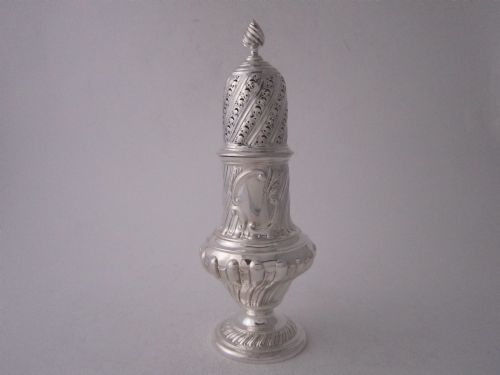
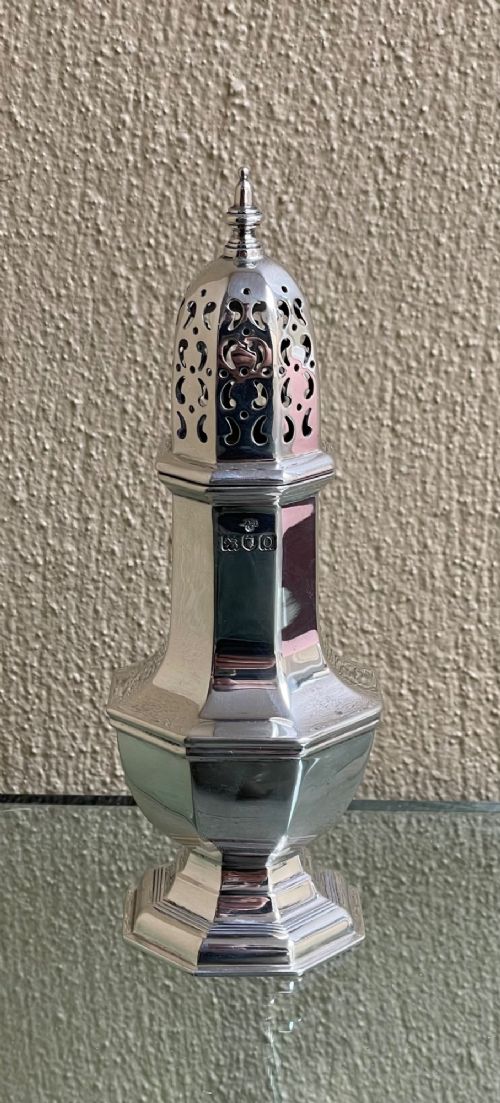
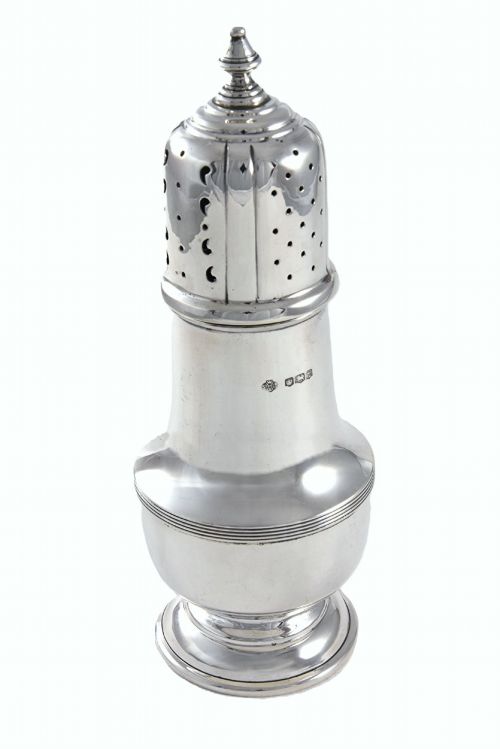
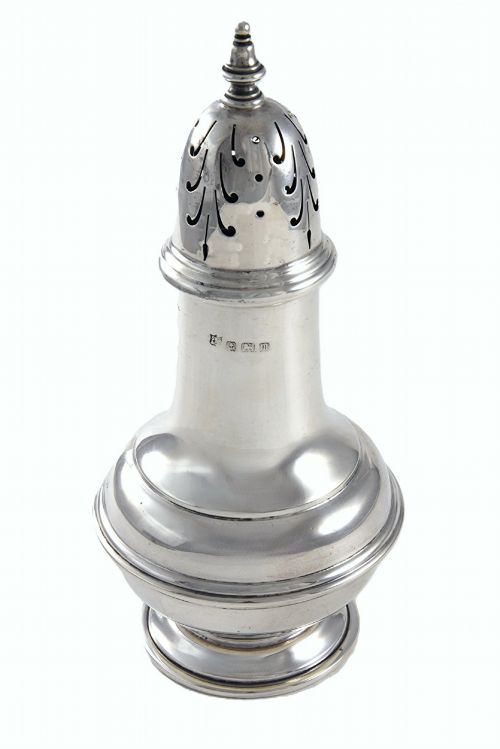
A hallmarked silver sugar caster is the table vessel that brings proper weight and perforated grace to dusting fine sugar over fruit or pastries.
Hallmarked Silver Sugar Caster
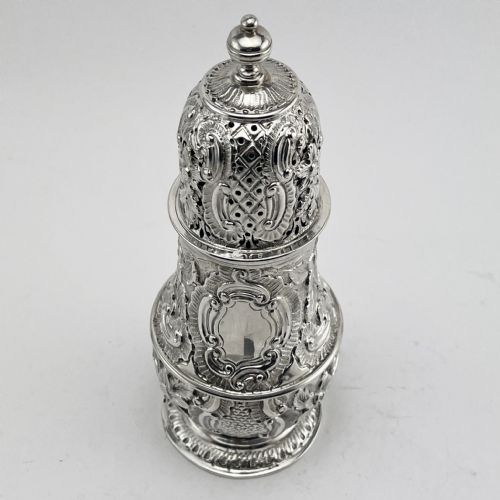
A hallmarked silver sugar caster is a tabletop vessel designed for dispensing fine sugar, taking forms from pear shapes to lighthouse profiles across this selection. When you search for this phrase, you encounter pieces spanning from the nineteenth century through the Edwardian years and into the mid-twentieth century.
The most common examples you meet on this page date from the Victorian and Edwardian eras, alongside George V and George VI pieces. Makers worked in solid sterling silver, occasionally adding silver gilt or pairing silver with cut glass.
Styles range from Victorian and Edwardian designs to Rococo Revival, Georgian Revival, and striking Art Deco polygons. Alongside dedicated sugar sifters and casters, you occasionally spot related tableware such as pepper casters sharing the same fitted proportions.
What varies in quality
The distinction between ordinary and exceptional pieces lies in the crispness of the piercing on the cover and the overall gauge of the silver. Thicker metal gives a substantial heft in the hand, whereas lighter bodies lack that reassuring weight.
Design ambition also divides the range, separating straightforward pear-shaped vessels from sculptural cornucopia forms or precise Art Deco polygon constructions. The clarity of the town mark, maker's mark, and date letter stamped into the silver confirms the provenance and standard of the metal.
The selection includes pieces spanning from the 1890s through the Edwardian era and into the Art Deco period of the 1930s and 1940s.
Barker Brothers·James Dixon And Sons Ltd·Horace Woodward And Co Ltd·Roberts And Belk·Berthold Muller Hanau·Henry Williamson·Joseph Gloster Ltd·Martin Hall And Co
The Hallmarked Silver Sugar Caster Glossary
- Hallmark
- The official stamp applied to precious metals by an assay office, verifying the purity of the silver, the maker, and the year of testing.
- Caster
- A small tabletop container with a perforated lid used for sprinkling sugar or spices over food.
- Silver Gilt
- Sterling silver that has been coated with a thin layer of gold on its surface, often seen on the interior of vessels.
- Pierced
- A technique where metal is cut away in decorative patterns to allow contents to be shaken through the lid.
- Polygon
- A multi-sided geometric shape utilised by silversmiths during the Art Deco period to give faceted modern lines to domestic silver.
Hallmarked Silver Sugar Caster: Frequently Asked Questions
What is a silver sugar caster used for?
These vessels sat on dining tables to dust refined white sugar over desserts, soft fruits, and pastries. The pierced top allowed diners to control the flow of sugar evenly.
Over time, as dining habits shifted, they transitioned from practical dining implements to decorative display items and collector's pieces.
How do I know if my sugar caster is sterling silver?
You look for the hallmarks stamped into the metal, usually near the rim or on the base and cover. These tiny symbols include a standard mark such as a lion passant for British sterling, alongside a date letter and maker's mark.
Unmarked pieces or foreign imports require closer inspection, as some continental makers used different standards and marks.
What is the difference between a caster and a sifter?
In historical terms, the words are often used interchangeably for table vessels holding dry condiments and sugar. A sifter sometimes implies a slightly larger vessel with finer or more expansive piercings designed specifically for powdered sugar.
Both perform the same primary function of dispensing contents through a removable pierced lid.
How do I clean an antique silver sugar caster?
Wash the piece gently in warm, soapy water using a soft cloth, taking care around delicate pierced lids where old sugar residue can harden. Avoid harsh abrasive dips that strip away the natural patination built up over decades.
Dry the silver thoroughly with a soft microfiber cloth to prevent water spots and maintain a soft, natural shine.