

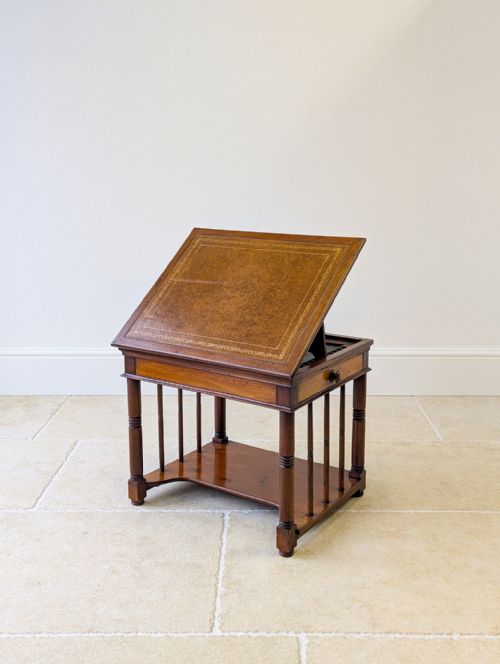
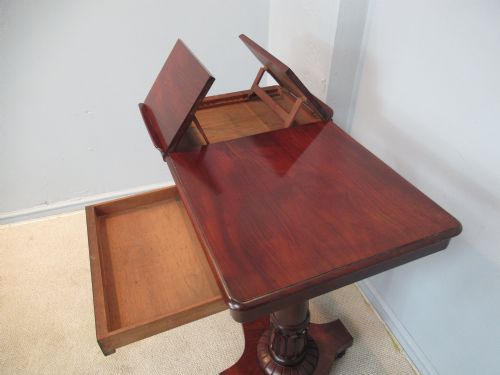


Victorian Standing Slope Desk
A victorian standing slope desk offers an elevated writing surface rooted in nineteenth-century working practices, combining practical storage with period character.
Victorian Standing Slope Desk
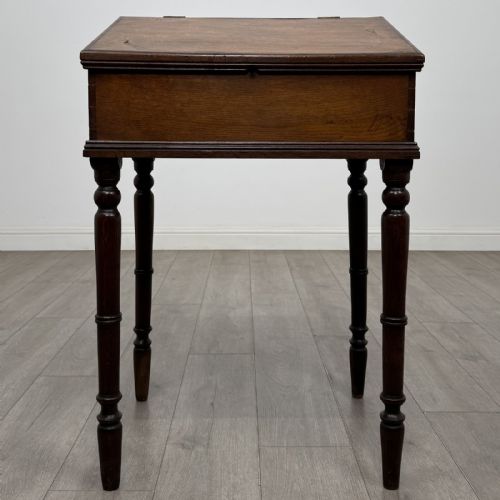
A victorian standing slope desk encompasses tall clerk's furniture, church lecterns, and reading tables designed for upright or elevated use. These pieces trace their origins to the nineteenth century, reflecting the administrative and ecclesiastical needs of the period.
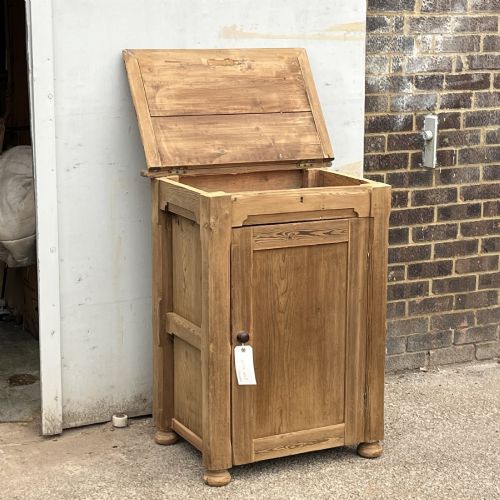
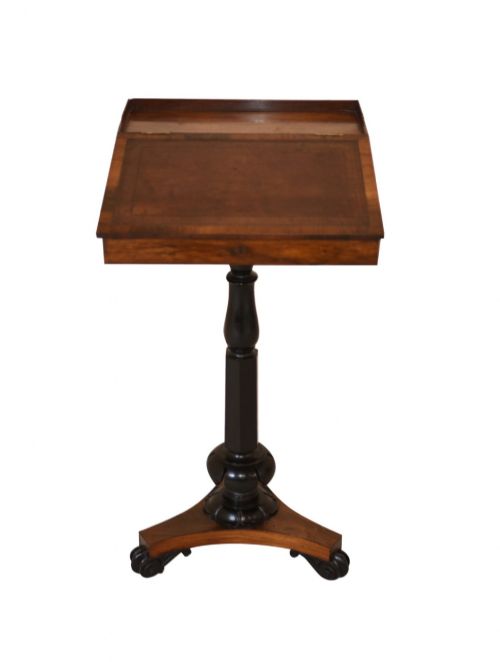
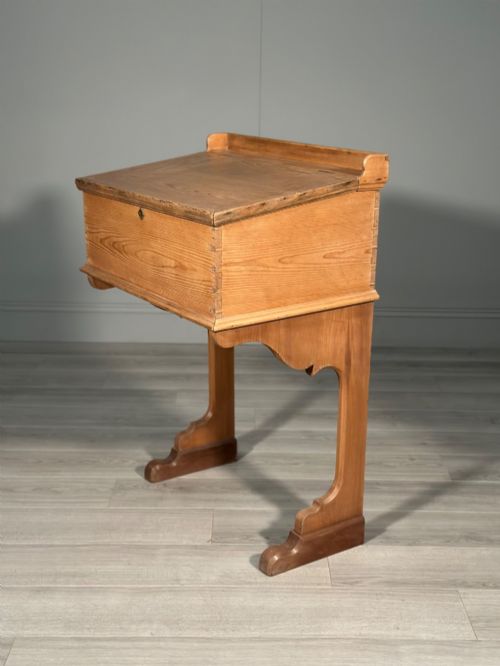
The selections encountered here range from utilitarian pine school pieces and oak clerks' desks to refined mahogany library reading tables. Variations include campaign variants and fitted Davenport forms with sloping lids.
Many items bridge the gap between heavy institutional furniture and domestic study equipment. Buyers will find both simple working stands and elaborate pieces incorporating brass mounts or fitted desk sets.
Materials and Construction
Makers of the period relied heavily on solid hardwoods like mahogany and oak, supplemented by pine for utilitarian or institutional pieces. Timber selection dictated both the longevity and the intended environment of the desk.
Construction techniques prioritized functional rigidity, utilising sturdy joinery to support the downward pressure of writing or the weight of large ledgers. Brass hardware, campaign hinges, and leather inserts frequently reinforced the primary wooden structures.
Victorian Standing Slope Desk Retail Price Guide 2026
Typical asking prices for victorian standing slope desk among the pieces listed under this phrase on Sellingantiques today, from the lower quarter to the upper quarter. They describe what is for sale here now, not the wider market.
Some desks arrive bearing the original ink stains of long-forgotten clerks, preserving a direct trace of nineteenth-century bureaucracy.
Assessing Quality and Craftsmanship
The division between standard workshop items and finer examples rests upon timber selection and secondary decorative elements. Superior pieces display figured mahogany, precise brass inlay, or carved gothic details rather than plain utilitarian surfaces.
Integrity of form and originality of components govern the standing of individual pieces. Alterations, such as modified heights or replaced internal fittings, distinguish working institutional variants from domestic library furniture.
Simpsons of Kendall
The Victorian Standing Slope Desk Glossary
- Slope
- An inclined writing surface designed to make reading or handwriting comfortable from an upright position. Slopes often lift to reveal storage compartments beneath.
- Campaign
- Furniture constructed for travel, typically featuring recessed brass handles, corner brackets, and folding mechanisms. These pieces were built for portability without sacrificing structural stability.
- Lectern
- An elevated stand with a slanted top used to hold books or papers for a standing reader. Common in ecclesiastical and library settings during the nineteenth century.
- Davenport
- A compact desk featuring a sloped writing surface above a pedestal of drawers. Originating in the nineteenth century, these pieces combine a small footprint with functional storage.
Victorian Standing Slope Desk: Frequently Asked Questions
What is a standing slope desk?
A standing slope desk is a piece of nineteenth-century furniture featuring an inclined writing top raised to a height suitable for a standing user. These items were traditionally utilised by clerks, scholars, and officials.
They provide a compact surface for reading and writing while taking up minimal floor space. Today, they serve as functional work areas or decorative period statements in home studies.
How do I use one today?
These pieces integrate well into modern home offices as laptop stands or dedicated writing spots. Their elevated surface encourages an upright posture during brief periods of work.
They also function effectively as display surfaces for open books or decorative objects. Their historic presence adds character to contemporary rooms.
Are these desks adjustable?
Certain reading tables and stands from the period incorporate mechanical adjustments for height or angle. These mechanisms usually rely on wooden ratchets or brass ratcheting arms.
Many standard clerks' desks and lecterns, however, maintain a fixed height determined by their original working purpose. Checking the specific mechanical details helps determine adjustability.
What woods are most common?
Mahogany and oak appear most frequently across nineteenth-century examples, chosen for their durability and grain. Pine is also common in institutional and school furniture.
More decorative items occasionally incorporate walnut, coromandel, or exotic veneers. Each timber reflects the intended setting, from grand libraries to utilitarian offices.