



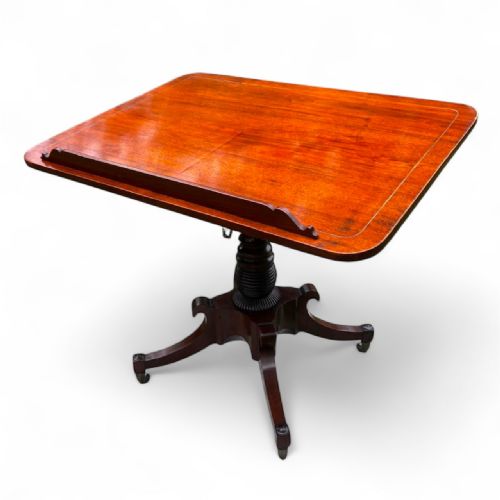


Pedestal Lectern Table
A pedestal lectern table brings adjustable reading surfaces and book rests into the study, offering practical book support for home libraries.
Pedestal Lectern Table
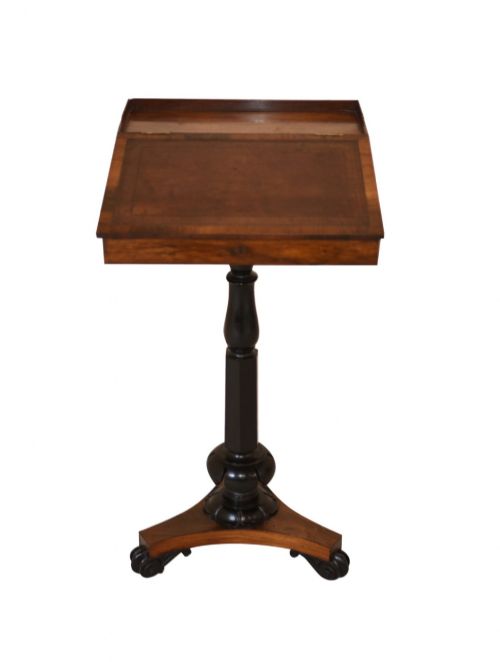
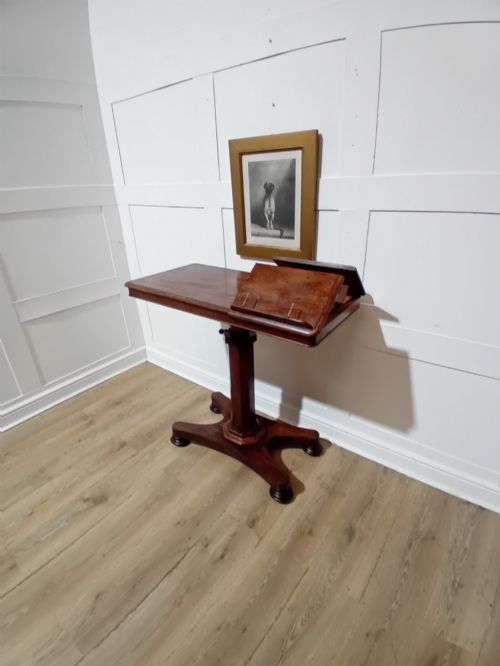
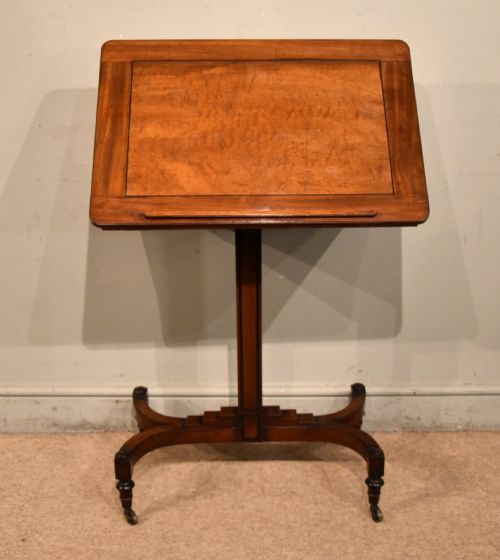
A pedestal lectern table combines a sturdy central support with an adjustable top designed for holding books, music, or writing materials. Buyers searching for a pedestal lectern table will find examples dating across the nineteenth century, including Regency, William IV, Early Victorian, and Edwardian periods.
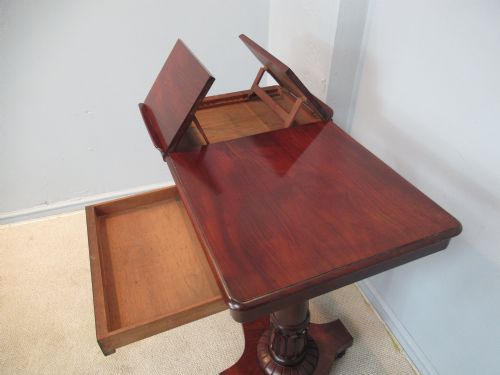
The forms on this page include reading tables, music stands, and occasional tables with specialised reading stands. Many feature book rests and adjustable mechanisms to alter the height or angle of the surface.
Most pieces recorded in the evidence utilise mahogany or rosewood, sometimes accented with brass or inlay. These tables served practical functions in studies and drawing rooms, accommodating readers and musicians alike.
How they were made
Cabinet makers constructed the primary surfaces and pedestals using dense timbers such as mahogany and rosewood, ensuring stability for the central column and base. Brass fittings and inlay appear as decorative elements and functional components of the adjustable mechanisms.
Workshops integrated mechanical ratchets, screws, and brackets to allow the book rests to tilt and the columns to raise or lower. Ebonised wood and leather inserts also feature in the construction of specific reading and writing surfaces.
Pedestal Lectern Table Retail Price Guide 2026
Typical asking prices for pedestal lectern table among the pieces listed under this phrase on Sellingantiques today, from the lower quarter to the upper quarter. They describe what is for sale here now, not the wider market.
The listings span the nineteenth and early twentieth centuries, featuring mahogany, rosewood, brass, and cast iron across Regency, Victorian, and Edwardian styles.
What varies in quality
The sophistication of the mechanical adjustment mechanism dictates much of the quality in these pieces, alongside the precision of the joinery in the pedestal and base. Smoother operation and robust brass ratchets distinguish superior examples from simpler forms.
Timber selection and decorative detailing, such as fine brass inlay or thoughtful grain matching on the mahogany top, mark out the finer productions. The integration of double-sided reading surfaces or specialised marine themes also alters the character of the piece.
The Pedestal Lectern Table Glossary
- Pedestal table
- A table supported by a single central pillar resting on a tripod or platform base. This design provides stability while freeing up floor space around the legs.
- Lectern
- A reading stand with a slanted top designed to hold a book at a comfortable angle for a standing or seated reader. Many nineteenth-century versions include adjustable ratchets.
- Regency period
- An era of British design spanning the early nineteenth century, known for classical restraint, dark woods, and brass ornamentation. Pieces from this time often display refined proportions.
- Mahogany
- A durable tropical hardwood prized for its rich reddish-brown colour and fine grain. It served as the primary material for high-quality furniture throughout the nineteenth century.
- Music stand
- A specialised stand or table designed to hold sheet music or scores. These frequently incorporate adjustable ledges or folding book rests.
Pedestal Lectern Table: Frequently Asked Questions
What is a pedestal lectern table used for?
These tables provide an adjustable surface specifically angled for reading books, consulting manuscripts, or holding sheet music. The central pillar design allows the stand to sit close to chairs or desks.
Historically, they served scholars, musicians, and readers who required hands-free support for heavy volumes or scores in studies and libraries.
What materials are typical for these tables?
Mahogany and rosewood dominate the construction of nineteenth-century reading tables, offering both structural strength and deep, polished grain patterns. Brass is common for functional hardware, hinges, and inlay.
Some pieces incorporate ebonised wood or leather surfaces to suit writing and detailed study.
How do you date a Victorian reading table?
Dating relies on stylistic clues, timber choices, and the complexity of the mechanical hardware. Early nineteenth-century pieces often reflect Regency or William IV classical lines, while later Victorian and Edwardian examples introduce different proportions.
Examining the construction methods beneath the top and inside the pedestal reveals the manufacturing techniques of the period.