



Mahogany Reading Lectern
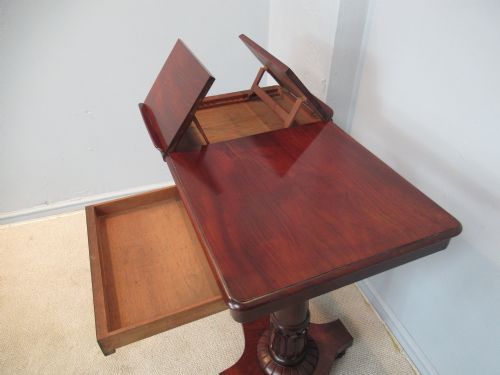
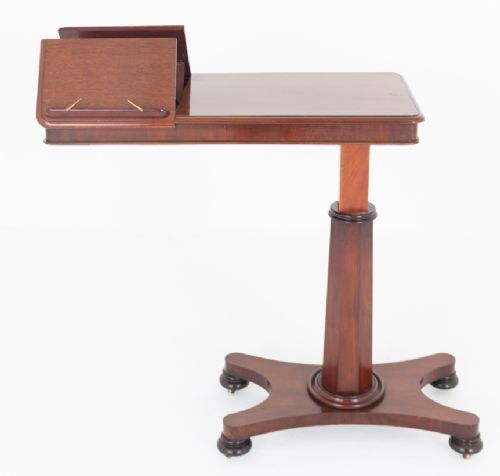
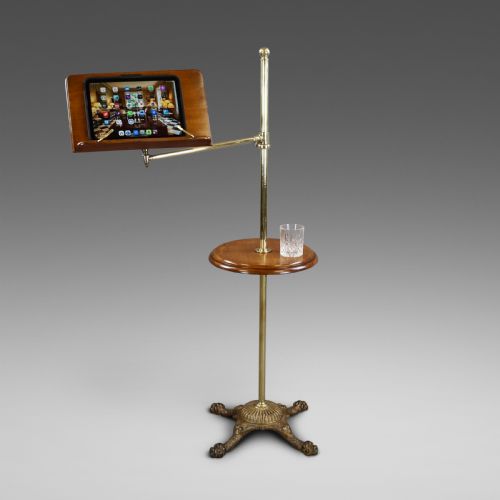
These mahogany reading lectern pieces offer adjustable support for books and music, combining solid timber with brass hardware to serve scholarly pursuits.
Mahogany Reading Lectern
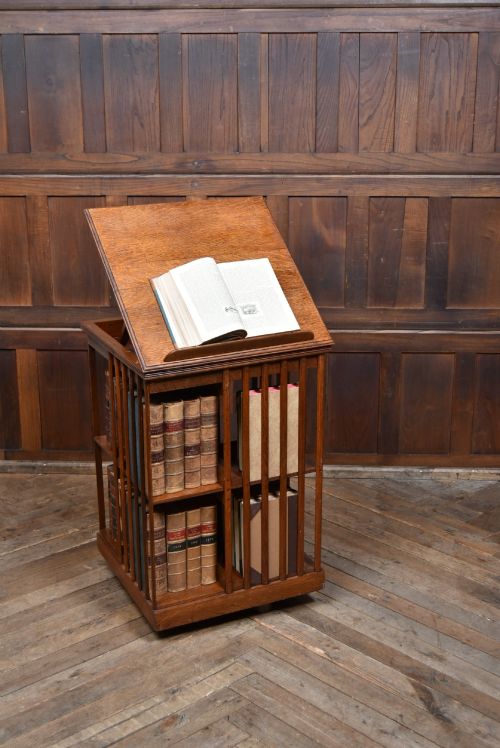
When you search for a mahogany reading lectern, you encounter items designed to hold texts at comfortable angles for reading or performance. The selection spans reading tables, music stands, desk-top book rests, and revolving bookcases originating across the Georgian, Regency, Victorian, and Edwardian periods.
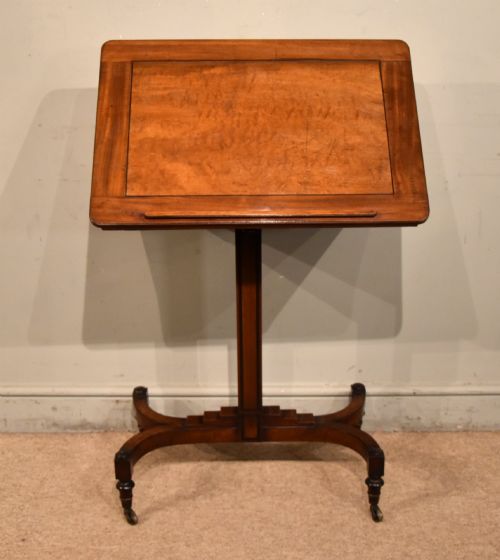
The version most commonly met on this page is the adjustable table standing on a pillar base, alongside campaign variants and table-top book rests. These pieces date predominantly from the nineteenth century, reflecting domestic and institutional habits of study.
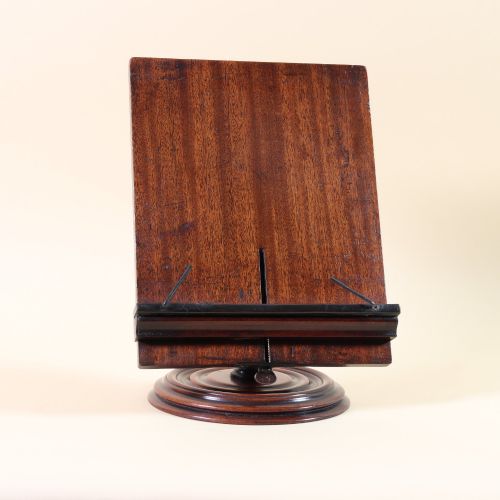
Examples merge utilitarian design with refined cabinet-making, incorporating folding book rests, ratchets, and sliding mechanisms. They appear alongside related forms such as occasional tables and whatnots equipped with reading surfaces.
How they were made
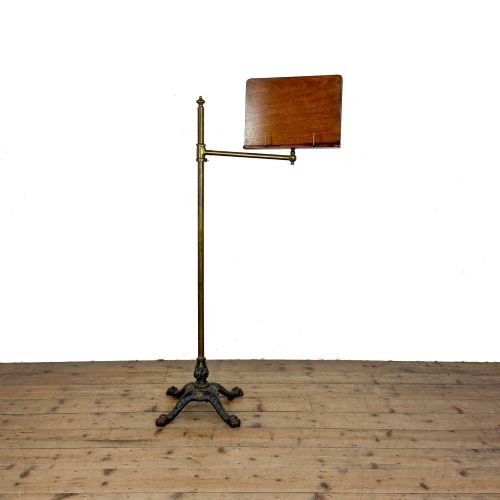
Makers integrated brass and cast iron for mechanical components, utilising brass hinges, ratchets, and column mounts to facilitate adjustment. Leather inserts occasionally line writing and reading surfaces, whilst inlay work ornaments select tops.
The listings span the Georgian, Regency, William IV, Victorian, and Edwardian periods, constructed primarily in mahogany with brass and cast iron fittings.
What varies in quality
The sophistication of the mechanical adjustment mechanism dictates much of the distinction between standard items and superior examples. Patented systems, such as those by John Carter, offer intricate ratchets and screw actions that operate with greater precision than basic slotted brackets.
The choice of timber and the execution of secondary details set the finer pieces apart. Heavily figured mahogany veneers, substantial brass fittings, and secondary details like brass inlay or marine-themed mounts demonstrate higher levels of workshop competence.
John Carter·Gillows·Harrods
The Mahogany Reading Lectern Glossary
- Campaign
- Furniture constructed to be easily dismantled or folded for travel. These items often feature brass binding to protect corners during transit.
- Ratchet
- A mechanism of a cog and pawl that allows an adjustable book rest to be set at various angles. It secures the reading surface in a fixed position.
- Whatnot
- An open set of tiered shelves used for displaying or storing books and ornaments. Examples in this category frequently incorporate reading surfaces or music stands.
- Revolving bookcase
- A freestanding bookcase designed to rotate on a central pivot base for easy access to volumes. Edwardian workshops produced these in mahogany.
- Metamorphic
- Furniture designed to transform from one form of object into another, such as an occasional table converting into a reading stand.
Mahogany Reading Lectern: Frequently Asked Questions
How do I adjust the reading height?
Adjustment relies on mechanical brass ratchets, sliding columns, or screw mechanisms incorporated into the central pillar or desk top. Operating these controls allows you to alter both the height and the angle of the book rest.
Ensuring the locking screws or pins are properly engaged keeps the reading surface stable during use. Different periods employ distinct hardware designs, from simple props to complex patent mechanisms.
Were these made for music or books?
These pieces served both functions depending on the specific form and internal fittings. Music stands and reading tables frequently overlap in design, accommodating scores as easily as heavy folios.
Many examples feature adjustable ledges or brass page holders to secure bound volumes or sheet music at sloping angles.
Can I use a reading table daily?
Daily use is entirely practical provided the moving joints and brass ratchets receive gentle handling. The solid mahogany construction provides robust support for modern books and laptops alike.
Placing the furniture away from direct heat sources prevents the timber from drying out and protects the polished finish.
How do I date a mahogany reading stand?
Dating relies on stylistic markers, construction methods, and the evolution of mechanical hardware across the Georgian, Regency, Victorian, and Edwardian eras. Regency pieces often exhibit classical pillar forms, while Victorian and Edwardian examples introduce heavier cast iron or patent brass mechanisms.
Cabinet-making techniques, such as the transition from hand-cut dovetails to machine assistance, further clarify the period of manufacture.