
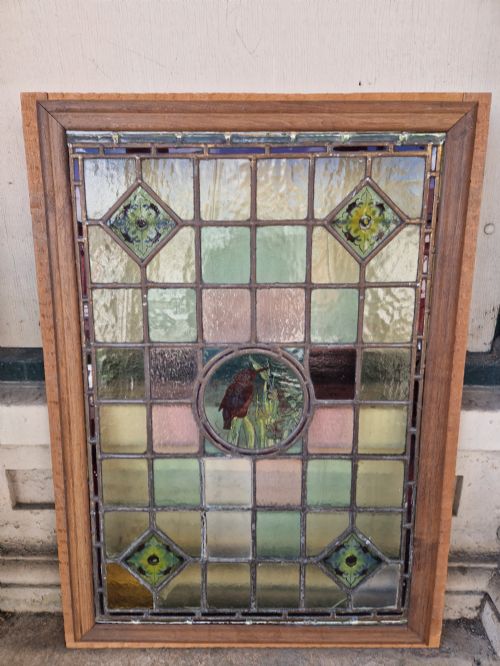


Victorian Stained Glass Panel
When you search for a victorian stained glass panel, you find leaded, painted and etched windows that bring colour and light into rooms.
Victorian Stained Glass Panel
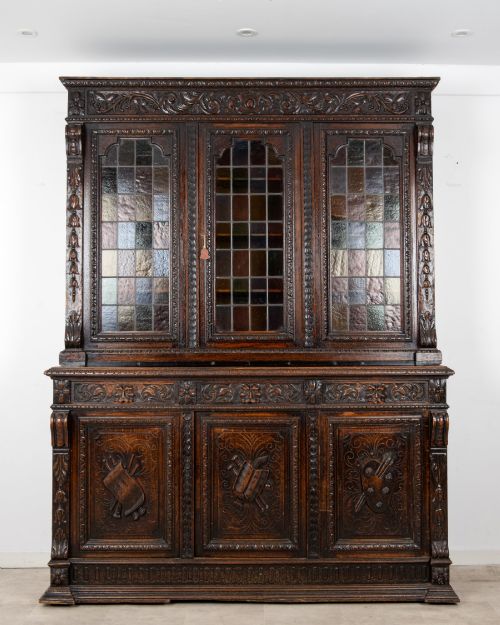
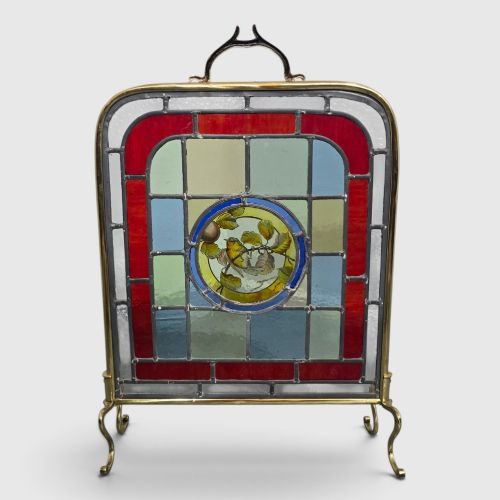
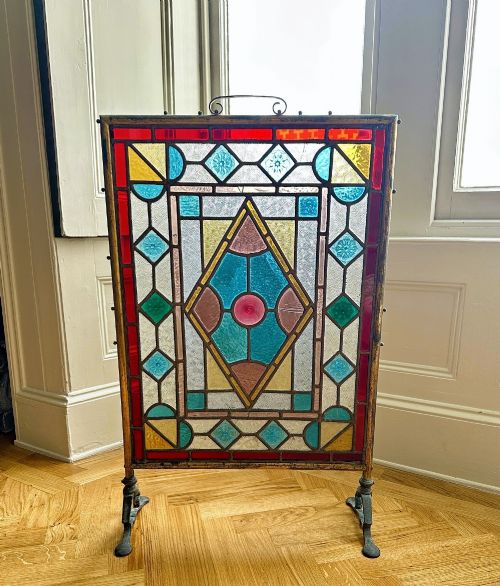
A victorian stained glass panel appears in various settings, from independent window panels and door inserts to architectural salvage, fire screens and built-in cabinet doors.
The selections span the nineteenth century into the early twentieth century, incorporating Victorian, Edwardian, Gothic Revival, Arts and Crafts, and Art Nouveau styles.
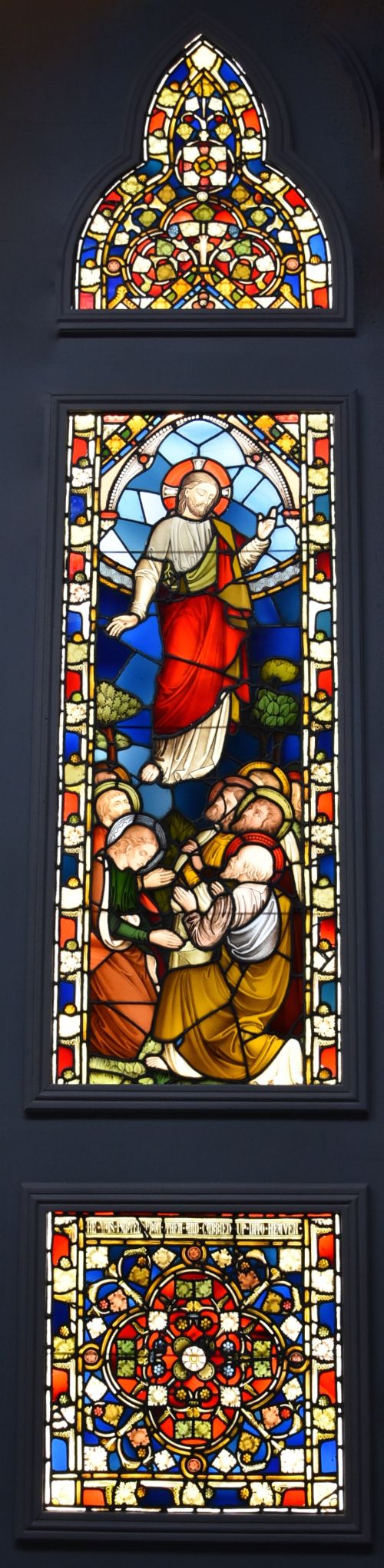
Many examples display pictorial scenes, including hand-painted countryside landscapes, birds, floral motifs, and religious figures set within leaded frameworks.
Materials and Technique
Pieces are constructed using coloured glass held together by lead cames, frequently integrated with timber frames made from pine, oak or pitch pine, alongside brass or iron supports.
Detailing involves hand painting, acid etching and enamel work applied directly to the glass surface to render emblems, figures and backgrounds with precision.
Victorian Stained Glass Panel Retail Price Guide 2026
Typical asking prices for victorian stained glass panel among the pieces listed under this phrase on Sellingantiques today, from the lower quarter to the upper quarter. They describe what is for sale here now, not the wider market.
The selection includes leaded glass windows featuring hand-painted countryside scenes, winter landscapes, and depictions of birds.
Craftsmanship and Design
The intricacy of the painted or etched imagery dictates the visual depth of a panel, separating simple geometric leaded designs from detailed pictorial works.
The integrity of the lead cames and the skill in glass cutting determine the structural success of each architectural piece.
Swaine Bourne, Birmingham·Sir Edward Burne-Jones
The Victorian Stained Glass Panel Glossary
- Came
- A grooved strip of lead used to hold pieces of glass together in a window panel. These flexible strips form the structural grid of the design.
- Bullseye
- A small, circular centre piece of blown glass showing a pontil mark. These are often incorporated into leaded windows for textural contrast.
- Acid Etching
- A technique utilising acid to eat away the surface of flashed glass to reveal a different colour underneath. This creates sharp, detailed patterns.
- Ecclesiastical
- Pertaining to the Christian church, describing panels depicting saints, biblical figures or religious scenes. These originate primarily from churches and chapels.
Victorian Stained Glass Panel: Frequently Asked Questions
How do I hang a panel?
Hanging a victorian stained glass panel requires secure brackets attached to the window frame or wall to support the weight of the lead and glass. Strong steel chain or wire anchored into the timber surround ensures the panel remains stable.
Positioning the piece against a natural light source allows sunlight to illuminate the painted details and coloured glass effectively. Many collectors use custom wooden stands or hang them directly inside larger window openings.
Were these made for doors?
Many examples were originally manufactured for internal doors, external doors, and room divider partitions in Victorian and Edwardian buildings. These architectural panels allowed light to pass between rooms while maintaining privacy.
Sash windows and entranceways frequently incorporated leaded glass sections featuring floral designs, birds or family emblems. Surviving panels are often salvaged from these doors when properties are remodelled.
What is Gothic Revival?
Gothic Revival is a design movement drawing inspiration from medieval architecture, featuring pointed arches, lancet shapes and religious iconography. In stained glass, this style manifests in ecclesiastical windows and panels depicting saints or biblical scenes.
These pieces often utilise heavy lead lines and rich, deep glass colours reminiscent of medieval cathedral windows. The aesthetic remained popular throughout the nineteenth century for both churches and domestic properties.
How are periods identified?
Dating a panel involves examining the stylistic motifs, glass colours and leadwork techniques characteristic of different decades. Victorian pieces often display rich enamels and traditional floral or religious subjects, while Arts and Crafts and Art Nouveau examples show stylised nature motifs.
Reference to maker signatures, specific painting styles on figures, and associated framing timber helps narrow the date of manufacture. Pieces from around 1900 frequently exhibit distinct hand-painted landscape scenes.