


Victorian Staffordshire Flatback Figure
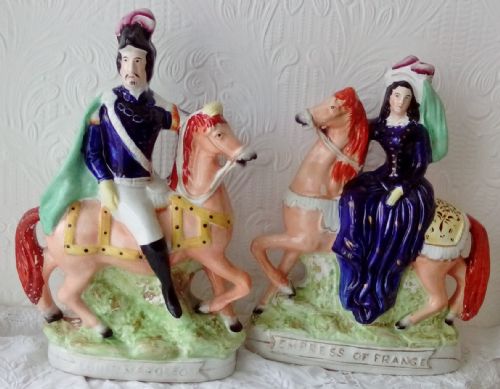
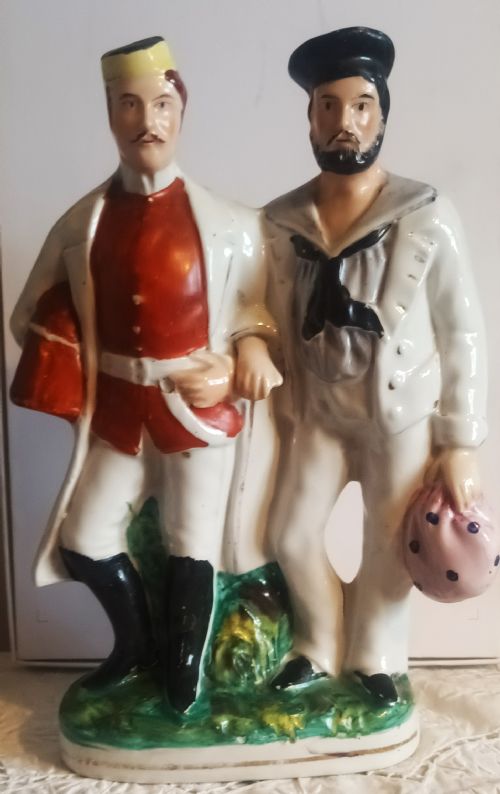
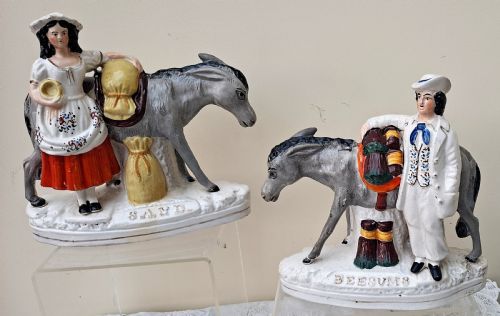
When you search for a victorian staffordshire flatback figure, you encounter nineteenth-century chimney ornaments shaped to show royals, soldiers, animals, and cottages.
Victorian Staffordshire Flatback Figure
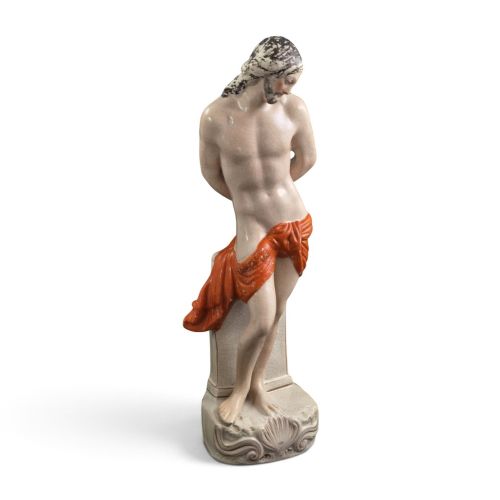
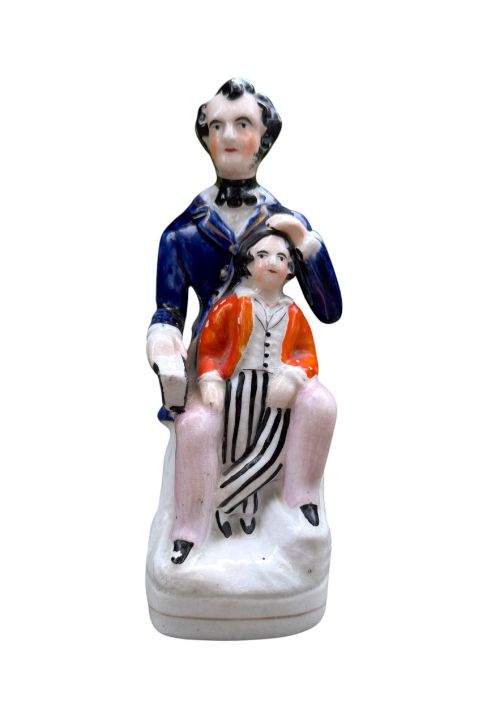
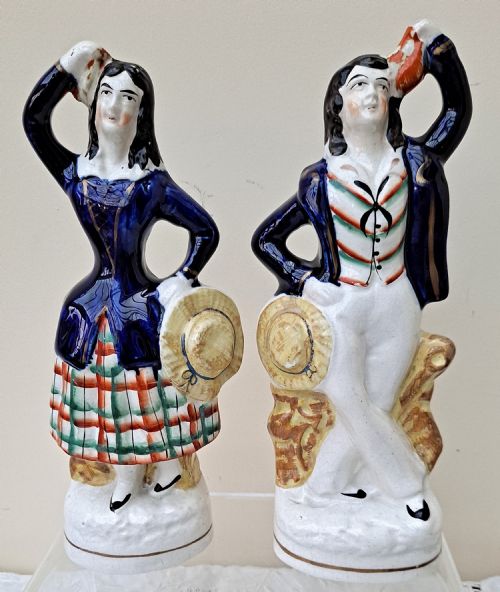
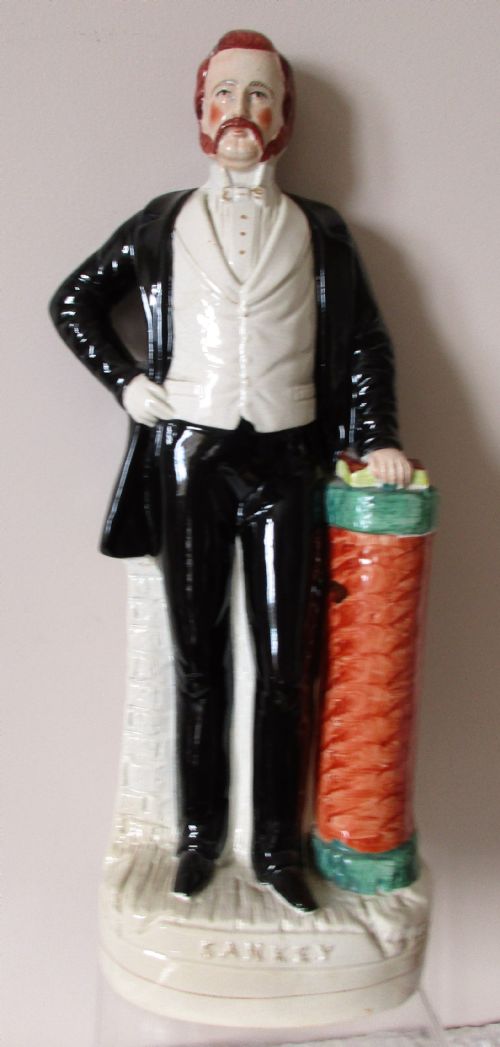
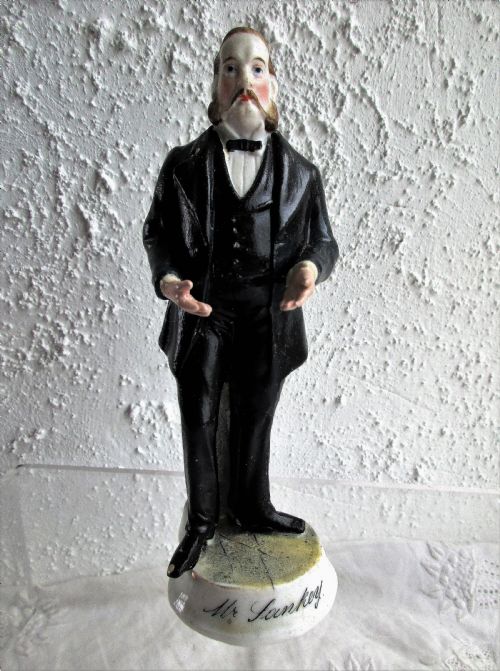
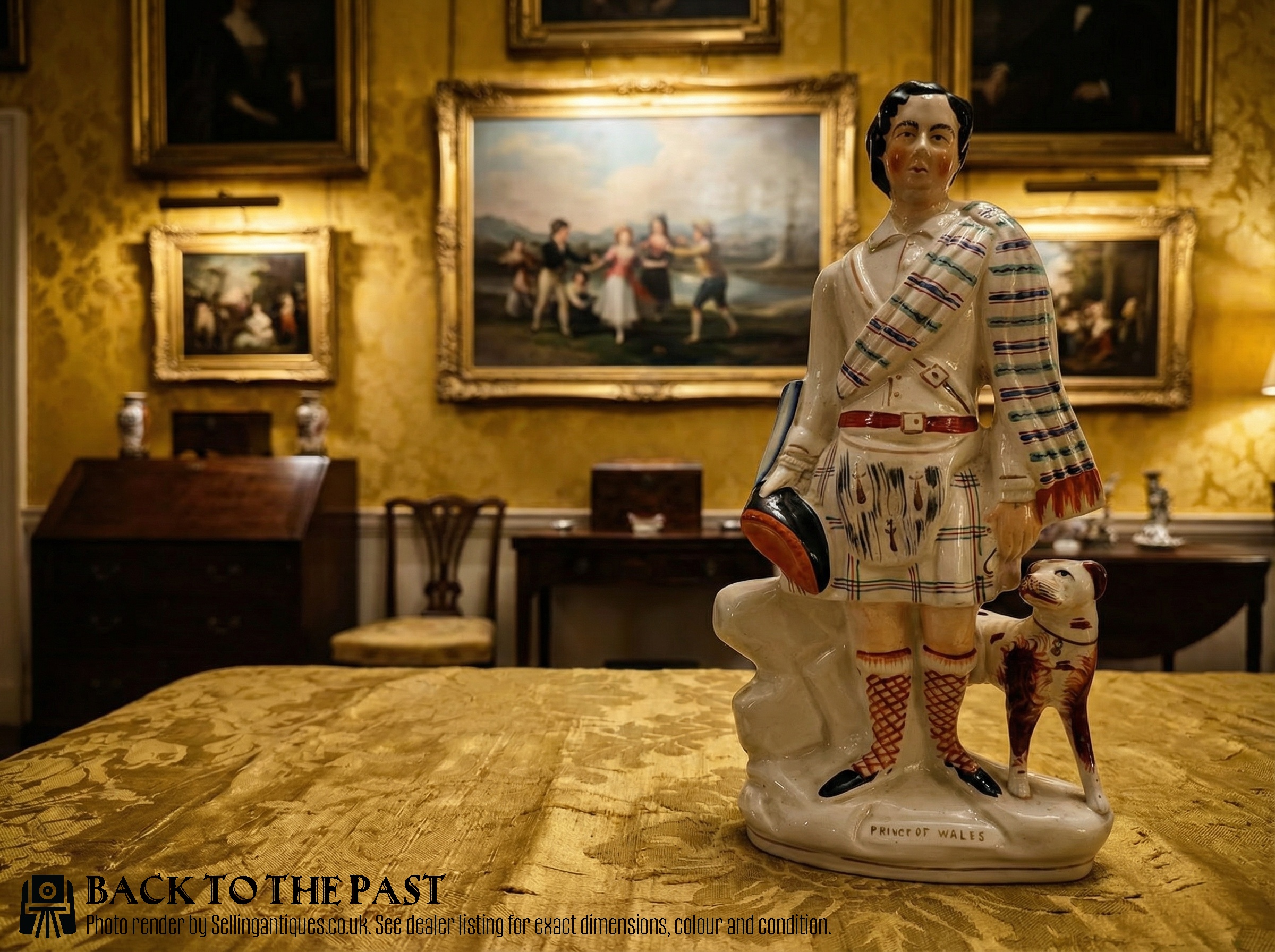
A victorian staffordshire flatback figure is a ceramic ornament made to sit on a mantelpiece, finished with a flat unglazed back because it stood against a wall. The selections here include figurines, decorative figures, spill vases, watch holders, and castles originating from the nineteenth century.
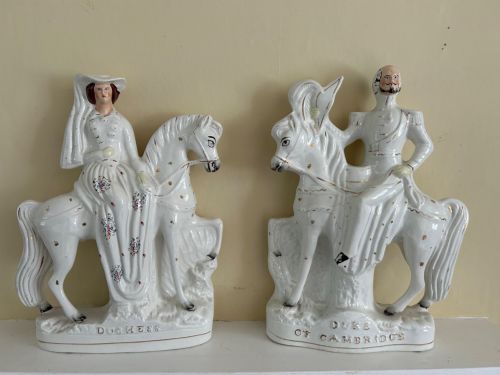
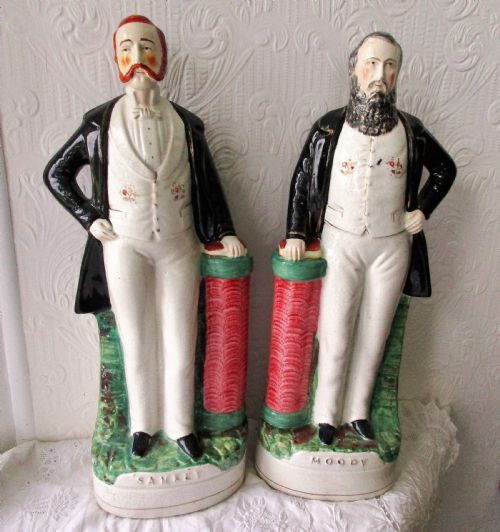
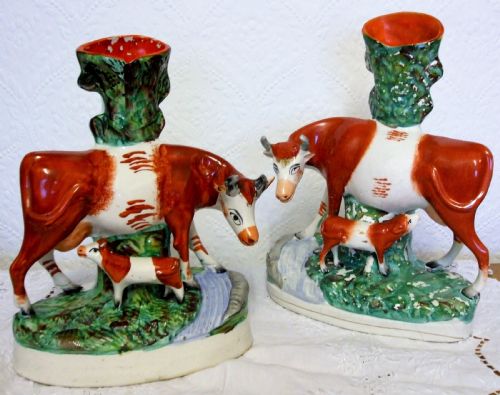
Subjects range from royal portraits and military figures to literary characters, theatrical pairs, and domestic animals such as cows, zebras, and deer. Most examples date from the Victorian period, spanning decades from eighteen fifty to nineteen hundred.
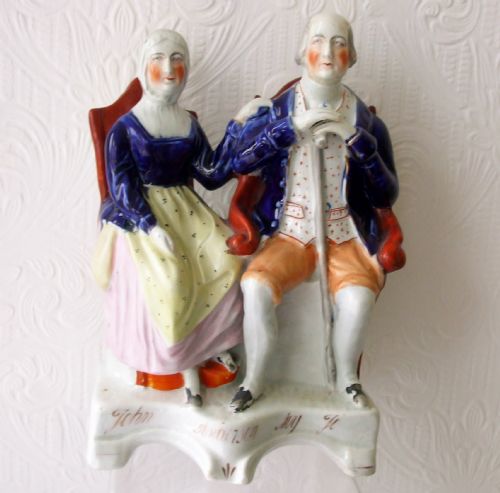
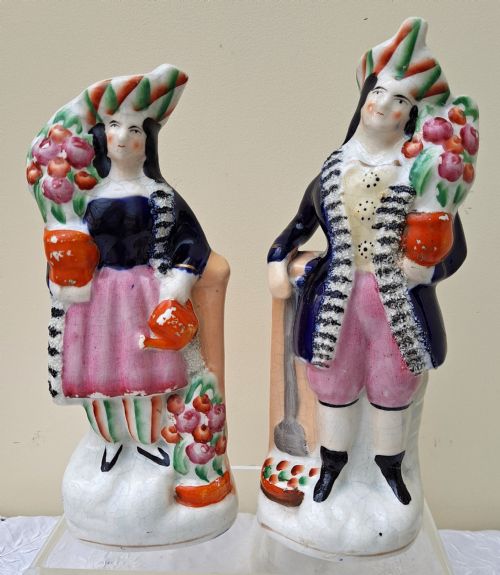
The category encompasses individual portrait pieces, pairs, and group figures depicting historical events, romantic scenes, or everyday occupations. These earthenware objects served as domestic decoration for middle-class Victorian homes.
How they were made
The manufacturing process involved firing the clay body, applying coloured enamels, and adding a glossy lead glaze to seal the surface. This technique produced the characteristic smooth sheen found on nineteenth-century ceramic figurines.
Nineteenth-century potters immortalised contemporary news, domestic animals, and zebras in glossy earthenware for Victorian mantelpieces.
What varies in quality
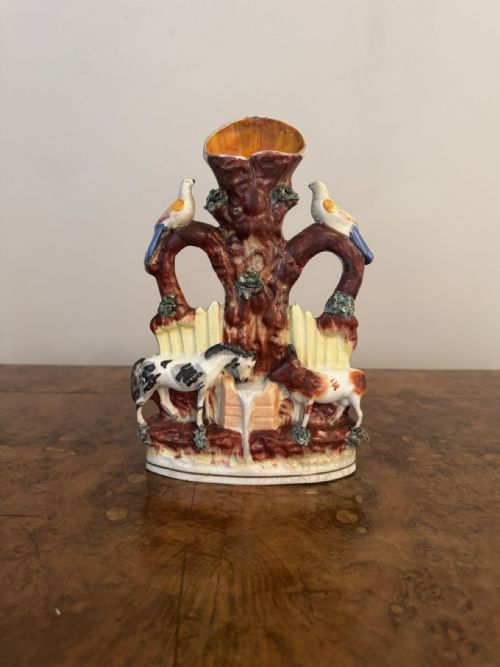
Scale and complexity also separate ordinary production from superior examples, particularly in large portrait groups, detailed castles, or spill vases featuring multiple animals and figures.
The Victorian Staffordshire Flatback Figure Glossary
- Flatback
- A ceramic figure moulded with a finished front and sides while the reverse remains flat and unglazed. This construction allowed the ornament to sit flush against a cottage mantelpiece.
- Spill vase
- A hollow cylindrical vase incorporated into the ceramic figure designed to hold wooden spills for lighting fires or pipes. These dual-purpose objects combine decorative portrait subjects with practical domestic utility.
- Earthenware
- A porous pottery body fired at lower temperatures and coated with a glaze to ensure it holds water. This material forms the structural foundation for nineteenth-century Staffordshire figures.
- Lead glaze
- A glossy vitreous coating containing lead oxide applied to the fired clay body. This finish gives the figures their characteristic reflective shine and protects the underlying enamel paint.
Victorian Staffordshire Flatback Figure: Frequently Asked Questions
Where did these figures sit?
These ornaments stood upon the mantelpieces of nineteenth-century parlours and living rooms. Their flat backs allowed them to rest securely against the wall above the fireplace.
Because they were designed primarily for visual display rather than handling, they populated the shelves and chimney breasts of Victorian homes.
What subjects are most common?
Royalty, military heroes, literary characters, and domestic animals appear frequently across the selection. Figures often commemorated contemporary events, marriages, or popular theatrical productions.
Pairs of figures, pastoral cottages, and occupational characters such as gardeners also feature regularly in nineteenth-century production.
How do I identify a spill vase?
A spill vase incorporates an open vertical cylinder alongside or behind the main figural group. This tubular section held thin wooden splints used for transferring flames from the hearth.
Collectors find these combination pieces featuring animals, human couples, or rustic architecture.
Are these figures glazed all over?
The front, sides, and base receive a transparent lead glaze over enamel paint, while the reverse remains unglazed and flat. This partial glazing method was standard practice for Staffordshire potters.
Leaving the back bare allowed the ceramic pieces to dry efficiently during the kiln firing process.