


Antique Ceramic Highland Figure
An antique ceramic highland figure brings nineteenth-century domestic storytelling into a room through hand-painted earthenware and enduring folk charm.
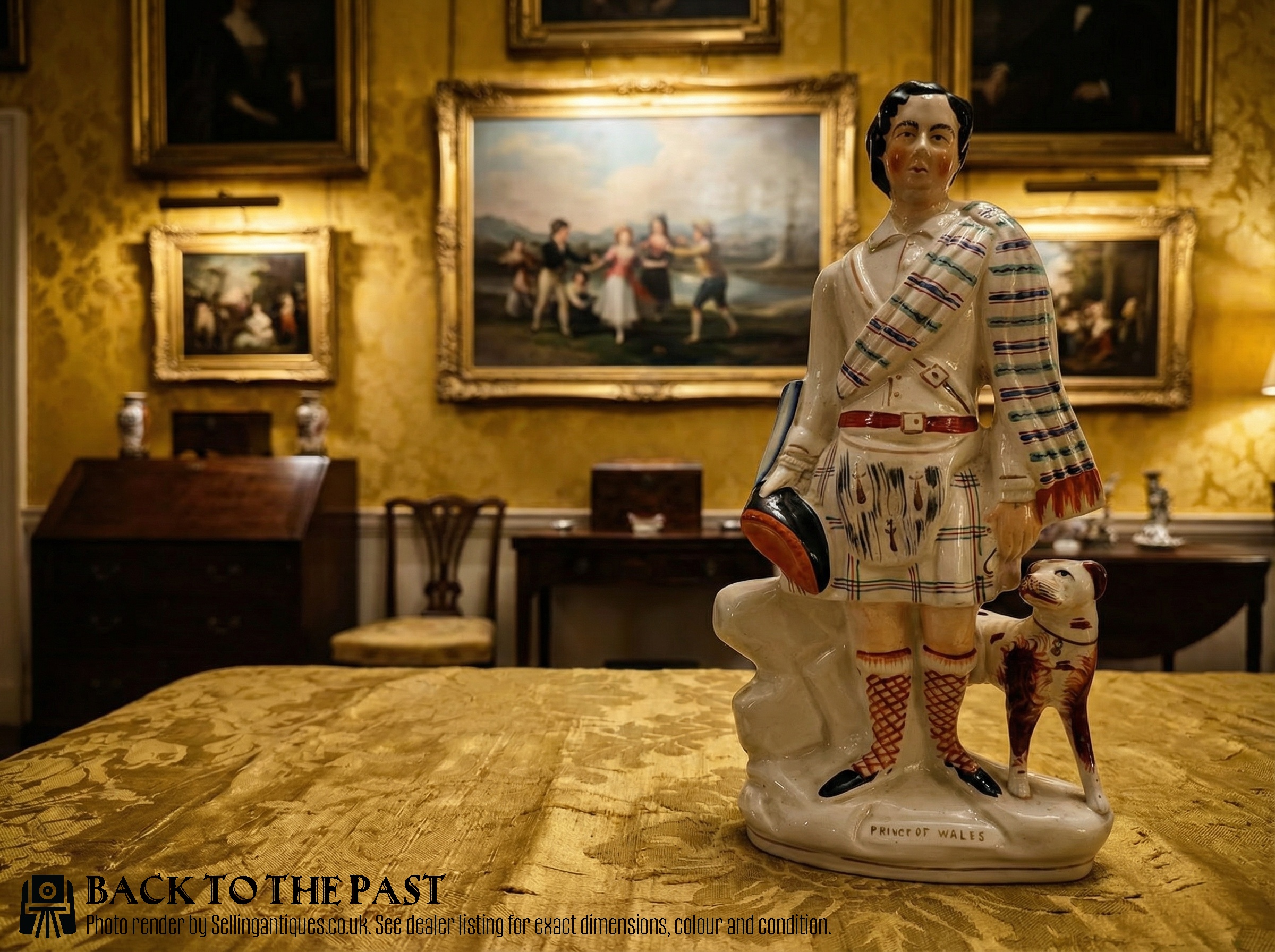
Antique Ceramic Highland Figure
An antique ceramic highland figure captures nineteenth-century Scottish subjects in domestic pottery, ranging from single highlanders to pairs of scots harvesters and flatback spill vases. These decorative objects date across the Victorian era, specifically appearing in periods from eighteen-sixty through nineteen-hundred.
Buyers browsing this selection will most frequently encounter Staffordshire pottery figurines and flatback figures modelled as Scottish lairds, highlanders on horseback, and watch holders. The forms serve both decorative and functional purposes on the mantelpiece, often combining portraiture of figures like the Prince of Wales with traditional Scottish dress.
Materials and construction
Potters constructed these Staffordshire figures using earthenware, applying lead glazes and vibrant enamel paint to finish the ceramic surface. The back of each flatback piece is typically unglazed or simply decorated, designed to sit flush against a wall or mantel.
Victorian folk art techniques dictated the modelling process, shaping clay into spill vases, watch holders, and decorative figurines before kiln firing. Artisans then hand-painted details onto the glazed ceramic body, resulting in distinctive variations across each pair and single piece.
Antique Ceramic Highland Figure Retail Price Guide 2026
Typical asking prices for ceramic highland figure among the pieces listed under this phrase on Sellingantiques today, from the lower quarter to the upper quarter. They describe what is for sale here now, not the wider market.
Scottish highlanders share shelf space with dogs and the Prince of Wales, proving that Victorian mantelpieces welcomed both royalty and loyal hounds.
Assessing quality and craftsmanship
The scale and ambition of the piece also distinguish the range, separating standard spill vases from large equestrian figures and detailed pairs. Well-preserved lead glazes and minimal wear to the surface colours indicate careful preservation since the Victorian period.
The Antique Ceramic Highland Figure Glossary
- Flatback
- A figure moulded with a finished front and a flat, unpainted, or minimally glazed back designed to stand against a wall. This construction saved ceramic material and production time for nineteenth-century potters.
- Spill Vase
- A hollow ceramic holder attached to a figure, intended to store wooden spills used for lighting fires or pipes. These dual-purpose objects combine utility with the decorative character of Scottish highland subjects.
- Earthenware
- A porous ceramic body fired at lower temperatures, commonly utilised for Victorian Staffordshire figures before being coated in lead glaze. It forms the structural base for the enamel paint applied by the decorator.
- Watch Holder
- A specialised figural ceramic piece featuring a small hook or recess to suspend a pocket watch on a mantelpiece. These functional items often incorporate highland or royal themes into their Victorian design.
Antique Ceramic Highland Figure: Frequently Asked Questions
What is a flatback figure?
A flatback figure is a ceramic ornament moulded with detailed decoration on the front and a flat, unpainted reverse side. This design allowed the piece to sit securely against a cottage mantelpiece.
Staffordshire potters produced these extensively during the nineteenth century, depicting Scottish highlanders, lairds, and historical personalities for domestic display.
How were spill vases used?
Spill vases incorporated a hollow cylindrical section alongside the main figure to hold thin wooden matches or spills. These paper or wood tapers transferred fire from the hearth to candles and pipes.
Victorian households placed them on mantelpieces where decorative figures doubled as practical everyday accessories.
What materials make up these figures?
These pieces are fashioned from earthenware ceramic, shaped into specific moulds representing Scottish subjects and royal figures. Artisans coated the clay body in lead glaze to seal the porous surface.
Colour was added using enamel paint, which was applied over or under the glaze depending on the nineteenth-century workshop methods.
How do I date a Victorian figure?
Dating relies on stylistic clues, the type of ceramic body, and recorded manufacturing periods spanning the nineteenth century. Victorian pieces often exhibit specific folk art characteristics and flatback construction methods tied to eighteen-sixty and nineteen-hundred production.
Examining the depth of the glaze and the style of enamel painting helps place the figurine within its specific decade.