




Victorian Staffordshire Dog Statues
Victorian Staffordshire dog statues are pottery figures of spaniels, poodles, and greyhounds that anchor a mantelpiece with traditional English character.
Victorian Staffordshire Dog Statues
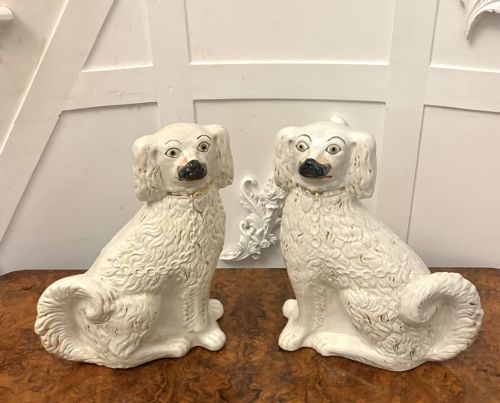
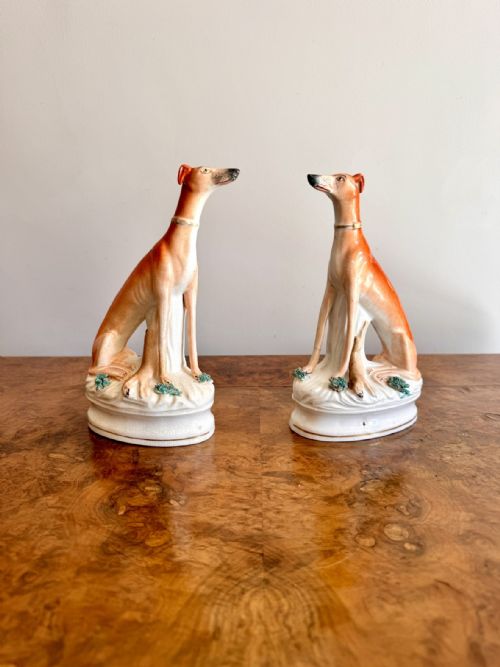
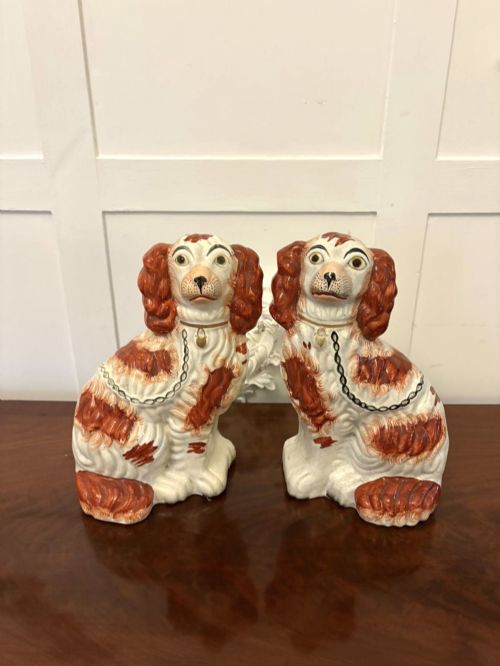
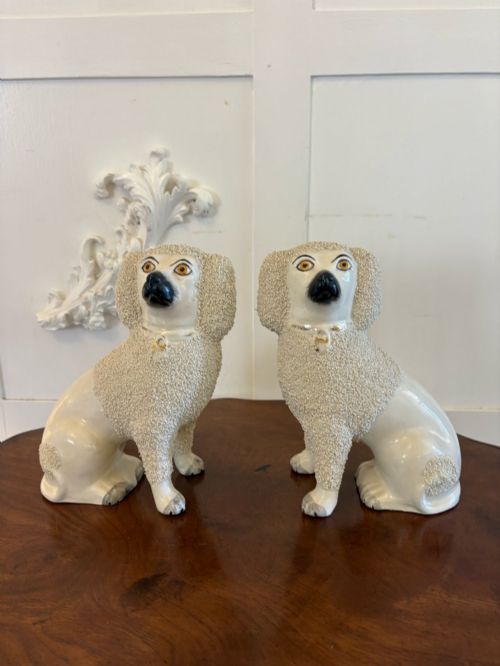
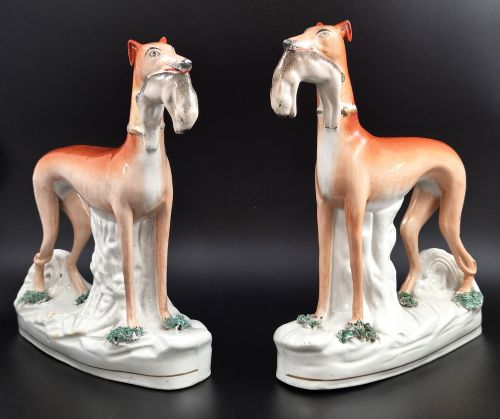
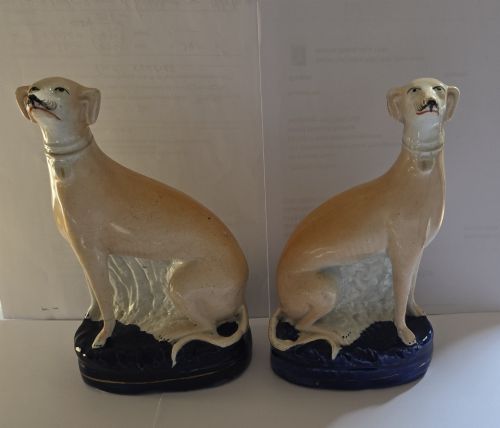
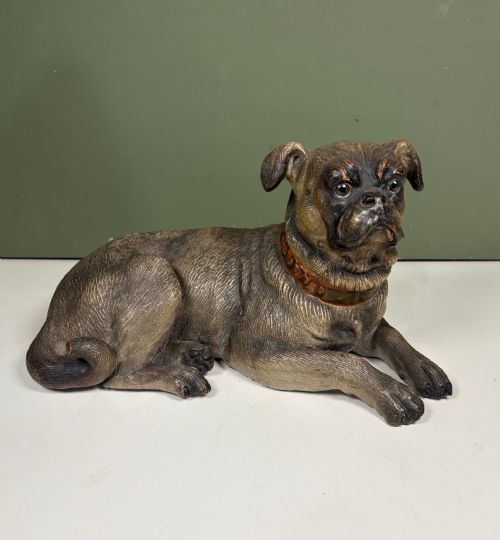
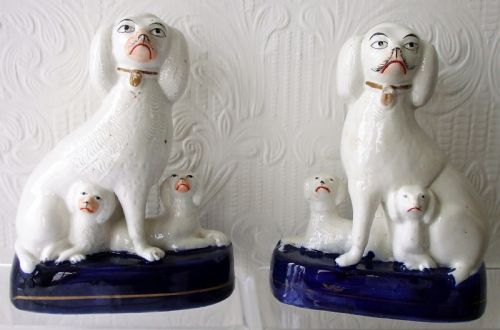
When you search for victorian staffordshire dog statues, you are looking at decorative ceramic figures produced during the nineteenth century across English potteries. The pieces on this page comprise spaniels, poodles, greyhounds, pugs, and Maltese terriers modelled as single figures, pairs, or groups with pups.
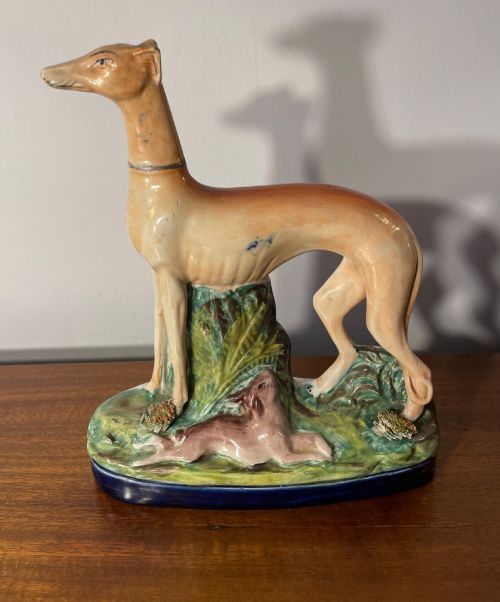
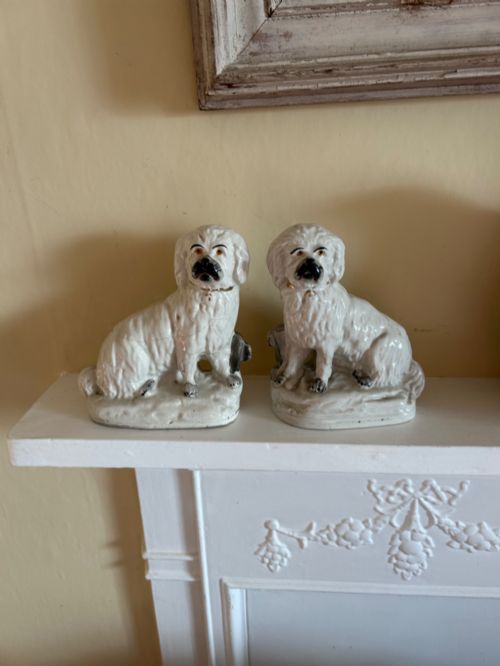
Most examples appear as matched pairs intended to sit at either end of a fireplace or shelf. Common forms include seated spaniels on cushions, greyhounds with hares, and poodles with textured coats, spanning periods from the Georgian era through to the late Victorian years.
How they were made
Certain models incorporate surface texturing, such as clay encrusting or woolly effects applied to poodles to simulate fur. Other variations include functional forms like greyhound quill holders designed for a desk.
Victorian Staffordshire Dog Statues Retail Price Guide 2026
Typical asking prices for victorian staffordshire dog statues among the pieces listed under this phrase on Sellingantiques today, from the lower quarter to the upper quarter. They describe what is for sale here now, not the wider market.
Woolly poodles wear tiny curls of clay like fleece.
What varies in quality
Quality rests primarily on the crispness of the modelling and the precision of the hand-painted enamel work. Finer pieces display distinct facial expressions, clean gilding, and well-defined eyes rather than hasty brushwork and blurred outlines.
Scale and completeness also separate standard production from superior examples. Large models, intact pairs, and complex figure groups like children on setters or greyhounds with hares command greater attention than simple single figures.
Beswick
The Victorian Staffordshire Dog Statues Glossary
- Earthenware
- A porous pottery body fired at lower temperatures, commonly used for nineteenth-century Staffordshire figures. It requires a glaze to become impermeable.
- Lead glaze
- A glossy coating containing lead oxide applied to ceramics before firing. It gives the pottery surface its characteristic shine and smooth feel.
- Enamel paint
- Vitreous pigments applied over the fired glaze and subjected to a second, lower temperature kiln firing. This technique allowed makers to add bright surface colours.
Victorian Staffordshire Dog Statues: Frequently Asked Questions
What are Staffordshire dogs?
Staffordshire dogs are ceramic animal figures, most famously spaniels, poodles, and greyhounds, made in English potteries during the nineteenth century.
Households traditionally displayed them on mantelpieces in symmetrical pairs facing inward toward each other.
Were these dogs meant to be functional?
Most Staffordshire dog statues served purely as decorative mantel ornaments or figural mantel displays to brighten Victorian living rooms.
Some specialised forms, such as greyhound quill holders, combined decorative appeal with desk utility for holding writing feathers.
How do I identify a pair?
Matched pairs comprise a left-facing and a right-facing figure designed to mirror each other at opposite ends of a shelf.
They share identical modelling, scale, and decorative treatment, such as matching gilt collars and enamel markings.
What breeds appear most often?
Spaniels represent the most frequent subjects, typically shown seated with white coats and gilt or black markings.
Poodles, greyhounds, pugs, and Maltese terriers also appear across the nineteenth-century selections, sometimes accompanied by pups or hares.