
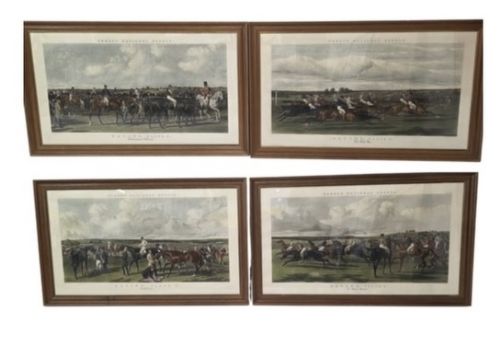


Victorian Sporting Decor
Victorian sporting decor brings the field, track, and moor indoors through oils, silver, and wood.
Victorian Sporting Decor
Victorian sporting decor encompasses oil paintings, framed prints, silver figures, and desk accessories that record nineteenth-century pursuits such as hunting, racing, fishing, and shooting. A buyer searching this phrase looks for visual and functional pieces that celebrate equine and canine subjects alongside field sports.
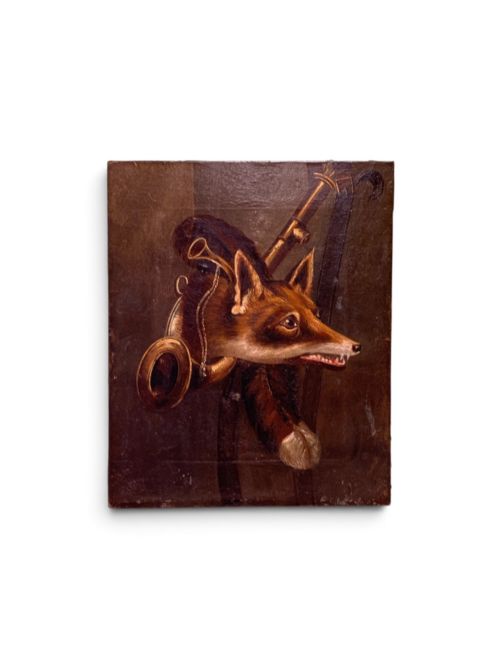
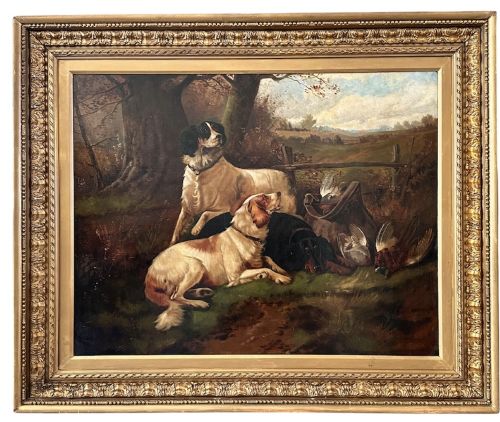
The version most commonly met on this page is the nineteenth-century oil painting on canvas depicting hounds, horses, huntsmen, and game. These works range from intimate studies of terriers and gun dogs to larger compositions capturing hunts and racing scenes.
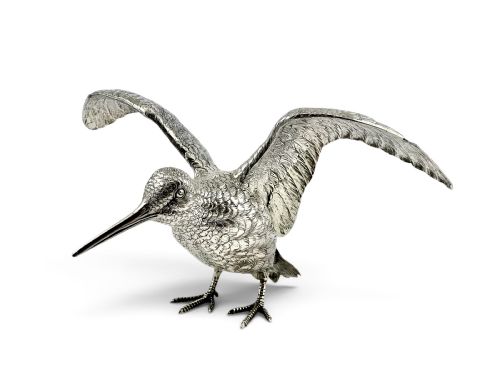
Beyond paintings, the category includes functional items such as silver woodcocks, curling stones, snooker scoreboards, and brass-mounted antler desk sets. Together, these objects form a coherent record of Victorian rural life and leisure.
How they were made
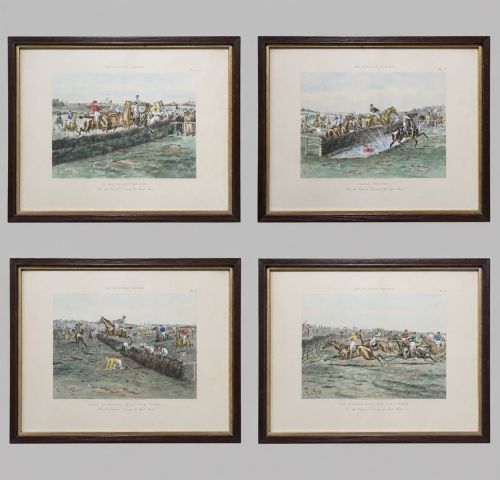
Painters applied oil paint to canvas and paper, often capturing movement in animal subjects through layered brushwork and glazing techniques. Printmakers produced aquatints and embossed prints to replicate popular racing and sporting compositions for domestic display.
Metalworkers utilised silver and brass to shape figures, desk sets, and sporting implements, frequently mounting natural materials such as antler and wood. Cabinetmakers and craftsmen constructed specialised items like wooden fishing rod rests and snooker scoreboards using cherry wood and other traditional timbers.
Listings span the nineteenth century, featuring oil paintings, silver, brass, canvas, paper, and wood.
What varies in quality
The quality of oil paintings depends upon the artist's ability to render the anatomy and expression of animals, particularly horses and dogs, with anatomical conviction rather than formulaic stiffness. Superior works demonstrate a confident handling of light across fur, canvas, and landscape.
Material selection and craftsmanship distinguish finer decorative items and game pieces, where the integration of brass, silver, and antler shows careful proportion and secure mounting. Maker attribution and legible signatures further elevate the standing of individual paintings and scores.
George Finch Mason·John Sargent Noble·Basil Nightingale·Charles Faulkner·John Charles Tunnard·John Emms·George Goodwin Kilburne·William Crampton·Orme and Sons
The Victorian Sporting Decor Glossary
- Aquatint
- A intaglio printmaking technique that produces tones resembling watercolour washes. It was frequently used for reproducing sporting art and horse racing series.
- Oil on canvas
- Pigments bound in a medium applied to a stretched woven fabric support. This method underpins the majority of nineteenth-century paintings in this field.
- Embossed print
- A print produced with a raised relief design on paper. These appear in sets depicting traditional sporting subjects.
- Sporting art
- Visual representations of field sports, hunting, shooting, fishing, and equine events. It forms the core visual record of Victorian leisure.
- Antler desk set
- A fitted desk accessory incorporating deer or stag antlers, often mounted in brass. It represents the utilitarian application of hunting trophies in the Victorian study.
Victorian Sporting Decor: Frequently Asked Questions
What subjects define these pieces?
These items predominantly depict horses, hounds, gun dogs, terriers, and wildlife in moorland, hunting, or racing settings. Portraits of specific animals and participants in hunts form a large part of the visual record.
Alongside canvases, the category includes functional items related to pastimes like fishing, curling, and cue sports.
How were these items used originally?
Paintings and framed prints served as interior decoration in country houses, libraries, and smoking rooms to display an owner's passion for field sports and equestrian pursuits. Silver figures and antler desk sets furnished studies and writing tables.
Items such as snooker scoreboards and curling stones had active roles in Victorian recreation and parlor games.
How do I identify a nineteenth-century oil painting?
Nineteenth-century oils typically utilise canvas or prepared board supports with traditional stretchers and framing methods appropriate to the period. Pigment analysis and canvas examination help confirm the era.
Signatures, artist inscriptions, and framing styles provide additional context for dating the artwork.
Are these items purely decorative?
Many items, such as oil paintings and framed aquatints, were created specifically for visual display. However, numerous pieces combined utility with sporting aesthetics, including desk sets, rod rests, and scoreboards.
These functional objects brought the atmosphere of the field directly into the domestic interior.