


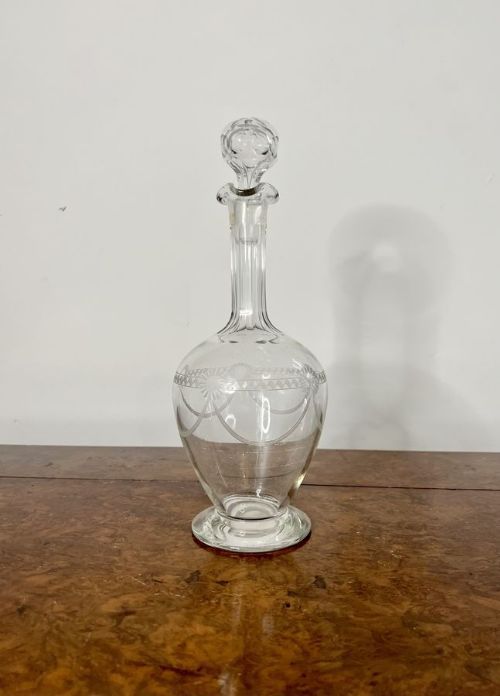
Victorian Spirit Bottles
These Victorian spirit bottles encompass decanters, tantalus sets, and flasks designed to hold and serve fine liquor with elegance.
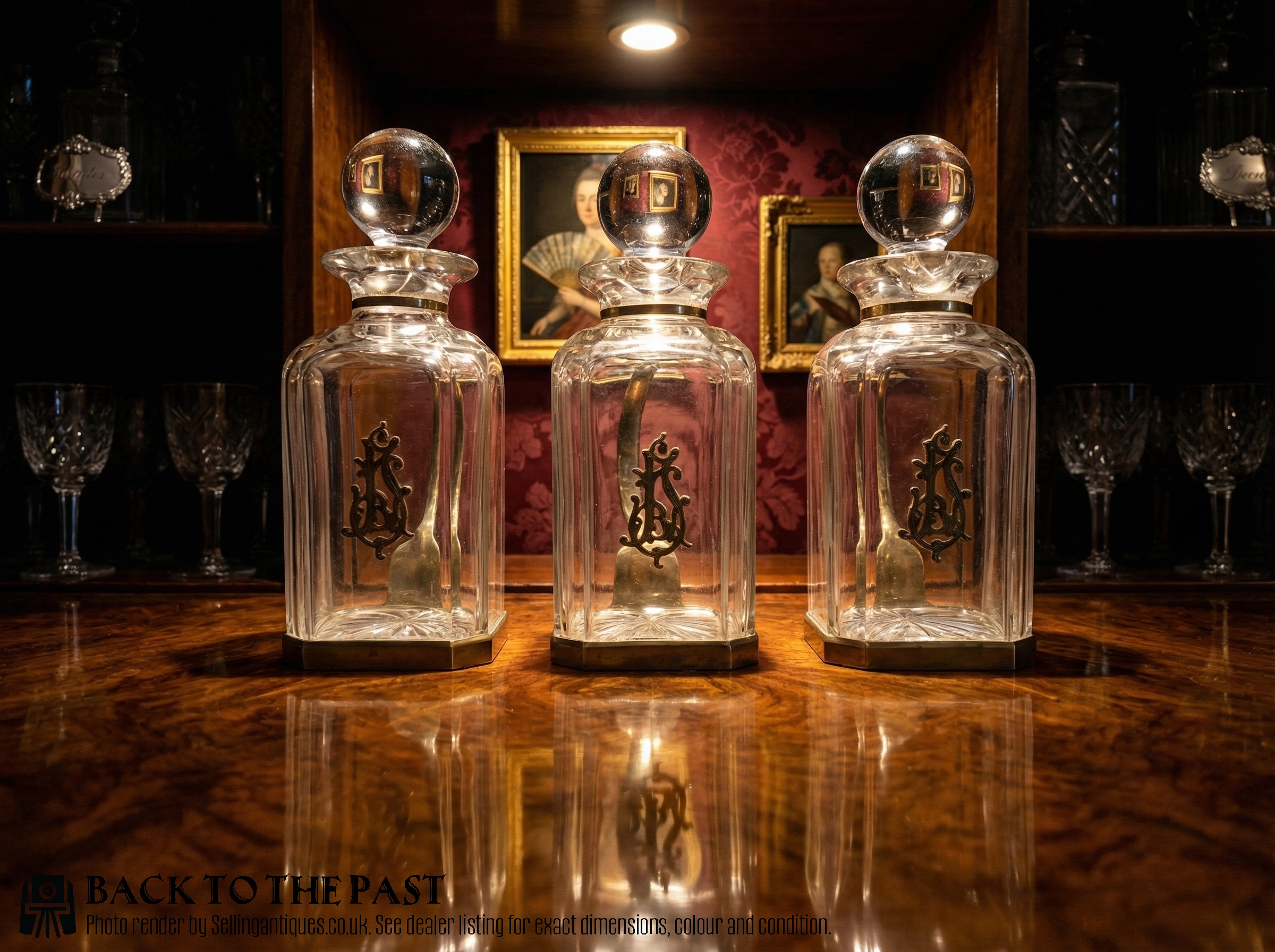
Victorian Spirit Bottles
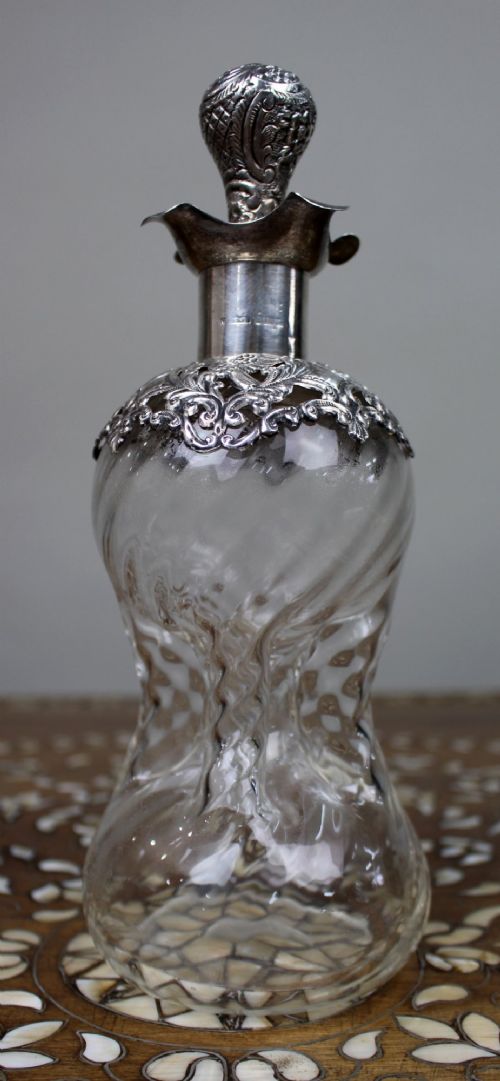
When searching for victorian spirit bottles, collectors encounter a diverse range of vessels designed to house potable spirits, from single decanters and matched pairs to robust stoneware flasks and locking tantalus frames. The pieces on this page span the nineteenth century and the early twentieth century, reflecting the rigorous social rituals of hospitality and home entertaining associated with the period.
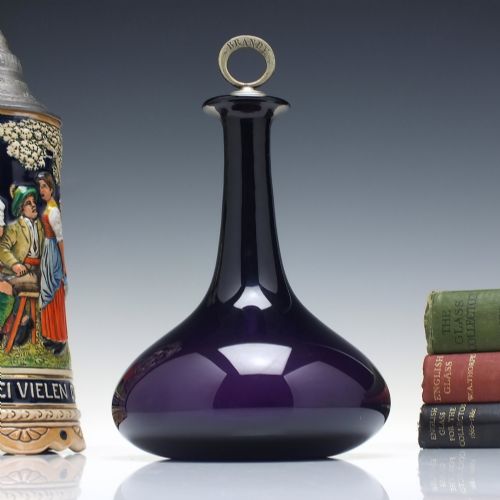
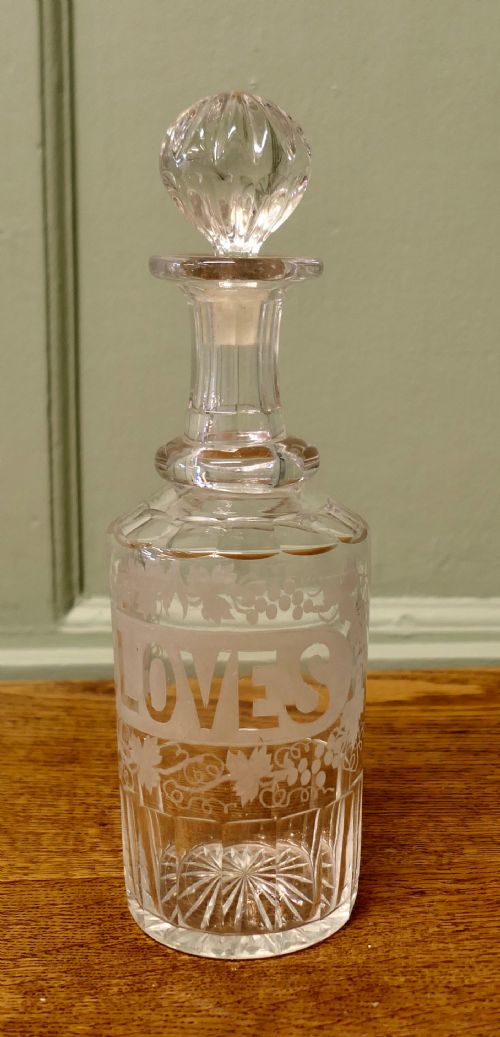
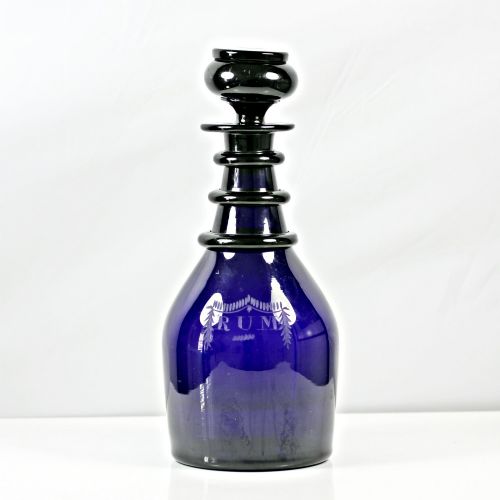
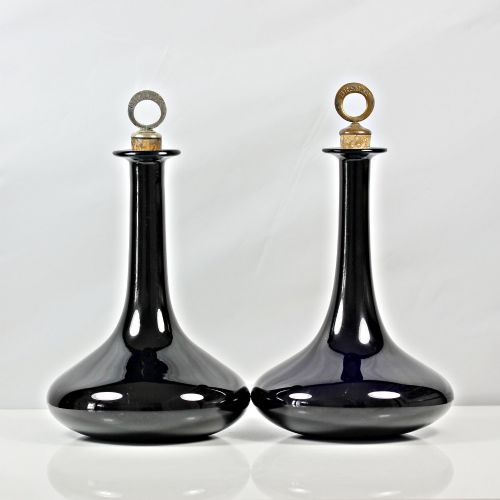
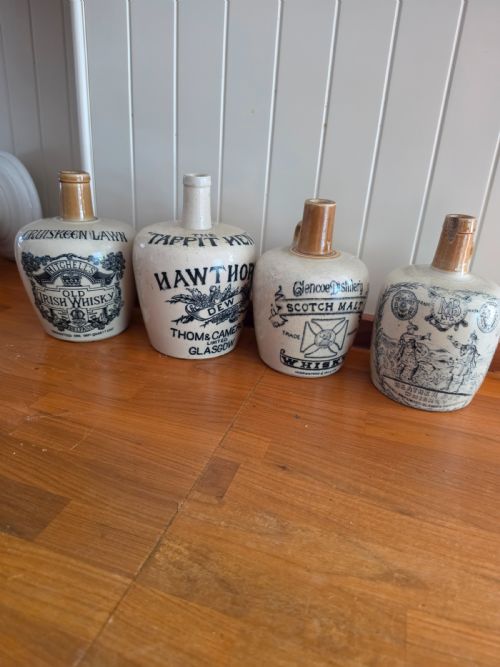
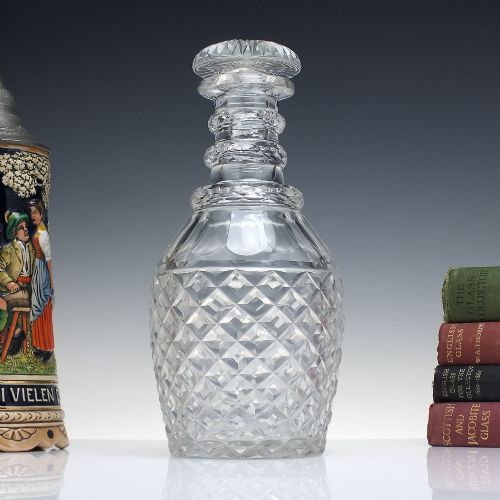
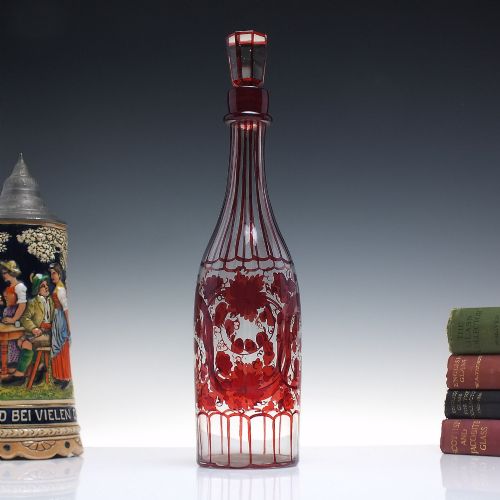
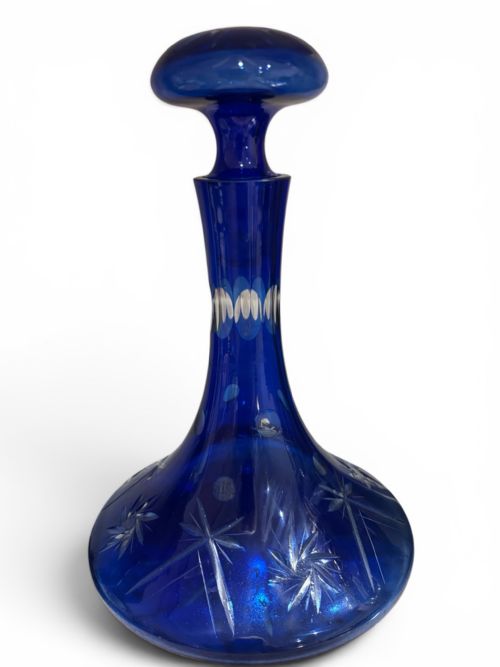
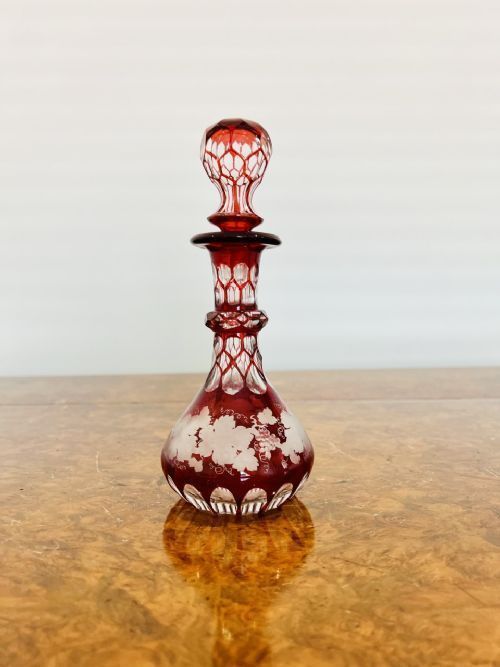
The most common forms met here include cut glass and crystal decanters, often fitted with stoppers, alongside stoneware advertising flasks and leather-cased travel sets. Makers utilised rich colours such as Bristol blue, ruby, emerald green, and amethyst, creating vessels intended to be displayed prominently on sideboards or within fitted oak and satinwood furniture.
Materials and Technique
Makers utilised lead crystal, heavy cut glass, and pottery to form the bodies of these vessels, frequently employing optical blowing, hand cutting, and enamel painting to achieve decorative depth. Metal components, including silver mounts, Birmingham hallmarks, brass hardware, and silver-plated labels, were integrated to secure and identify the contents.
Wooden housings such as oak and satin wood were constructed with marquetry stringing and brass mountings to create secure tantalus frames that locked the bottles in place. Additional materials like cork stoppers and leather travel cases ensured that spirits remained preserved during transit or formal dinner service.
Listings feature items from the Victorian, Edwardian, and William IV periods, utilising cut glass, oak, and silver plate.
Evaluating Quality
Superior quality in these items is distinguished by the clarity and weight of the lead crystal, the precision of the hand-cut facets, and the richness of coloured glass types like cranberry and cobalt. Top-tier pieces feature unblemished stoppers that match the bottle perfectly, alongside substantial silver or brass mounts bearing clear hallmarks.
The sophistication of the secondary materials also dictates the standard of the piece, evident in finely figured oak grain, intricate marquetry inlay, and fully functioning locking mechanisms on tantalus frames. Simpler utilitarian stoneware flasks or moulded glass variants display less hand-craftsmanship, representing standard domestic utility rather than luxury presentation.
Royal Doulton·James Powell·Stevens and Williams
The Victorian Spirit Bottles Glossary
- Tantalus
- A locking wooden frame that holds spirit bottles securely while displaying the contents, preventing unauthorized access through a barred mechanism.
- Decanter
- A vessel constructed from glass or crystal used for holding and serving wine or spirits, typically fitted with a ground-glass stopper.
- Stoneware
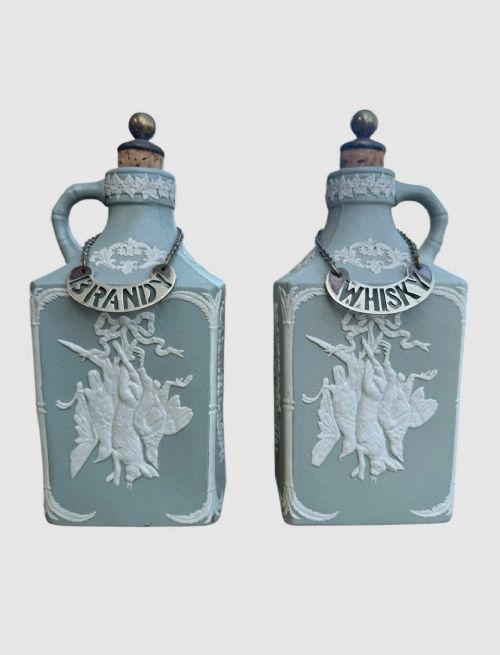
- A dense, impermeable ceramic pottery fired at high temperatures, frequently utilised for durable trade and advertising spirit flasks.
- Hallmark
- An official stamp applied to precious metals such as silver, indicating the standard of purity, the assay office, and the year of manufacture.
- Nailsea Type
- Glassware characterised by distinctive looped or combed white enamel trails applied over a coloured or clear glass body.
Victorian Spirit Bottles: Frequently Asked Questions
What is a spirit tantalus?
A spirit tantalus is a specialised locking stand designed to hold two or three decanters securely behind a wooden and metal bar.
This device allowed hosts to display expensive liquors in the dining room while preventing servants or guests from helping themselves without the key.
How do I date a decanter?
Dating a decanter involves examining the manufacturing techniques, such as pontil marks on the base, the shape of the neck rings, and the depth of the hand-cut facets.
Matching silver mounts with legible Birmingham hallmarks or correlating the design style with periods like William IV and Edwardian eras also helps establish an accurate date.
Were these bottles used for whisky?
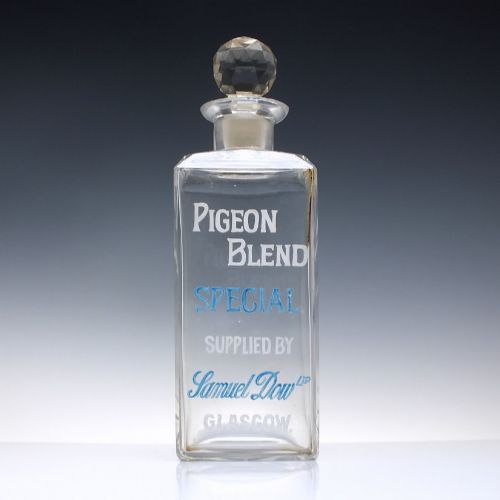
Many of these vessels were expressly created or labelled for whisky, ranging from fine cut crystal decanters to glazed stoneware advertising flasks.
Distilleries and merchants often commissioned specific pottery flasks to promote their regional blends during the nineteenth century.
What colours of glass were popular?
Victorian makers favoured a vibrant palette for spirit vessels, producing pieces in rich cobalt, deep amethyst, vibrant ruby, and forest green.
Clear lead crystal remained standard for formal dining, while coloured glass was frequently employed to protect sensitive contents from light or simply to add visual warmth to a sideboard.