




Victorian Spill Holder
These Victorian spill holder pieces are small domestic receptacles designed to hold slender wooden tapers for lighting fires and lamps.
Victorian Spill Holder
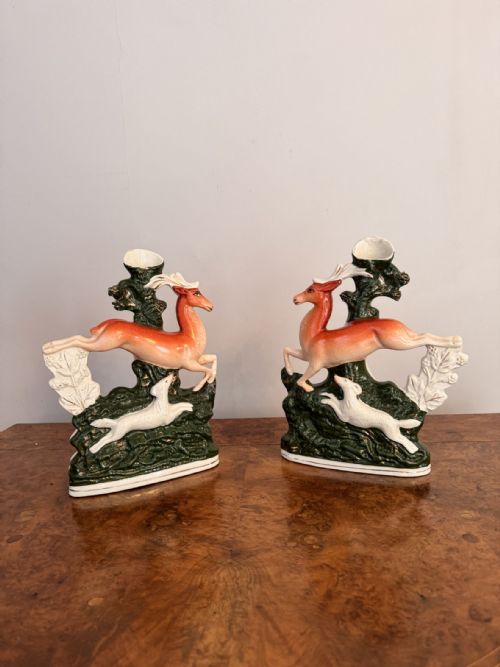
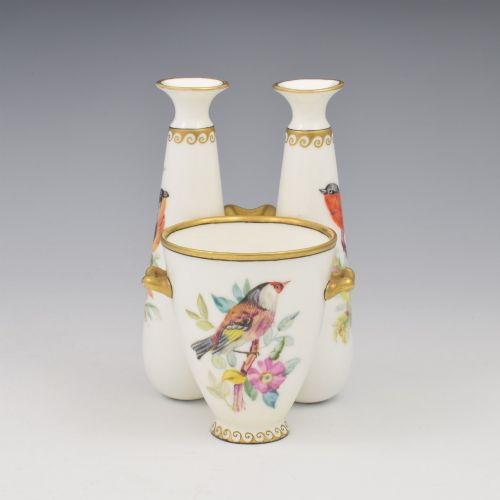
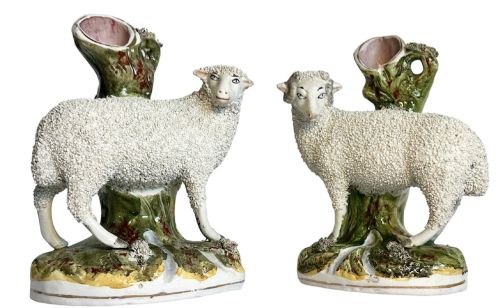
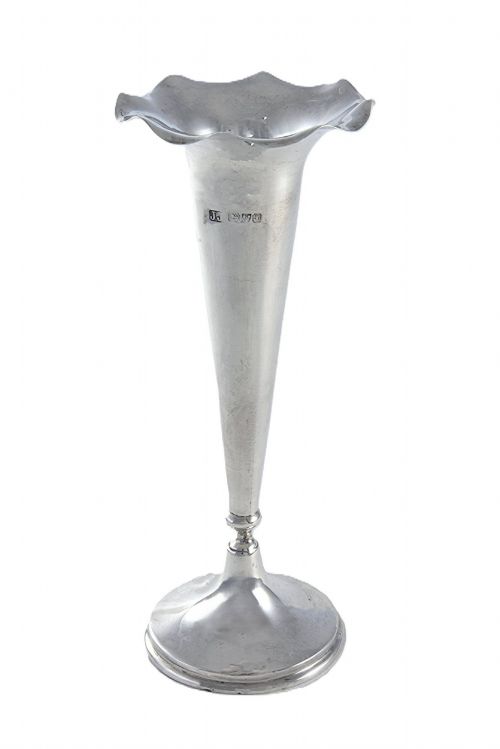
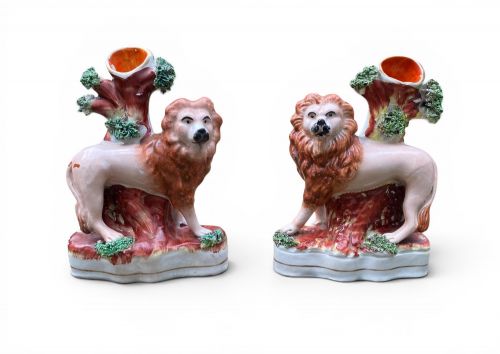
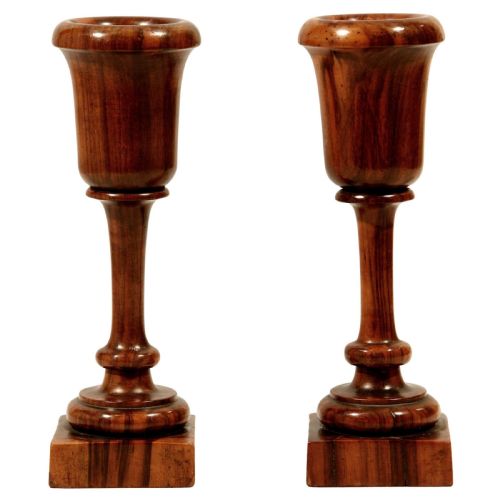
A victorian spill holder takes many forms across the nineteenth century, from moulded earthenware figures and flatback animal groups to porcelain vases and turned wooden stems. Buyers searching for a victorian spill holder most frequently encounter Staffordshire pottery examples featuring pairs of deer, sheep, lions, or swans alongside human figures.
Makers shaped these functional vessels to sit upon mantelpieces, combining ornamental subjects with a central cylindrical socket for paper or wooden spills. The selection ranges from robust earthenware pottery to delicate porcelain and hallmarked silver specimens.
The assortment extends from mid nineteenth century Staffordshire flatback models to later ceramic figurines and turned timber urns. Each piece reflects the domestic habits of the period, when fires required constant tending and tapers stood ready in every parlour.
What varies in quality
The fineness of modelling and crispness of hand-painted enamel decoration separate standard production items from superior works. Staffordshire figures with distinct facial expressions and detailed brushwork represent a higher grade of manufacture than hastily finished factory output.
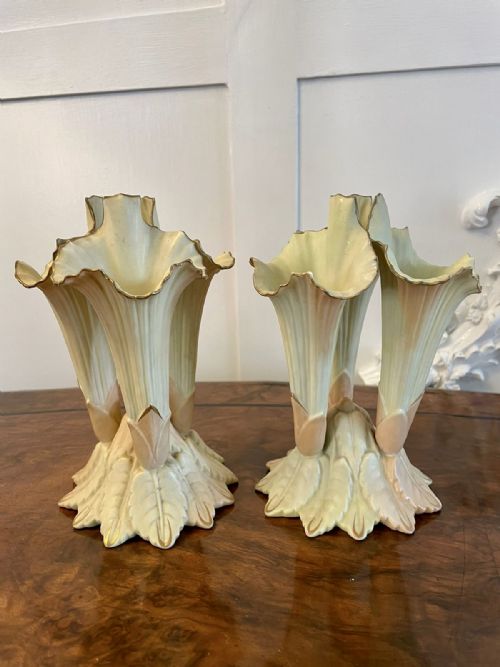
Material choice and finishing details dictate the standing of metal and ceramic examples. Solid silver construction, crisp wood turning, and porcelain with delicate blush ivory glazes or gilding indicate superior craftsmanship.
Materials span earthenware, porcelain, sterling silver, enamel, and turned hardwoods including oak and lignum vitae.
Royal Worcester·Locke & Co.
The Victorian Spill Holder Glossary
- Spill
- A slender strip of wood or rolled paper used to transfer a flame from a hearth fire to a candle or pipe. These were kept ready in dedicated holders on the mantelpiece.
- Flatback
- A style of ceramic figure moulded with a finished front and a flat, unpainted rear designed to stand flush against a wall. This technique saved materials and production time for mantelpiece ornaments.
- Earthenware
- A porous ceramic body fired at lower temperatures and finished with a glaze to achieve impermeability. Most Staffordshire animal figures utilise this accessible material.
- Lead glaze
- A glossy coating containing lead oxide applied to ceramic wares before a secondary firing. It produces a smooth, shiny surface that enhances painted enamel colours.
- Blush ivory
- A porcelain finishing technique pioneered by Royal Worcester featuring a soft, creamy background with delicate floral decoration and gilding. It mimics the warm tone of antique ivory.
Victorian Spill Holder: Frequently Asked Questions
What is a spill holder?
A spill holder is a decorative container designed to hold wooden tapers or rolled paper used for lighting fires and candles before the invention of safety matches.
These vessels sat upon nineteenth century mantelpieces as both functional fireplace accessories and ornamental ornaments.
How were spill holders used?
Households kept them filled with slender wooden spills near hearths to easily transfer flames from the coal fire to oil lamps or candles.
They provided a practical solution for lighting household lighting without constantly wasting matches.
How do I date Staffordshire spill holders?
Staffordshire spill holders are typically dated by examining the modelling style, flatback construction, and the vibrancy of the hand-painted enamel glazes.
Mid nineteenth century examples often feature simpler, robust animal forms while later pieces show refined detailing.
What materials are they made from?
These pieces appear in earthenware, porcelain, ceramic bisque, sterling silver, sheet brass, and turned hardwoods like oak and lignum vitae.
Ceramics and Staffordshire pottery dominate the selection alongside occasional metal and turned wooden specimens.