




White Glaze Ceramic Ornament
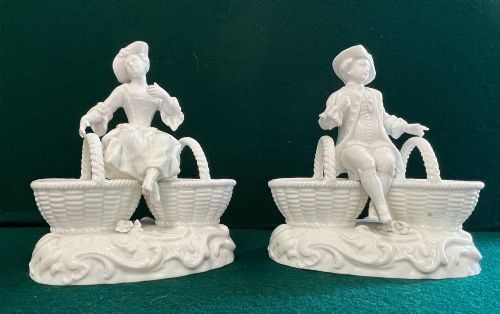
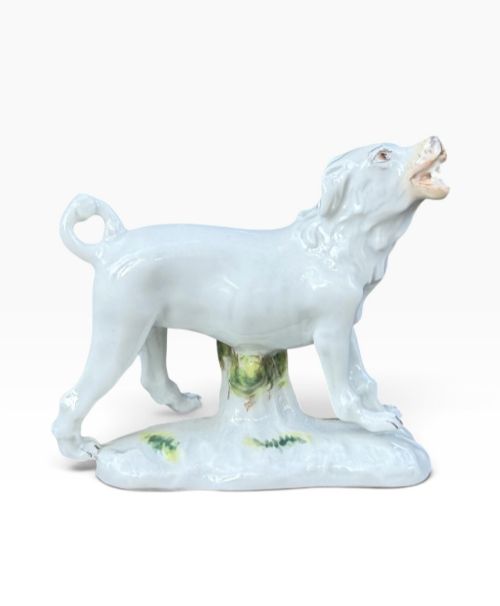
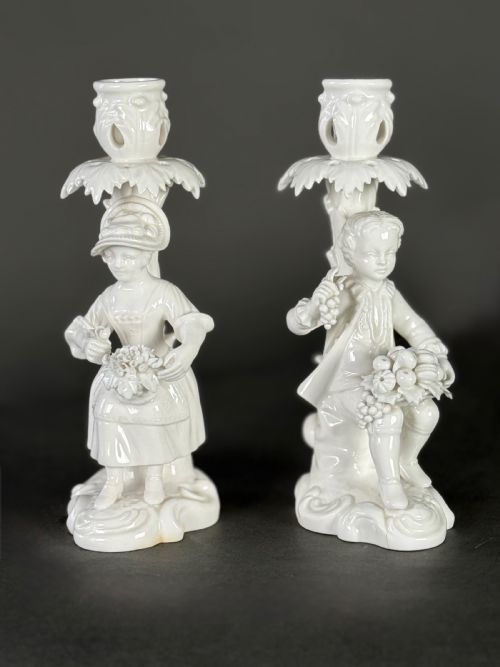
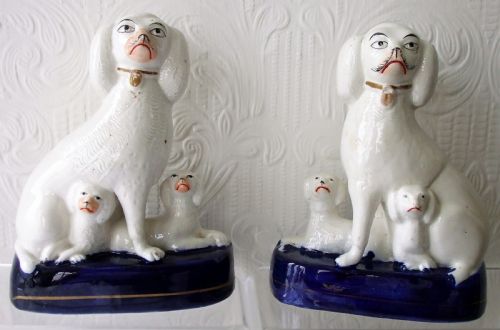
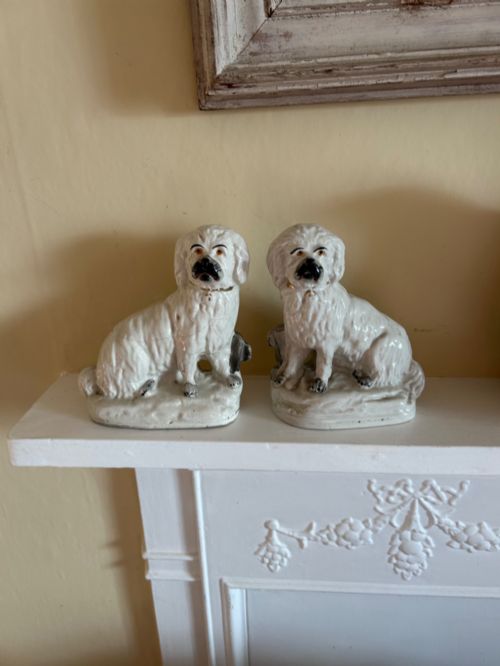
A white glaze ceramic ornament brings figurative charm to a mantelpiece, taking the form of nineteenth-century dogs, figures, and spill vases.
White Glaze Ceramic Ornament
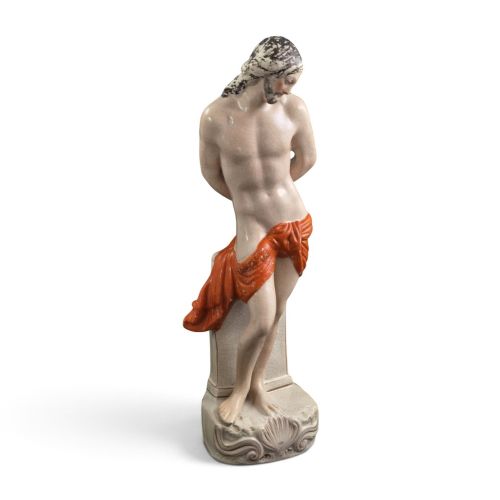
A white glaze ceramic ornament spans decorative figures, spill vases, and portrait groups originating from nineteenth-century English potteries and continental European kilns. Buyers seeking this category encounter earthenware, hard-paste porcelain, and soft-paste pieces shaped into animals, historical figures, and pastoral subjects.
Staffordshire earthenware dogs, poodles, and spaniels dominate the selection alongside German porcelain figures and Dutch Delftware animals. These domestic and figurative forms reflect Victorian mantelpiece tastes and continental ceramic traditions.
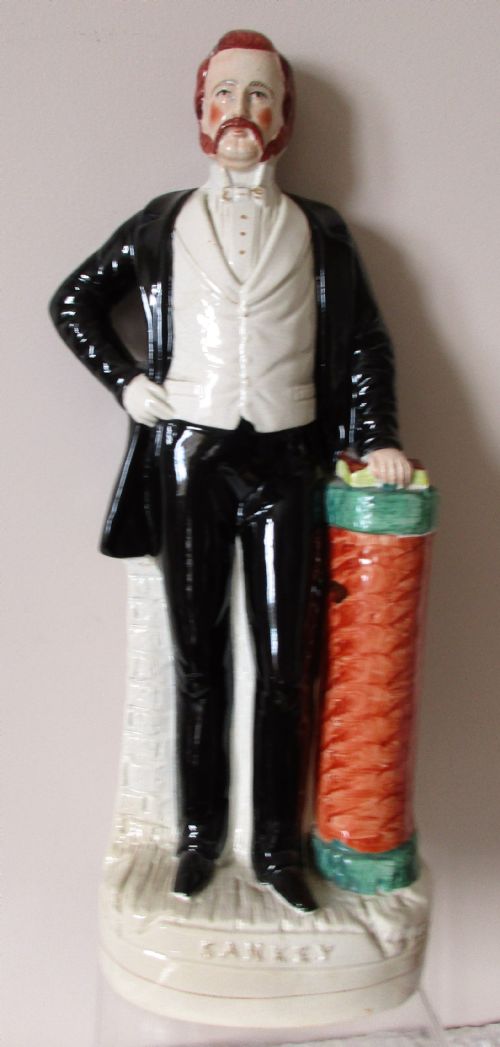
Continental porcelain works from makers such as Meissen, KPM, and Volkstedt appear alongside Staffordshire flatback groups and spill vases. The selection ranges from miniature poodles to large portrait figures commemorating historical events.
Materials and construction
Potters shaped these objects from earthenware, terracotta, and hard-paste or soft-paste porcelain before applying lead glazes, tin glazes, or enamel highlights. The application of white glaze creates a uniform surface that conceals the underlying ceramic body.
Makers utilised slip-casting and hand-modelling techniques to form figurines, animals, and architectural spill vases. Artisans then fired the pieces in kilns, sometimes adding gold leaf or hand-painted details over the glaze.
Nineteenth-century Staffordshire poodles arrived on mantelpieces sporting ceramic fur formed from tiny applied clay pellets resembling curls.
Distinctions in manufacture
Quality separates through the crispness of the modelling and the evenness of the glaze across the ceramic body. Finer examples retain delicate facial expressions, sharp paws, and clean moulding lines without pooling glaze.
Meissen·Thomas Parr·Vion and Baury·Royal Worcester·Volkstedt
The White Glaze Ceramic Ornament Glossary
- Flatback
- A figurine moulded with a finished front and a plain, unglazed or semi-glazed flat rear designed to sit flush against a wall.
- Spill vase
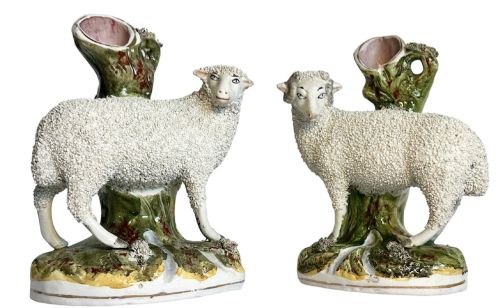
- A hollow ceramic cylinder attached to a figure, utilised to hold wooden spills for lighting candles or fires.
- Blanc-de-chine
- A French term for white porcelain originating from Chinese kilns and later adopted in Europe to describe uncoloured white glazed wares.
- Earthenware
- A porous ceramic body fired at lower temperatures, requiring a glaze to render it waterproof.
- Soft-paste porcelain
- A glassy porcelain composition fired at lower temperatures than hard-paste, producing a warm texture under the glaze.
White Glaze Ceramic Ornament: Frequently Asked Questions
What is a spill vase used for?
A spill vase combines a decorative figural subject, such as a sheep or a dog, with an integrated hollow cylinder.
Households used these cylinders to hold thin strips of wood called spills, which transferred flames from the hearth to candles and lamps.
How do I date a ceramic figurine?
Dating relies on stylistic clues, ceramic bodies, and manufacturing techniques such as flatback construction or glaze characteristics.
Nineteenth-century examples often feature crazing in the glaze and hand-painted details rather than modern transfer printing.
What is the difference between earthenware and porcelain?
Earthenware is an opaque, porous ceramic body fired at lower temperatures that requires a glaze for sealing.
Porcelain is a denser, vitrified material that can remain translucent and resists liquid even without surface glazing.
Where should I display these ornaments?
These decorative objects suit placement on mantelpieces, bookshelves, and tables where their figures and white glazes are visible.
Positioning them away from direct heat sources and high-traffic edges protects the ceramic body and glaze from damage.