


Victorian Slant Desk
A victorian slant desk brings nineteenth-century craftsmanship into daily use, offering fitted drawers and sloped writing surfaces in rich timbers.
Victorian Slant Desk
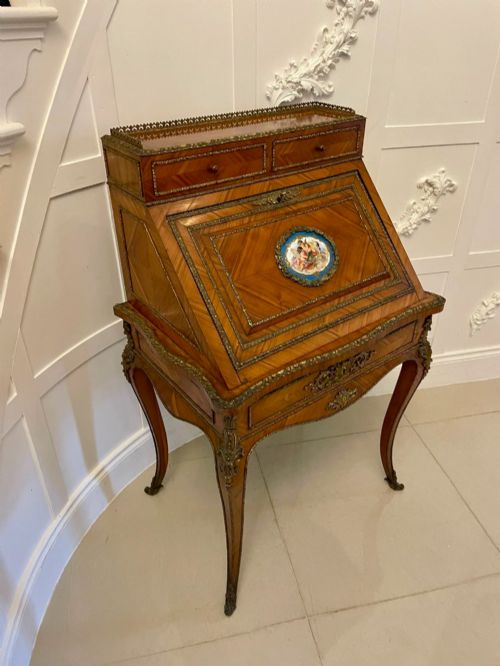
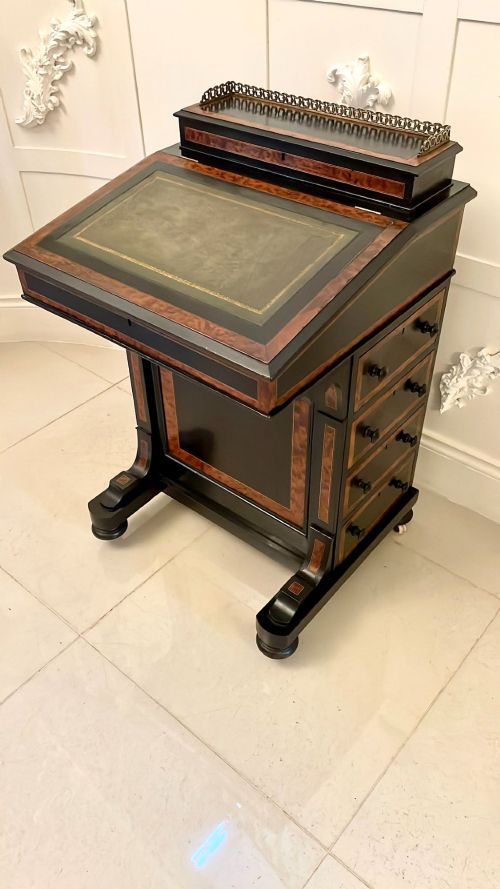
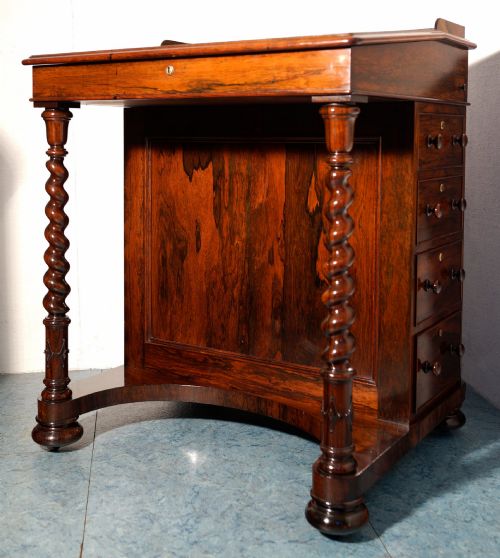
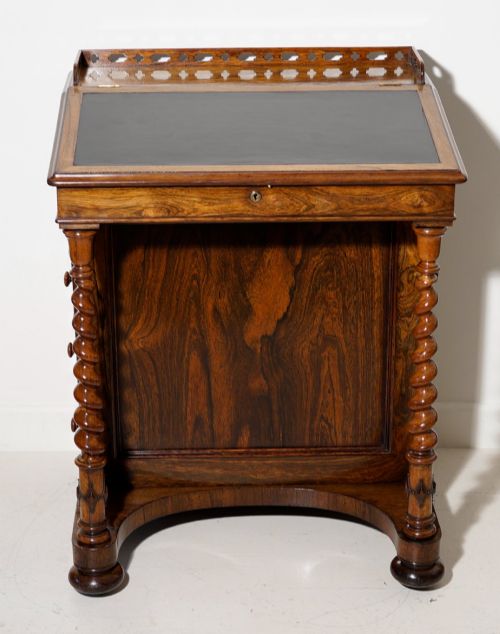
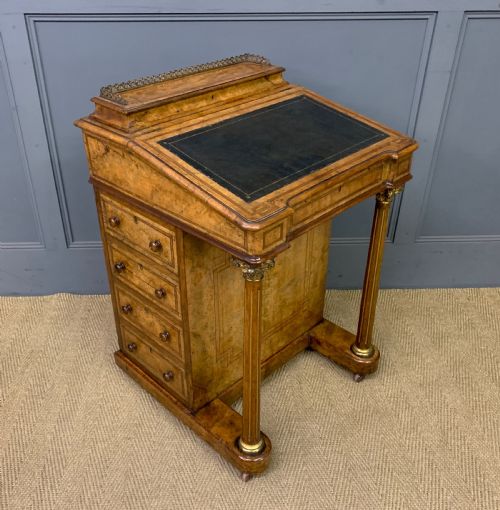
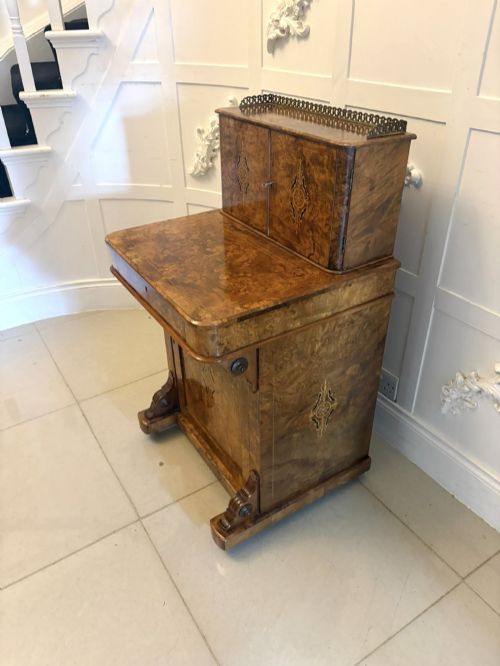
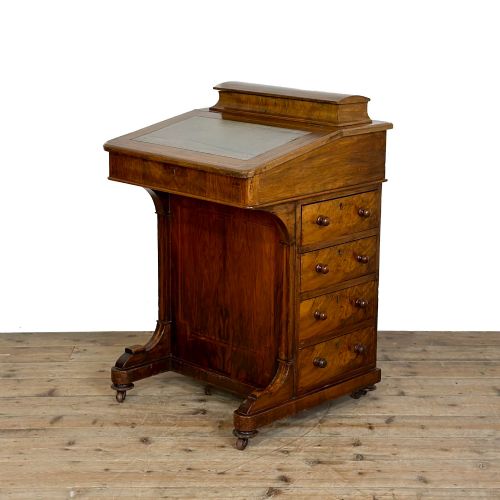
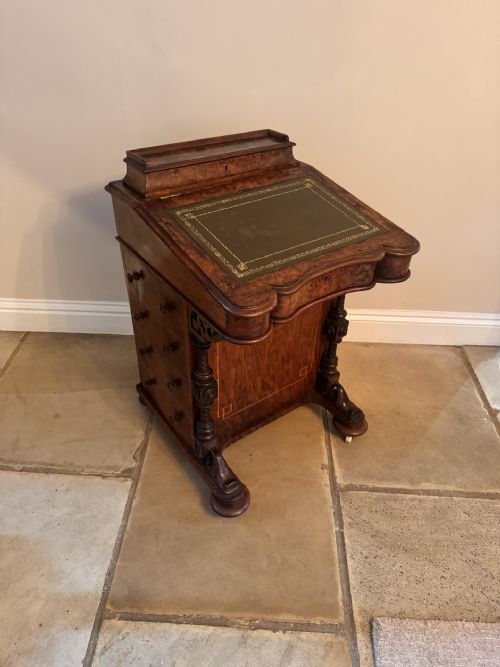
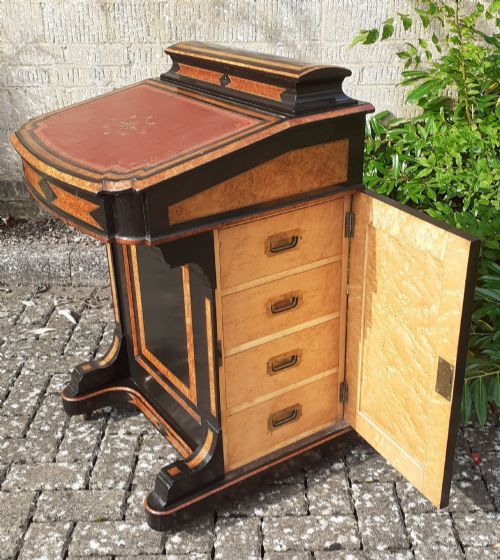
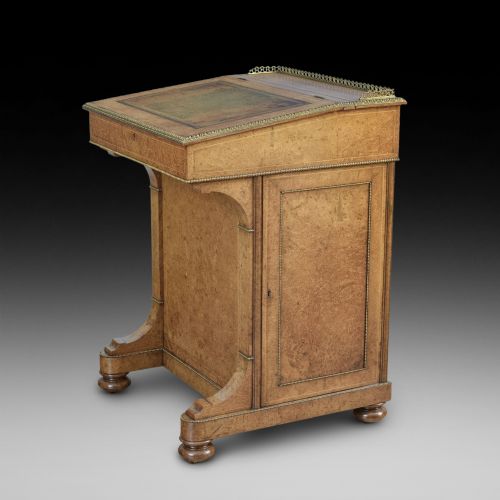
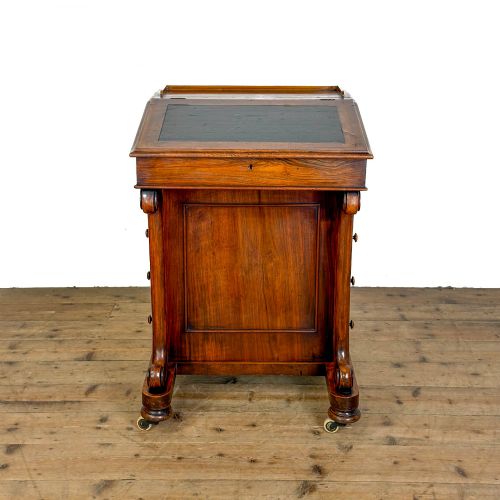
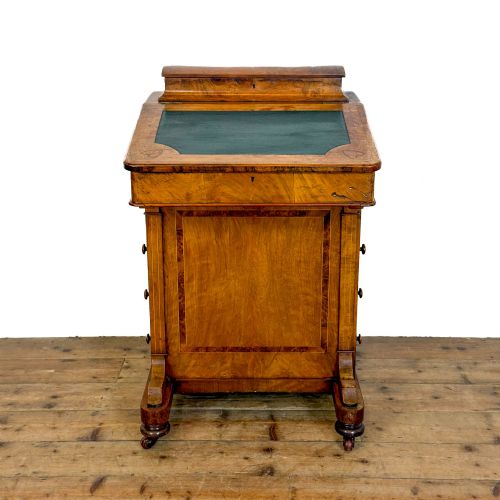
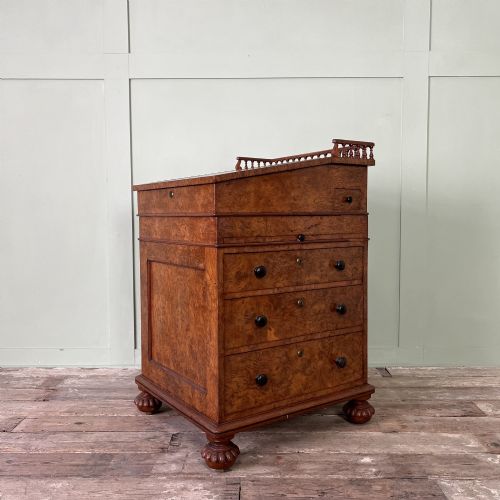
A victorian slant desk encompasses several nineteenth-century writing forms, most commonly compact Davenport desks alongside bureaus, Dickens desks, and bonheur du jour tables.
Makers produced these pieces across the Victorian period, utilising styles ranging from Early Victorian mahogany to Late Victorian oak and marquetry-inlaid walnut.
The selection ranges from fitted desk boxes and stationery cabinets to large architectural writing tables featuring leather tops and multiple drawers.
Materials and Construction
Cabinetmakers constructed these pieces from dense hardwoods like mahogany, walnut, burr walnut, rosewood, and oak, frequently employing kingwood and amboyna for decorative effect.
Surface decoration relies on floral marquetry, crossbanding, and brass mounts, alongside ormolu details and fitted satinwood interiors within the writing compartments.
Writing surfaces integrate inset leather panels, while structural elements incorporate locking mechanisms operated with original keys.
Listings feature Davenport desks, Dickens desks, and bonheur du jour tables executed in walnut, mahogany, rosewood, and oak across the Victorian period.
Quality and Distinction
Distinction rests on the choice of timber figures, such as highly figured burr walnut or amboyna, matched with intricate floral marquetry and crossbanding.
Internal refinement separates standard pieces from finer examples, particularly where satinwood stationery compartments and secret drawers remain intact.
The integration of substantial brass hardware, original locking keys, and secondary timbers demonstrates superior workshop execution.
Gillow and Co·Maple and Co·Pairs MFG Co
The Victorian Slant Desk Glossary
- Davenport
- A compact pedestal desk featuring a sloped, hinged writing surface above a bank of side drawers. This form became popular during the nineteenth century for domestic correspondence.
- Bonheur du jour
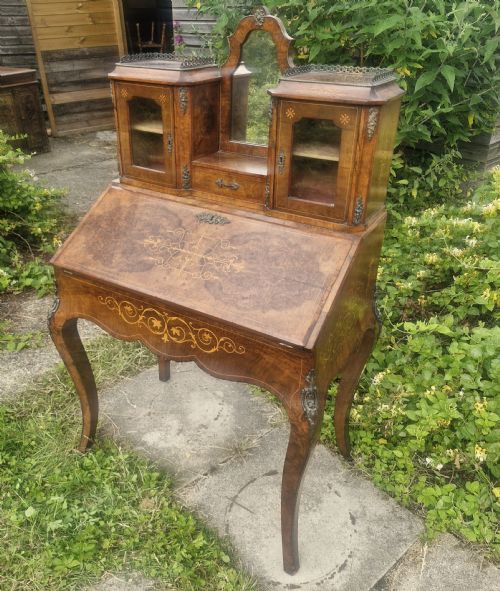
- A light ladies' writing desk fitted with small drawers, pigeonholes, or a small cabinet on top. Cabinetmakers often decorated these with floral marquetry and kingwood veneers.
- Dickens desk
- A large partner's desk featuring a raised superstructure of pigeonholes and small drawers above the main writing surface. These heavy pieces typically appear in oak or walnut.
- Marquetry
- The art of applying decorative pieces of veneer to a structure to form detailed patterns or floral pictures. Makers utilised contrasting timbers such as walnut, satinwood, and amboyna.
- Crossbanding
- A strip of veneer applied around the border of a furniture panel with the grain running at right angles to the centre. This technique frames the primary timber figure.
Victorian Slant Desk: Frequently Asked Questions
What is a Davenport desk?
A Davenport is a small pedestal desk featuring a sloped writing lid that lifts to reveal internal stationery compartments. The side incorporates a bank of functional drawers.
Cabinetmakers designed these compact pieces for domestic writing rooms and parlours during the nineteenth century.
How do I identify a Dickens desk?
A Dickens desk is a substantial partner's desk characterised by a raised superstructure of small drawers and pigeonholes on the top surface. They provide extensive compartmentalised storage.
Most examples appear in heavy oak or walnut, often dating from the mid to late Victorian decades.
What is a bonheur du jour?
A bonheur du jour is a light writing table designed for ladies, featuring a small cabinet or shelving superstructure above the desk top. Makers frequently decorated them with kingwood and floral marquetry.
These pieces gained popularity in French-influenced Victorian and revival interiors.
What timbers were used?
Cabinetmakers utilised dense hardwoods including mahogany, walnut, rosewood, and oak for the primary structures. Burr walnut, amboyna, and kingwood provided decorative veneer surfaces.
Secondary timbers often included satinwood for internal compartments alongside brass and ormolu mounts.