


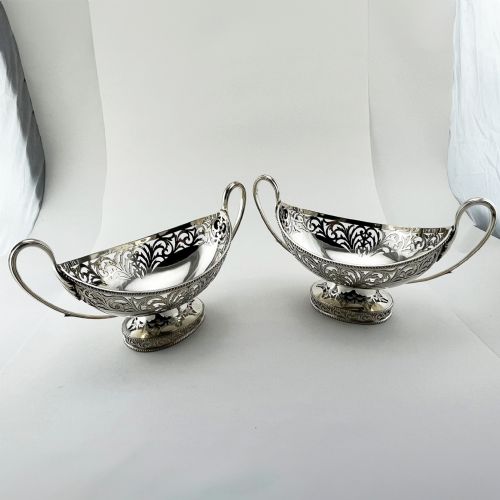


Victorian Silver Table Basket
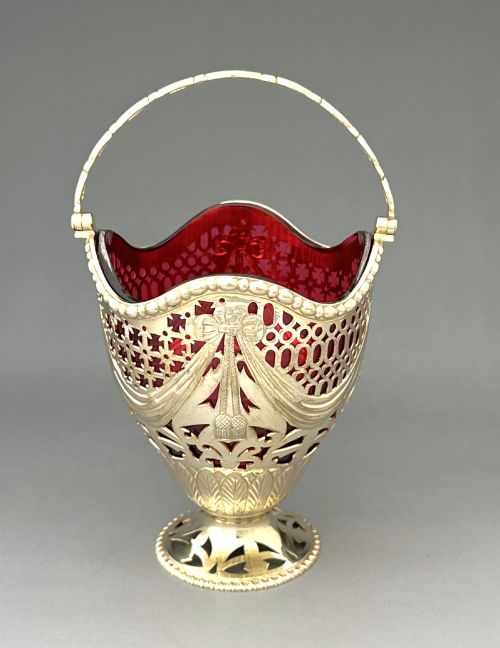
These victorian silver table basket examples bring pierced metalwork and coloured glass liners to the table, offering versatile serveware for fruit, sugar and bonbons.
Victorian Silver Table Basket
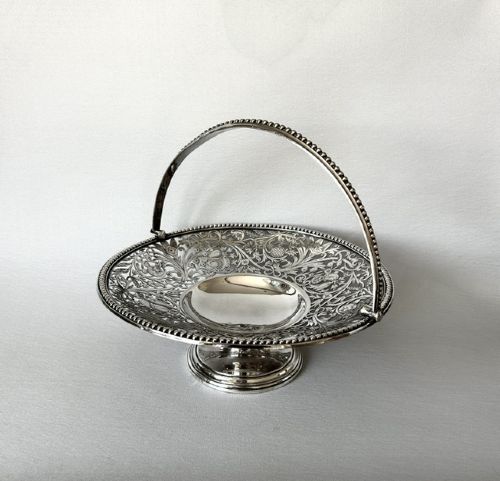
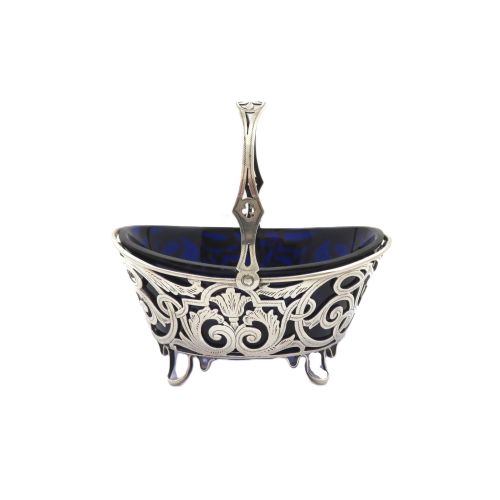
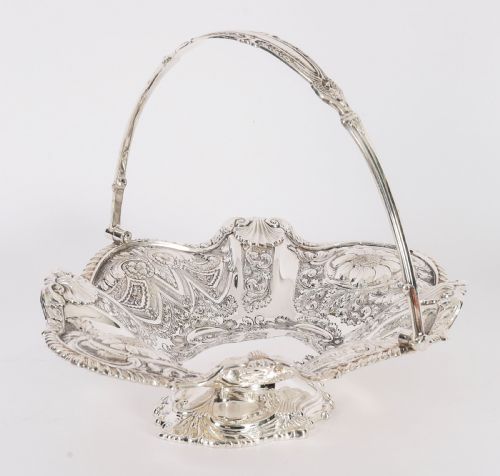
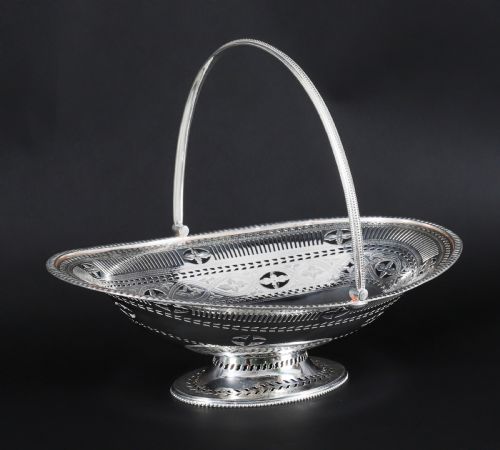
Most pieces combine a metal framework with coloured glass inserts such as cranberry, cobalt, and vaseline glass. Others utilise solid sterling silver or silver plate alone, shaped into oval or pierced designs with loop and swing handles.
Makers produced these items for domestic display and service, incorporating styles from rococo revival to art nouveau. The selection spans simpler cream pails and toothpick holders alongside substantial cake baskets and centrepieces.
Materials and Construction
Silversmiths and electroplaters worked sterling silver and silver plated metal into complex shapes through casting, piercing, and hammering. Pierced lattice patterns require careful hand-sawing or stamping to achieve openwork decorative walls.
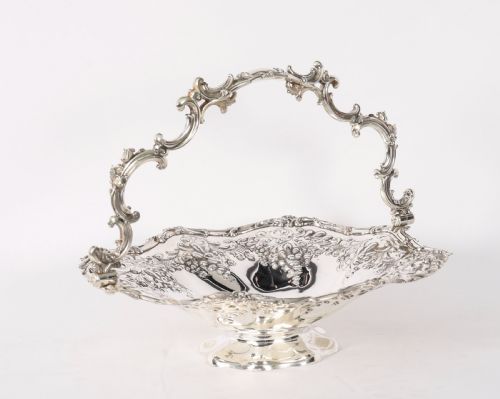
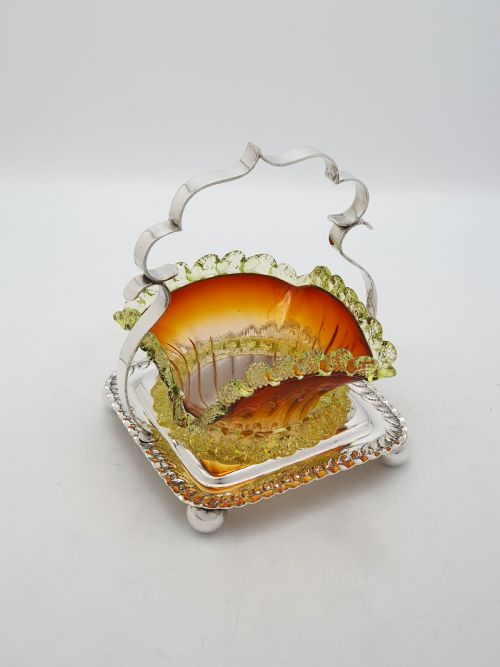
Makers combined silver gilt and standard silver with blown and cut glass liners in amber, green vaseline, and cranberry hues. Handles often feature cast floral motifs or reeded elements secured by hinges or fixed mounts.
Some delicate glass liners glow bright green under ultraviolet light, revealing their uranium glass content.
Distinctions in Quality
Quality rests upon the crispness of the piercing, the weight of the metal, and the harmony between the silver frame and its glass liner. Solid sterling pieces with fully cast floral handles and clear hallmarks demonstrate superior manufacturing compared to standard plated items.
The integrity of the glass liner matters greatly, as does the retention of the original silver gilt finish on the interior surfaces. Refined engraving and balanced proportions distinguish ambitious centrepieces from simpler utility dishes.
George W. Scott & Sons Ltd·Thomas Bradbury·William Comyns·George Fox·James Dixon
The Victorian Silver Table Basket Glossary
- Silver Plate
- A base metal coated with a thin layer of silver through electroplating or older manufacturing methods. This technique allowed makers to produce large decorative table baskets at a lower cost than solid sterling.
- Silver Gilt
- Silver covered with a thin layer of gold on its surface, often seen on the interior of sugar baskets and preserve dishes. The gold wash protects the silver from tarnishing when in contact with acidic foods.
- Pierced
- Metalwork punctured with decorative holes in geometric, floral, or lattice patterns. This technique lightened the weight of large fruit and cake baskets while adding visual intricacy.
- Vaseline Glass
- A transparent yellowish-green glass coloured with uranium dioxide, popular in Edwardian and art nouveau table accessories. It produces a distinct glow under ultraviolet light.
- Swing Handle
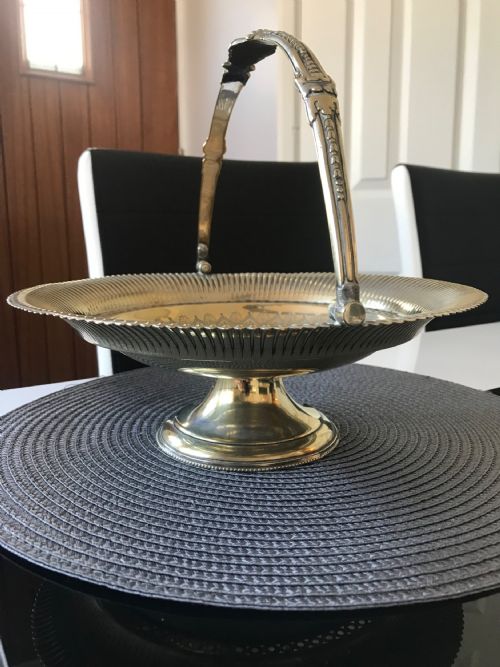
- A movable arched handle attached to the rim of a basket by pivots. This feature allows the handle to drop flat for easy access and storage on the dining table.
Victorian Silver Table Basket: Frequently Asked Questions
What were these baskets used for?
These pieces held fruit, sugar lumps, bonbons, and preserves on the dining table during formal meals and afternoon tea.
Hosts used them for service and display, passing them among guests or placing them centrally as decorative table ornaments.
How do I clean a silver basket?
Clean sterling silver and silver plate gently with a specialised soft cloth and mild silver polish to avoid removing the plating. Remove glass liners before cleaning and wash them separately in warm soapy water.
Avoid abrasive materials that might scratch the metal or damage any delicate silver gilt surfaces.
Are the glass liners usually original?
Many baskets retain their original cranberry, cobalt, or vaseline glass liners, shaped specifically to fit the contours of the metal frame. Replacements occur due to breakage over the decades of use.
Matching liners should sit flush within the basket without excessive wobble against the pierced walls.
How do I tell Victorian from Edwardian pieces?
Victorian pieces often lean towards rococo revival, neoclassical styles, and heavy floral casting dating from the nineteenth century. Hallmarks and date letters stamped on the silver provide exact verification of the year of assay.
Edwardian items, produced around the turn of the twentieth century, frequently incorporate flowing art nouveau lines and green vaseline glass elements.