


Victorian Silver Salt Dips
Victorian silver salt dips are small table vessels for holding seasoning, prized for their intricate metalwork and coloured glass liners.
Victorian Silver Salt Dips
Victorian silver salt dips are small vessels designed for the dining table to hold salt alongside individual meals. The pieces found here span the Victorian and Edwardian eras, alongside some Georgian and 19th-century examples.
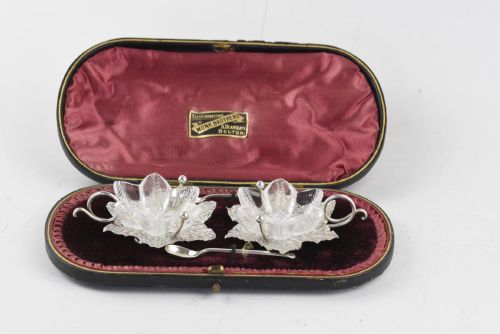
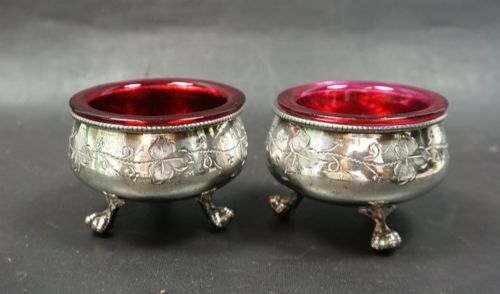
Most entries take the form of salt cellars, open salts, or small dishes, often accompanied by matching spoons and fitted presentation cases. Buyers will encounter pairs and sets of four, frequently fitted with contrasting cobalt or cranberry glass liners.
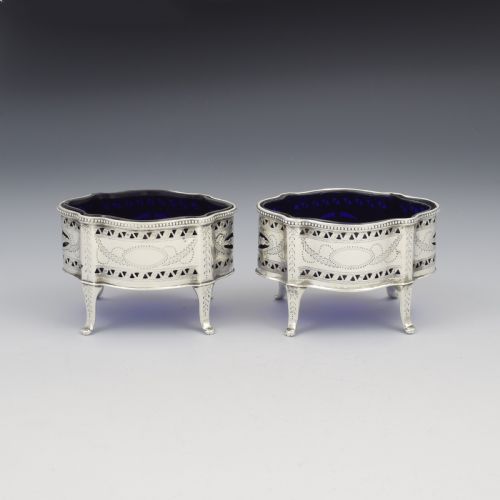
Makers and silversmiths utilised styles ranging from Rococo Revival and the Aesthetic Movement to 19th-century Russian designs. Forms vary from simple open bowls to serpentine shapes, six-lobed bodies, and figural interpretations such as birds and eagles.
Materials and construction
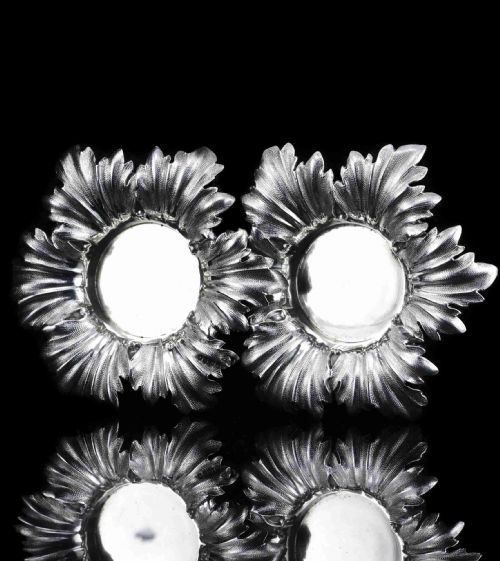
These items are constructed primarily from solid sterling silver or silver plate, shaped through techniques like piercing, chasing, and moulding. Silversmiths decorated the exteriors with foliate patterns and detailed motifs.
Internal glass liners, particularly in cobalt or cranberry hues, protected the metal from the corrosive nature of salt. Fitted interiors often included silk and velvet linings within leather or card presentation boxes.
Listings feature sterling silver and silver plate alongside velvet, silk, leather, and coloured glass liners.
Distinctions in craftsmanship
Quality separates through the crispness of the hand-chased foliage and the weight of the solid silver versus plated alternatives. Pierced work demonstrates the skill of the silversmith in achieving balanced, symmetrical openwork patterns.
The presence of original matching glass liners and contemporaneous spoons elevates a piece. Complete boxed sets with intact velvet and silk interiors also hold greater cohesion for collectors.
Barnards·Thomas Smily·Vale Brothers and Sermon
The Victorian Silver Salt Dips Glossary
- Open salt
- A small master or individual salt cellar that does not have a lid, allowing the contents to be spooned out directly.
- Cobalt glass
- A deep blue glass frequently used to line open salt cellars, providing a striking contrast to the silver exterior.
- Chasing
- A metalworking technique where the silversmith hammers patterns into the front surface of the silver to create raised ornamental designs.
- Pierced silver
- Metalwork that has been cut through to create decorative open lattice patterns or grilles.
- Salt spoon
- A tiny diminutive spoon specifically proportioned to transfer salt from the dip to the side of the diner's plate.
Victorian Silver Salt Dips: Frequently Asked Questions
How were salt dips used at the table?
Victorian diners used these small vessels for individual portions of salt placed beside each setting. Guests transferred the seasoning to their plates using a tiny matching spoon.
Before domestic salt shakers became common, open salts were a standard part of formal dining arrangements. They required careful placement and maintenance to keep the salt dry and free from lumps.
Can I use antique salt dips today?
You can certainly use these pieces on a modern dining table for salt, spices, or small condiments. Their sturdy construction makes them practical for contemporary use.
Care must be taken to empty and clean the glass liners promptly after dining, as residual salt can pit silver over extended periods.
How do I clean silver salt dips?
Silver components require gentle cleaning with a specialised polish to maintain the shine without wearing down the chased details. Removable glass liners should be washed separately in warm soapy water.
Harsh chemical dips should be avoided, particularly on pieces with velvet or silk case linings which can be easily stained or ruined by moisture.
How do I know if they are sterling silver?
British pieces typically feature hallmarks stamped into the metal, indicating the assay office, the maker, and the standard of silver. Sterling silver marks confirm the precise metal purity used in the construction.
Silver-plated items lack these specific sterling hallmarks and often display wear where the base metal shows through the thin outer coating.