





Victorian Silver Plated Barware
Victorian silver plated barware brings the ceremony of nineteenth-century drinking rituals to a sideboard, combining heavy metalwork with cut glass.
Victorian Silver Plated Barware
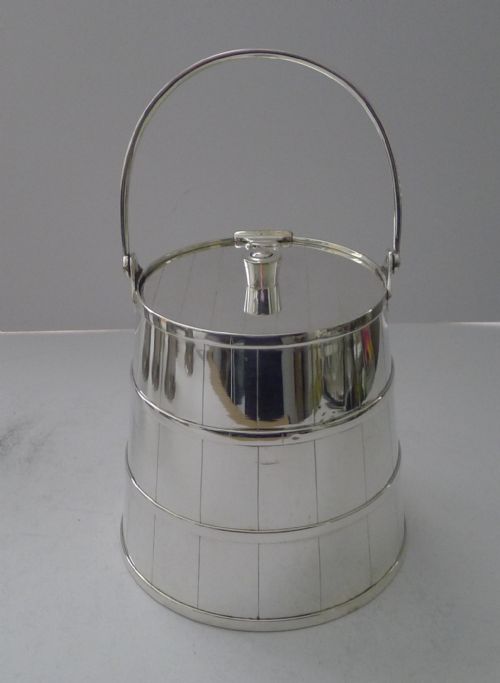
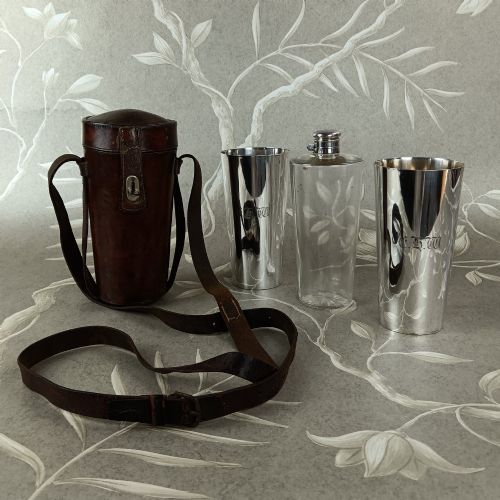
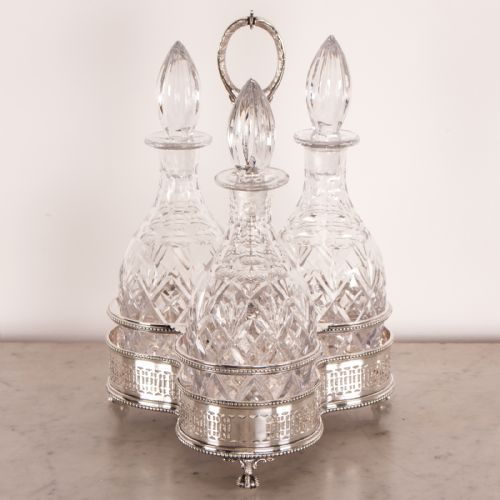
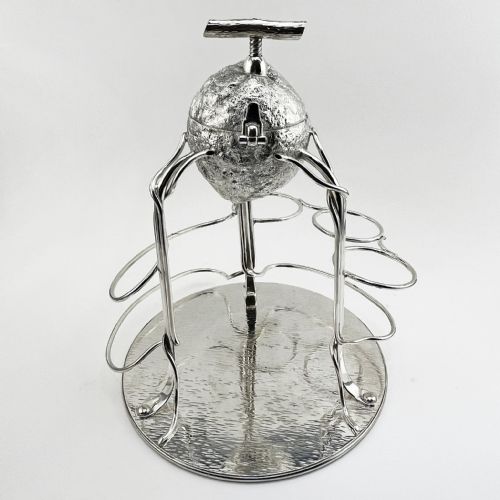
Victorian silver plated barware encompasses the functional vessels and locking containers used to serve wine, spirits and iced drinks during the nineteenth and early twentieth centuries. These objects range from claret jugs and spirit barrels to ice buckets, tantalus frames and bottle holders.
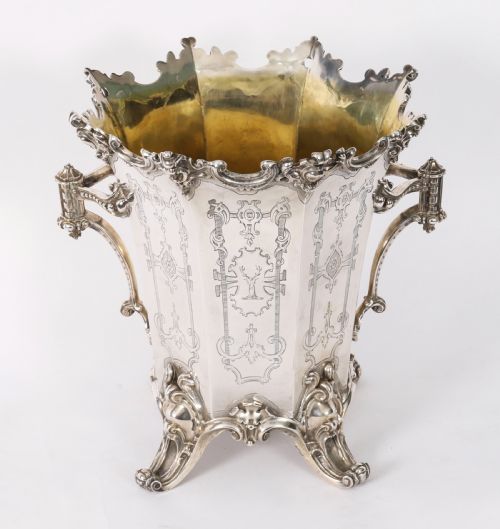
The items most commonly encountered in this category include silver-plate mounted cut-glass claret jugs, multi-bottle tantalus sets, and wine coolers or bottle coasters. Many examples combine silver plate with clear, frosted or cranberry glass, oak, and ceramic liners.
Originating predominantly from English workshops during the Victorian and Edwardian periods, these pieces reflect the elaborate hospitality habits of the era. They were designed for domestic entertaining in dining rooms and drawing rooms, often featuring mechanical locks or novelty forms.
How they were made
Makers applied thin layers of silver onto base metals such as copper, nickel silver or electroplated nickel silver, using early electroplating techniques or older Sheffield plating methods. This created the bright appearance of solid silver while providing a durable surface for daily handling.
Glass components were heavily cut, moulded or frosted to catch the light, then combined with metal mounts, hinged lids and cast handles. Wood such as oak and coromandel was frequently integrated into ice buckets and bottle frames, often paired with ceramic creamware liners.
Some Victorians enjoyed pouring their champagne from decanters shaped precisely like giant champagne bottles.
What varies in quality
The standard of an object depends heavily on the crispness of the cast mounts and the depth of hand-chased or engraved surface decoration. Heavier gauges of silver plate and robust foundational metals resist wear and maintain their integrity through decades of use.
Design complexity also separates standard utility items from exceptional pieces, particularly in mechanisms like locking tantalus frames or novelty forms shaped as thistles and champagne bottles. The integration of high-grade cut crystal and maker-marked hardware elevates the standing of an individual piece.
James Dixon & Sons·Walker & Hall·Elkington, Mason & Co·Hukin & Heath·Rupert Favell & Co·The Goldsmith Co
The Victorian Silver Plated Barware Glossary
- Tantalus
- A locking wooden or metal frame designed to secure decanters of liquor while allowing guests to see the contents. The mechanism holds the stoppers firmly in place until a key is unlocked.
- Claret jug
- A pouring vessel featuring a glass body and a hinged silver plated metal mount, handle and spout. These pitchers were used for serving red wine at the dining table.
- Old Sheffield plate
- A composite material made by fusing a thin sheet of silver to a thicker copper ingot before rolling them into sheets. This early technique predates standard electroplating.
- Salver
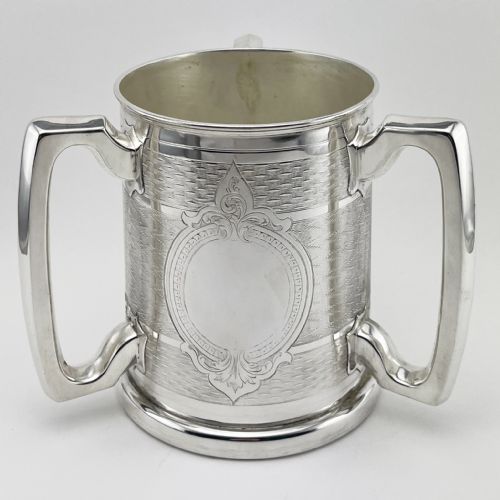
- A flat metal tray with a raised rim used for serving drinks or glasses. They frequently feature engraved surface patterns and decorative cast borders.
Victorian Silver Plated Barware: Frequently Asked Questions
What is a silver plated tantalus?
A tantalus is a locking drinks frame that prevents guests or servants from accessing the spirits inside without a key. The metal framework traps the glass stoppers so the decanters cannot be opened.
These security stands became popular in affluent Victorian households to protect expensive imported liqueurs and whiskies. They sit neatly on sideboards and combine heavy woodwork with ornate metal locking bars.
How do I care for silver plated barware?
Silver plate requires gentle cleaning with a soft cloth and dedicated silver polish to preserve the thin metallic layer over the base metal. Abrasive cleaners should be avoided because they wear down the plating over time.
Glass inserts and crystal bodies can be washed in warm soapy water separately from the metal mounts. Ensuring items are dried thoroughly prevents moisture from tarnishing the metal or damaging fitted wooden bases.
How can I date Victorian barware?
Dating relies on identifying maker marks, manufacturing techniques, and stylistic shifts between the early nineteenth century and the Edwardian era. Sheffield plating points to earlier origins, while electroplating became widespread after the middle of the century.
Design motifs also offer clear chronological clues, transitioning from ornate Rococo Revival scrolls to cleaner Art Nouveau lines by the end of the period. Patented locking mechanisms and retailer stamps often provide further confirmation of a specific decade.
What were novelty spirit barrels used for?
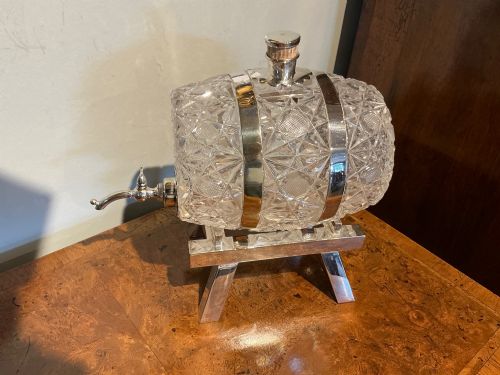
Novelty spirit barrels served as decorative containers for dispensing liquor during Victorian dinners and gatherings. They were often mounted on miniature wooden carriages or stands for easy tilting.
Guests would turn a small tap to pour drinks directly from the barrel into individual glasses. Their whimsical designs made them popular conversation pieces in domestic entertaining settings.