




Turned Wood Wine Coaster
Turned wood wine coasters are circular tabletop bottle stands designed to protect dining surfaces, pairing rich timber with polished metal to anchor a formal table.
Turned Wood Wine Coaster
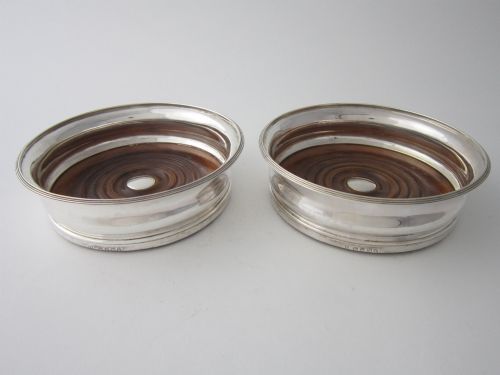
A turned wood wine coaster sits on the dining table to hold a bottle, protecting the polished timber beneath from rings and spills. These items appear across the Georgian, Regency, William IV, and Victorian periods, often taking the form of a low circular gallery.
The versions met most frequently combine turned timber bases with metal rims, specifically silver plate or Old Sheffield Plate. Examples range from simple single stands to matched pairs and larger sets intended for decanter service.
How they were made
Makers shaped the central bases from dense hardwoods like mahogany and rosewood on a lathe, creating smooth dished profiles designed to cradle bottle bases securely. These wooden discs frequently incorporate central roundels of sterling silver or silver plate fitted flush into the grain.
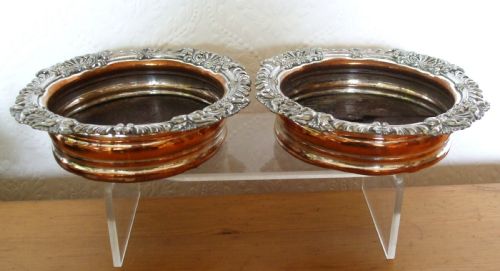
The outer galleries combine copper, brass, and silver plating techniques, notably Old Sheffield Plate where a thin sheet of silver is fused to a copper core. Silversmiths and specialised workshops then pierced, chased, or engraved the metal rims with floral and geometric patterns before securing them to the turned wooden foundations.
The listings span the Georgian, Regency, William IV, and Victorian periods, utilising mahogany, rosewood, silver, and Old Sheffield Plate.
What varies in quality
Quality rests in the crispness of the lathe work and the weight of the timber, where dense grain and rich natural colour show superior selection. Lesser examples display plain, unfigured wood with dry surfaces that lack depth.
The refinement of the metal gallery dictates the upper tier of pieces, showing sharp chasing and intact plating rather than worn copper showing through. Matched pairs and sets exhibit greater consistency in profile and turned detail than assembled groups.
Matthew Boulton·James Dixon and Son·Mein of Kelso
The Turned Wood Wine Coaster Glossary
- Old Sheffield Plate
- A composite material made by fusing a thin layer of sterling silver to a thicker copper base. This technique creates a durable metal used for fine Georgian and Regency tableware.
- Decanter Stand
- An alternative term for a wine coaster, denoting a low tray or gallery sized specifically to hold a decanter. These pieces protect the table during pouring and service.
- Turned Wood
- Timber shaped on a rotating lathe to create circular profiles and mouldings. This method produces the uniform round bases characteristic of these table accessories.
- Gallery
- The upright outer rim of a coaster, often pierced or decorated with repoussé work. It prevents the bottle from sliding off the wooden base.
Turned Wood Wine Coaster: Frequently Asked Questions
What is a turned wood wine coaster?
It is a low circular table accessory featuring a turned wooden base and a raised metal or wooden rim. The design prevents condensation rings and scratches on dining tables.
They appear in various historic styles, from simple Georgian turned timber to elaborate Victorian pieces with silver centres.
How were these coasters used?
Hosts placed wine bottles or decanters inside them to slide easily across the mahogany surface between guests after dinner. The raised walls kept the bottles secure during transit.
Pairs and larger sets allowed multiple vintages to circulate simultaneously around the table.
How do I care for wooden coasters?
Keep them away from direct heat sources and excessive moisture to protect the timber and the metal plating. Gentle dusting and occasional wax preservation maintain the polished surface.
Avoid submerging the pieces in water, as the combination of wood, copper, and silver requires dry maintenance.
How do I date these pieces?
Dating relies on combining the timber species, the metalworking technique, and the stylistic details of the gallery. Georgian and Regency pieces often feature simpler mahogany turnings and Sheffield plate.
Victorian examples frequently introduce rosewood and more ornate pierced metal decoration around the circumference.