



Victorian Silver Grape Scissors
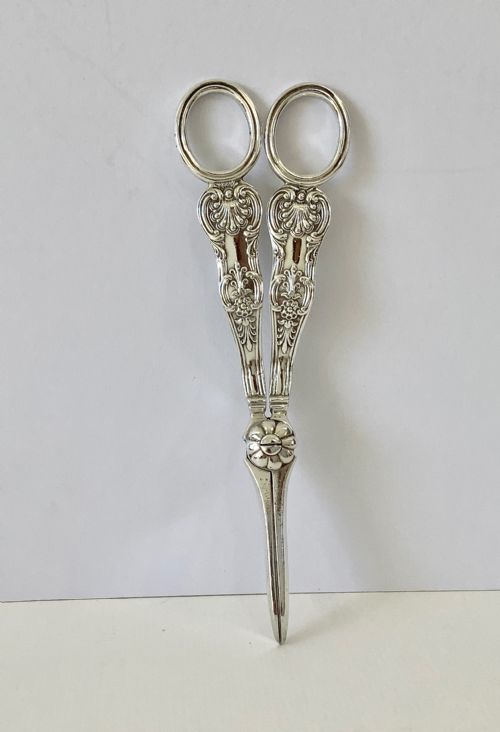
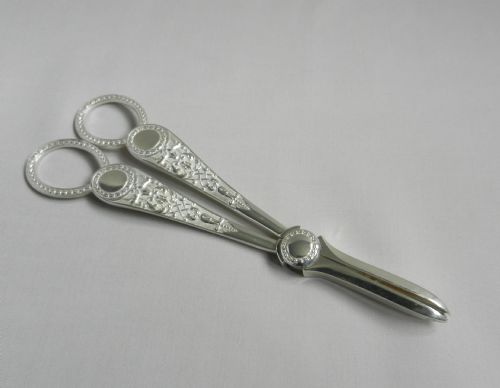
Victorian silver grape scissors are dedicated dining implements designed for severing fruit clusters at the table.
Victorian Silver Grape Scissors
Victorian silver grape scissors represent a specialised form of serving cutlery created during the nineteenth century for formal dining. When you examine this phrase, you look at implements designed specifically to cut small bunches of fruit without bruising the berries or damaging the vine.
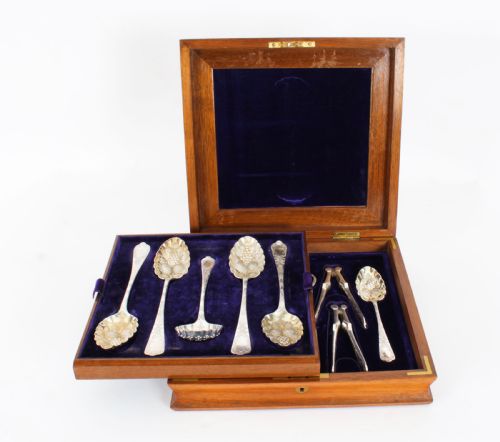
The versions most frequently met on this page date from the Victorian period, alongside examples spanning the nineteenth century from eighteen hundred onwards. Makers produced these implements in solid sterling silver, silver gilt, and silver plate, often pairing them with matching fruit knives, spoons, and nutcrackers in fitted presentation boxes.
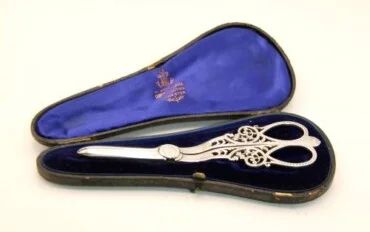
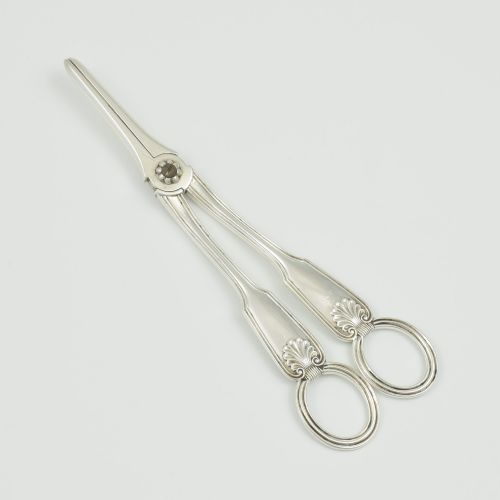
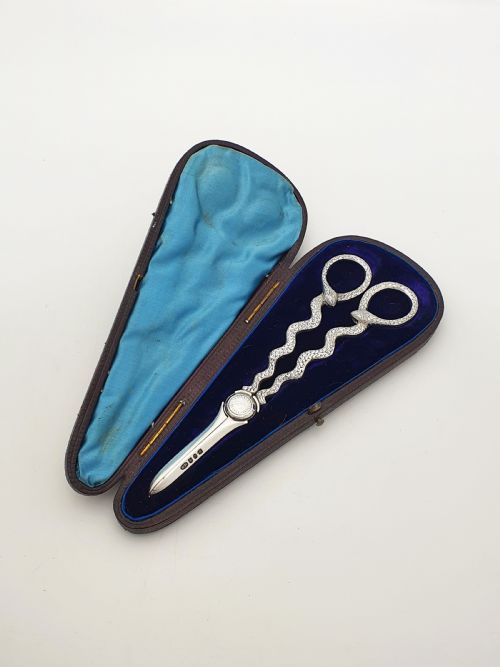
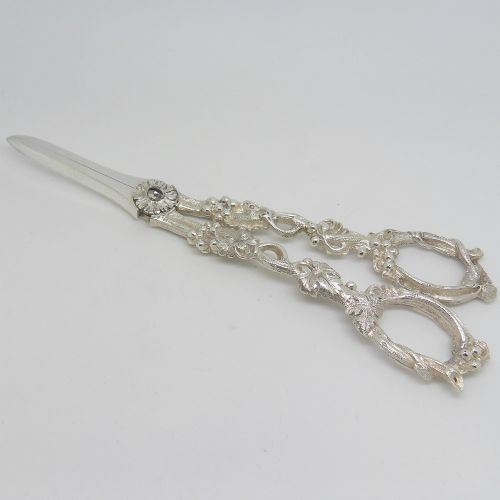
The forms range from plain, functional shears to highly ornate implements featuring cast acanthus leaf motifs, snake handles, and engraved vine decoration. Collectors encounter both loose items and cased sets lined with velvet, silk, satin, and leatherette.
Materials and Construction
Silversmiths utilised sterling silver and silver plate as the primary structural metals, frequently applying gold gilt washes to the interior surfaces of the blades. Handles were often cast separately with detailed figural designs, snake motifs, or naturalistic vine patterns before being joined to the cutting edges.
Fitted presentation cases combined rigid leather or leatherette exteriors with internal linings of velvet and silk to protect the metalwork. Hallmarks stamped directly into the silver record the assay office, city, and date of manufacture for many individual pieces.
Object forms recorded in the evidence cover grape scissors, grape shears, fruit serving sets, flatware, and cased presentation boxes.
The Distinction in Quality
Quality in these implements rests upon the crispness of the casting and the depth of the hand engraving along the handles and blades. Pieces produced by notable silversmiths display superior balance, precise pivot tension, and sharply defined decorative motifs that remain distinct through years of handling.
The presence of an original fitted case lined with silk and velvet indicates a higher tier of production, particularly when the interior contours match the exact shape of the shears and any accompanying fruit cutlery.
Goldsmiths & Silversmiths Co·Paul Storr·Chawner & Co·Reilly & Storer·Hukin & Heath·Elizabeth Eaton·Francis Higgins·Josiah Williams & Co·John Gilbert·Wakely & Wheeler
The Victorian Silver Grape Scissors Glossary
- Sterling silver
- An alloy consisting of ninety-two point five percent silver by mass, with the remainder composed of copper or other metals. This standard alloy provides the durability required for functional cutlery items.
- Silver gilt
- Sterling silver that has been coated with a thin layer of gold through a chemical or electrochemical process. This treatment gives the metal a warm yellow tone and protects the underlying silver from tarnishing.
- Silver plate
- A base metal substrate covered with a thin layer of sterling silver. This method offered a bright decorative finish at a lower cost than solid silver.
- Assay office
- An official body responsible for testing the purity of precious metal items and stamping them with hallmarks. Common locations include London and Sheffield.
- Cast acanthus
- A decorative technique utilising modelled leaf scrollwork derived from classical architecture. Silversmiths cast these leafy patterns into the handle components of the shears.
Victorian Silver Grape Scissors: Frequently Asked Questions
What are victorian silver grape scissors used for?
These implements were designed for use during nineteenth century dessert courses to snip individual clusters of grapes from a larger bunch. This method allowed diners to serve fruit cleanly without handling the entire stem.
They formed part of a broader assortment of serving cutlery that included fruit knives, nutcrackers, and berry spoons.
How do you display or store them?
Many examples survive alongside their original fitted presentation cases lined with velvet, silk, or leatherette. These boxes protect the delicate silver blades and cast handles from accidental knocks while on display.
Loose pieces fit easily into standard silver display cabinets or flatware rolls treated to prevent tarnishing.
Are these implements made of solid silver?
The listings include both solid sterling silver pieces and silver plated variants. Hallmarks stamped onto the metal indicate solid silver manufacture and provide clues to the assay office and date.
Plated alternatives offer a similar aesthetic appearance using a base metal core coated with a layer of silver.
How can you tell the age of grape scissors?
Official hallmarks stamped into the metal provide precise dates and indicate which assay office tested the piece. Stylistic elements such as engraved vine motifs, snake handles, or cast acanthus designs also point to specific decades within the nineteenth century.
Associated fitted boxes and accompanying fruit sets help corroborate the production period.