



Victorian Silver Decanter Jug
These pieces combine cast mounts with heavy blown vessels to serve wine at table.
Victorian Silver Decanter Jug
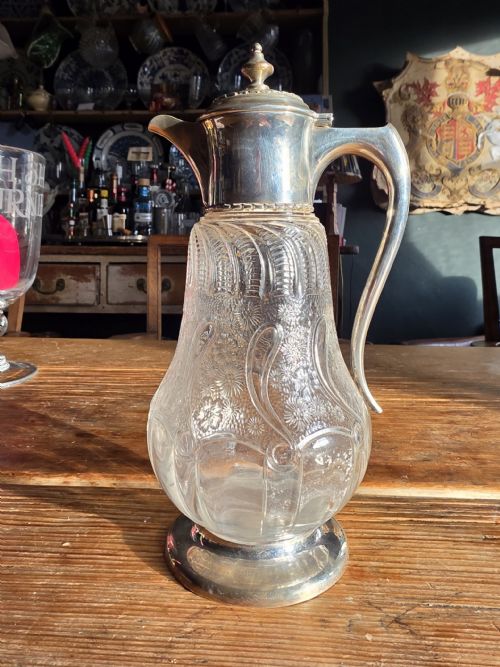
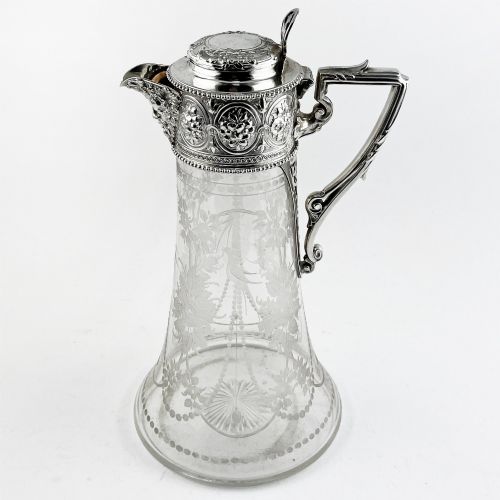
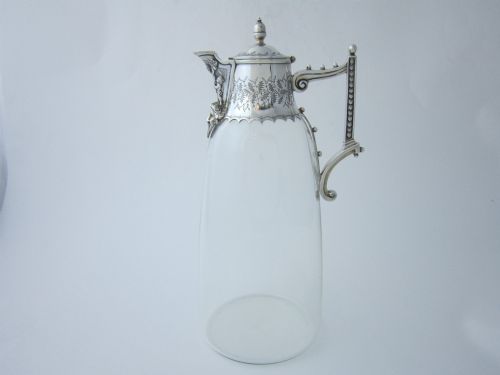
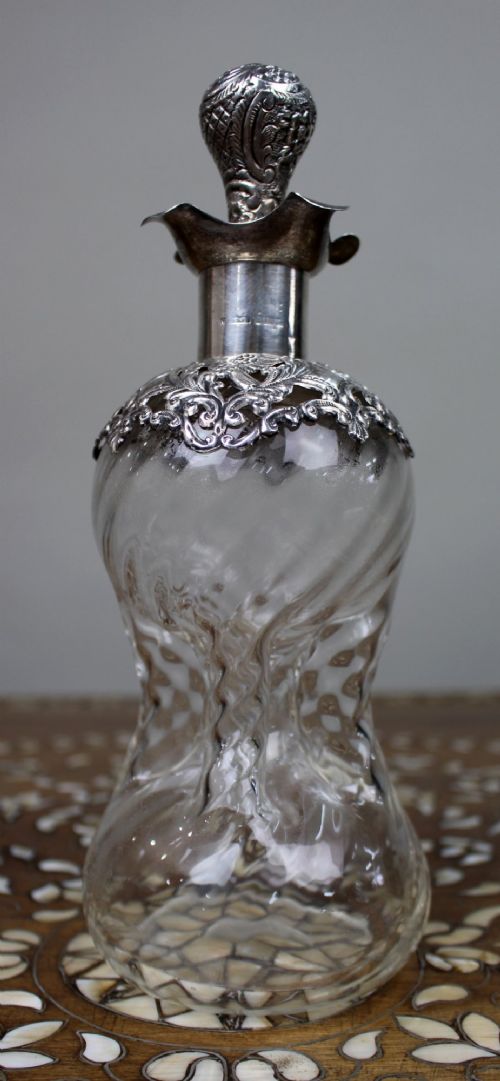
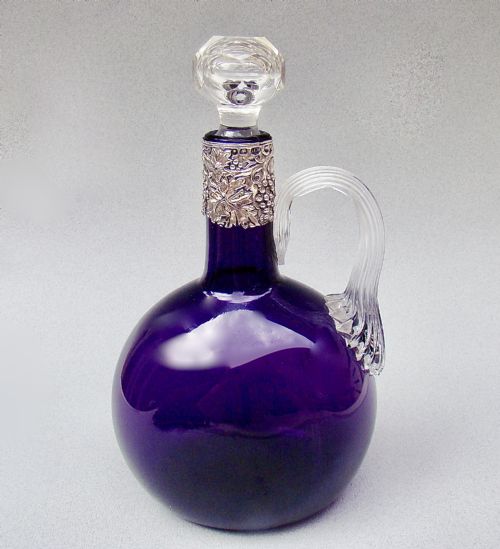
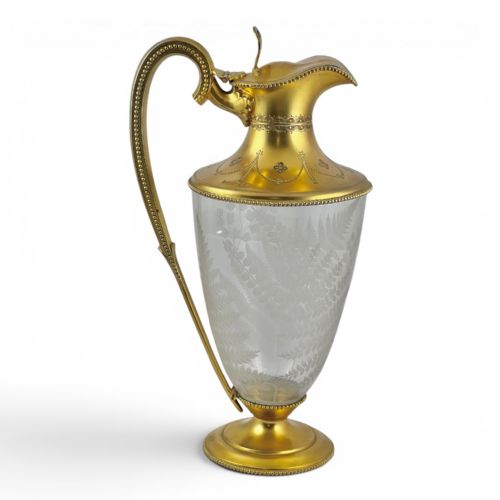
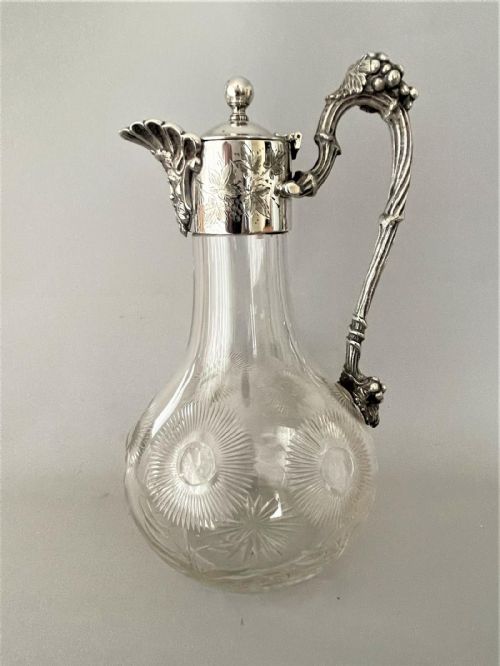
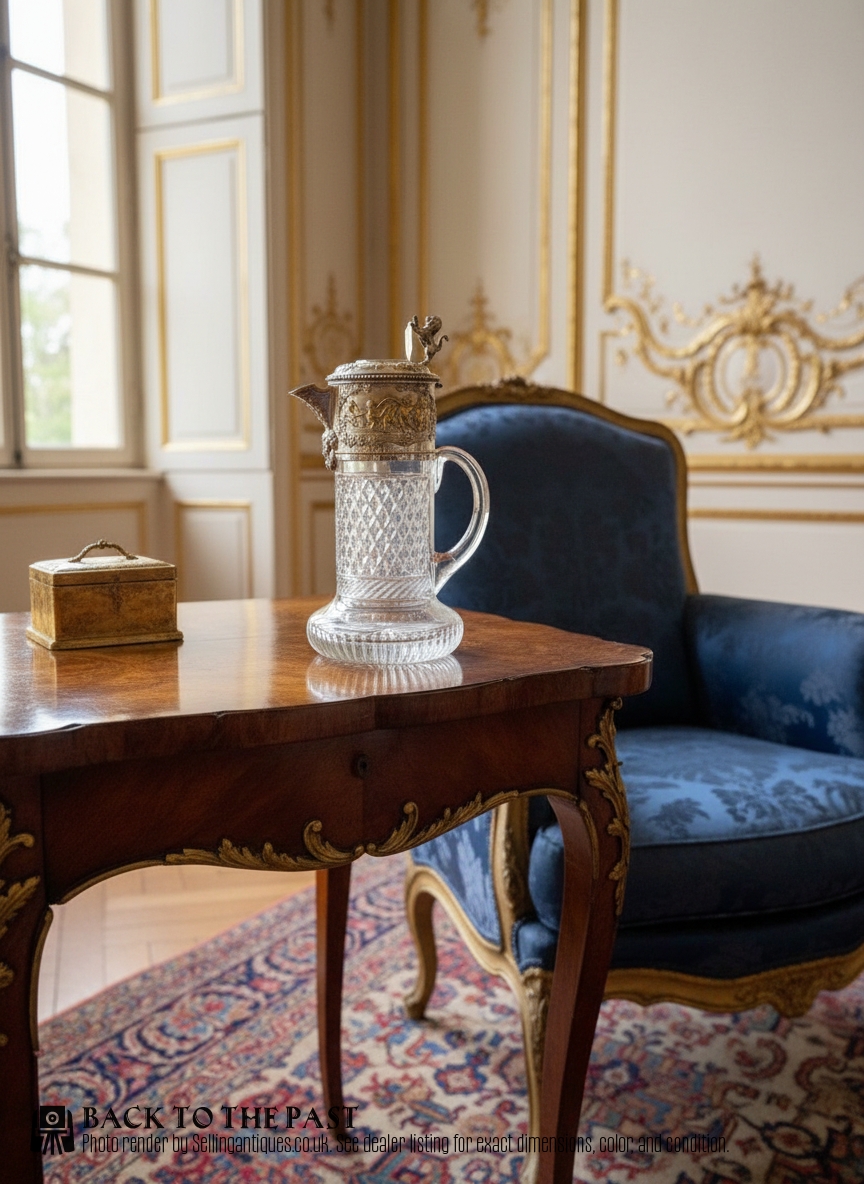
A victorian silver decanter jug is a serving vessel designed for wine, water, or spirits, combining a metal handle, collar, and hinged lid with a glass body. Collectors seek these pieces for their decorative presence on the dining table and the variety of forms produced during the nineteenth century.
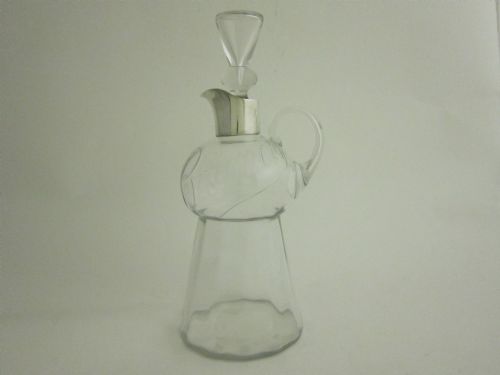
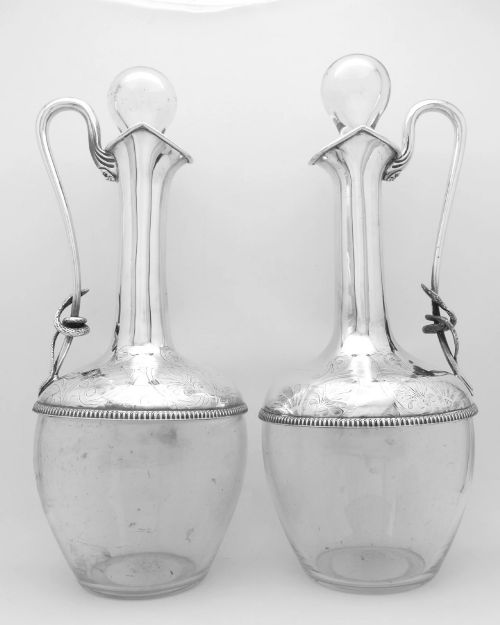
The most common version met on this page is the claret jug, typically pairing a cut or etched glass body with silver-plated or sterling silver mounts. Alongside these, buyers encounter ewers, pitchers, and wine carafes dating from the Victorian and Edwardian periods.
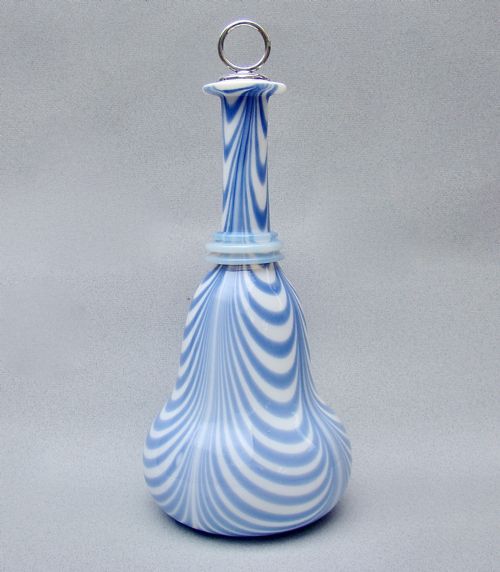
Makers utilised diverse glass colours and decorative styles, ranging from clear crystal and cut glass to cranberry, amethyst, and Nailsea glass. Mounts frequently display revivalist ornament, including French and Victorian Rococo, Renaissance Revival, and the clean lines of the Aesthetic Movement and Art Nouveau.
How they were made
Makers combined glassblowing and metal casting, blowing vessels into moulds or forming them by hand before fitting them with cast, chased, or engraved metal mounts. Silver plate and sterling silver formed the collars, handles, and hinged lids, which were secured to the glass neck with collars and adhesive.
Glass bodies received surface decoration through wheel-cutting, acid-etching, or hand-engraving floral and geometric motifs. Metal mounts often incorporated sculptural elements, such as serpent handles, Bacchus masks, or novelty figural forms like monkeys.
Victorian diners enjoyed serving wine from vessels shaped like swinging monkeys and mischievous apes.
What varies in quality
Quality rests upon the crispness of the metal chasing and the weight and clarity of the glass vessel. Finer examples display deeply carved or etched patterns on the glass and heavy, well-balanced silver mounts that fit the neck securely without excess solder.
The distinction between standard production items and exceptional pieces lies in the design of the handle and mount. Workshops employed notable designers and silversmiths to produce novelty forms, figural motifs, and distinctive aesthetic or modernist outlines that elevate the piece beyond standard tableware.
Asprey and Co. Ltd·Henry Matthews·Mappin and Webb·Elkington·Hukin and Heath
The Victorian Silver Decanter Jug Glossary
- Claret jug
- A specialised pouring vessel with a handle and hinged lid, created specifically for serving red wine at the Victorian table.
- Ewer
- A large jug with a wide spout and arched handle, historically derived from washing vessels but adapted in the nineteenth century as a decorative serving piece.
- Silver plate
- A manufacturing technique where a thin layer of silver is fused or electroplated onto a base metal, commonly used for nineteenth-century mounts.
- Sterling silver
- An alloy consisting of pure silver and other metals, marked by hallmarks that record the assay office, standard, and date of manufacture.
- Nailsea glass
- A type of nineteenth-century glassware characterised by looped or combed opaque white trails embedded within a clear or coloured glass body.
- Cellini ewer
- A ornate style of vessel featuring elaborate classical strapwork and Renaissance-inspired relief ornament, named after the Renaissance goldsmith.
Victorian Silver Decanter Jug: Frequently Asked Questions
What is a claret jug?
A claret jug is a pouring vessel specifically designed for serving red wine during the nineteenth-century dining ritual. These pieces typically feature a hinged metal lid to preserve the contents.
The glass bodies allowed hosts to display the colour of the wine, while silver or plated mounts provided a sturdy handle and spout for pouring at the table.
How do I clean an antique jug?
Cleaning requires warm water and mild dish soap applied with a soft bottle brush. Avoid submerging mounted pieces for extended periods to protect the internal adhesives securing the collar.
Polish the silver mounts with a cloth while avoiding direct contact between metal cleaning agents and the glass surface.
Were these used for claret only?
While named for claret, these vessels served various drinks including water, lemonade, brandy, and liqueurs. Some specialised examples included internal ice tubes to keep beverages chilled without dilution.
Different glass colours and sizes often indicated the intended contents, with smaller vessels serving as liqueur ewers or noggins.
How do I date a silver mount?
Sterling silver mounts on British pieces usually carry hallmarks that include a date letter, assay office mark, and maker's mark. These stamps provide the exact year and location of manufacture.
Silver-plated pieces lack full hallmarks but often feature maker marks, registry numbers, or stylistic indicators that narrow down the production period.
What is Nailsea glass?
Nailsea glass refers to glassware produced near Bristol featuring distinctive looped, combed, or feathered trailing in opaque white. This technique created striking patterns across the body of decanters and carafes.
These colourful glass bodies were frequently fitted with Old Sheffield Plate mounts during the mid-nineteenth century.