


Silver Plate Cut Glass Decanter
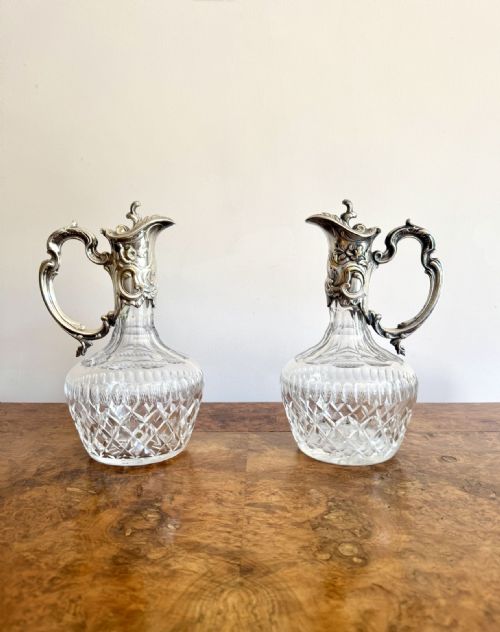
These items combine cut glass and silver plate into functional serving vessels designed for the dining table and sideboard.
Silver Plate Cut Glass Decanter
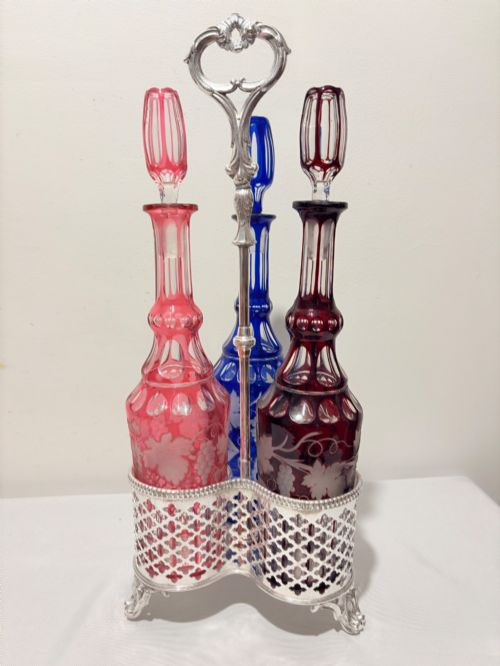
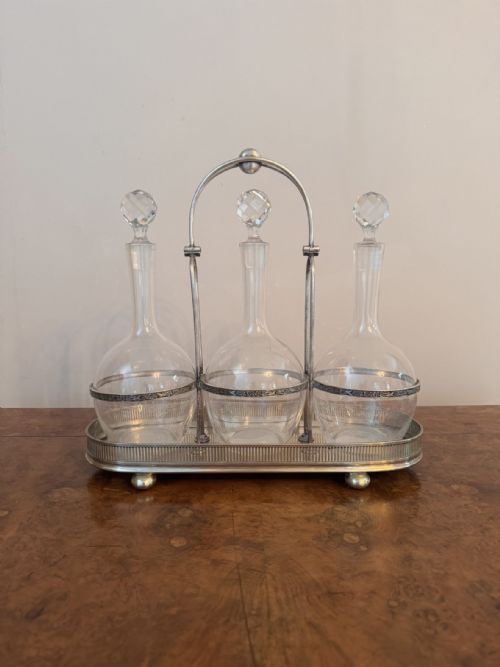
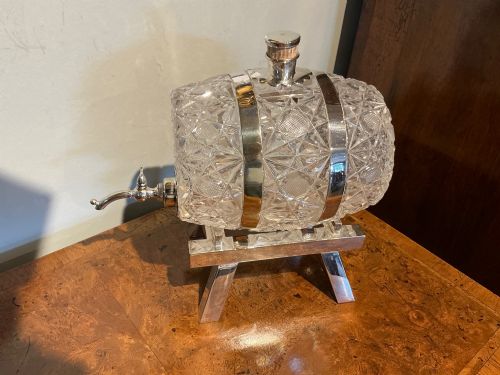
A silver plate cut glass decanter brings together heavy glassware and plated metal mounts for serving wine and spirits. Buyers searching for a silver plate cut glass decanter encounter forms ranging from single claret jugs to multi-bottle tantalus sets and cruets.
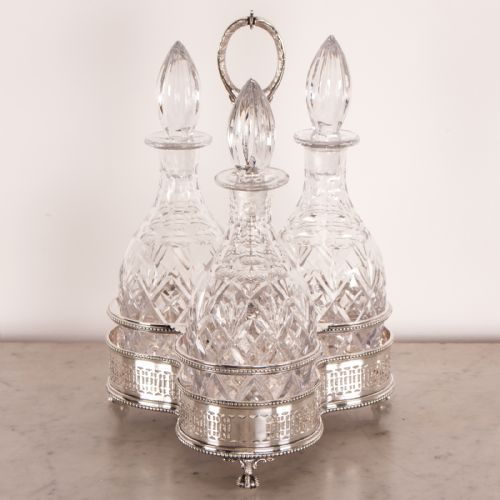
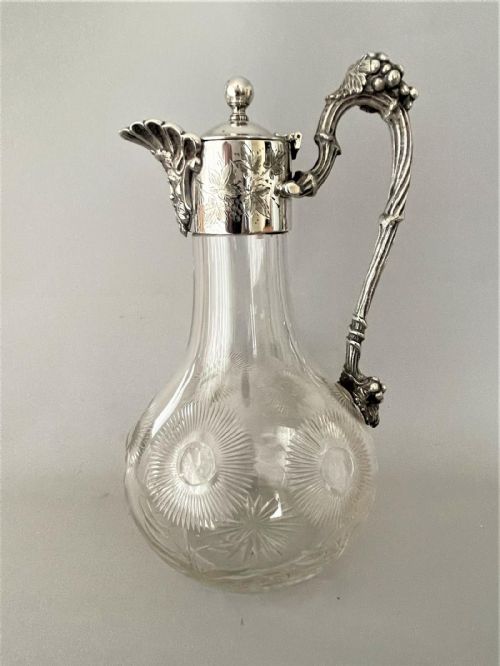
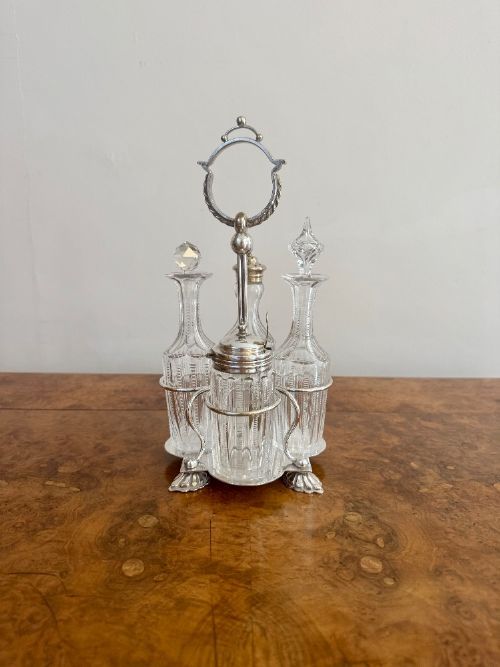
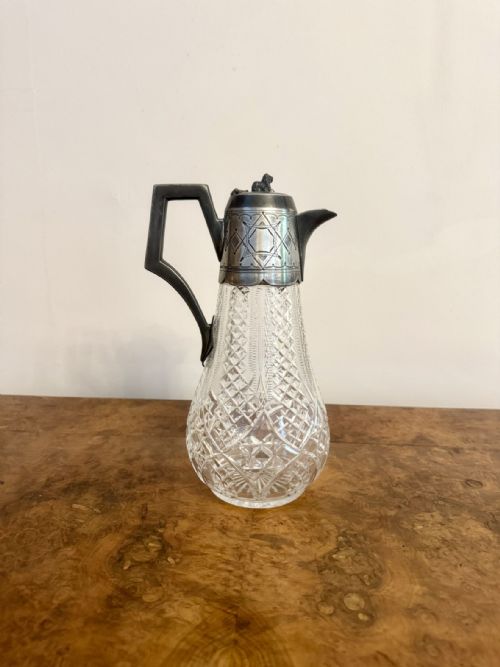
The pieces on this page originate predominantly from the Victorian and Edwardian periods, alongside a smaller number from the nineteenth century and earlier decades. Standard formats include claret jugs fitted with hinged silver plated lids and stands housing two or three bottles.
Makers and designers of the period utilised combinations of clear glass, cranberry glass, and etched glass alongside oak and hardwood frames. These items served practical roles in nineteenth and early twentieth century domestic hospitality, holding wine, sherry, and whisky.
Materials and Manufacture
Makers fashioned the vessels from heavy glass and crystal, applying wheel-cut geometric and floral patterns directly to the surface. Artisans then fitted these glass bodies with cast or stamped silver plated mounts, hinged lids, and spouts.
Stands and frames incorporate silver plated metal alongside wooden components such as oak and hardwood. Certain pieces also feature interior elements like glass ice tubes designed to cool beverages without dilution.
Listings feature items spanning the nineteenth century, Victorian era, Edwardian period, and early 1900s.
Factors of Quality
Weight and depth of the glass cutting distinguish standard items from superior examples. Crisp facets catch the light differently than shallow, pressed patterns.
The thickness and integrity of the silver plating over the base metal base metal dictate the longevity of the mounts. Well-preserved plating shows even coverage without extensive wear to the underlying metal.
Walker & Hall·Mappin & Webb·Elkington·Hukin & Heath
The Silver Plate Cut Glass Decanter Glossary
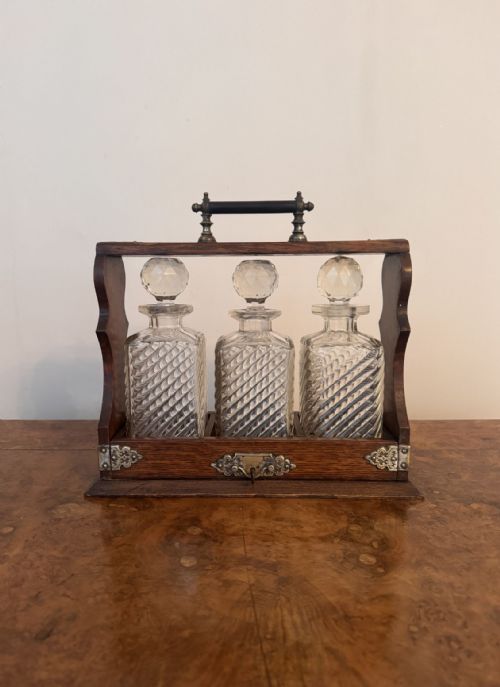
- Tantalus
- A locking frame that secures decanters to prevent unauthorized access to the contents while displaying the bottles. These stands typically utilise a key-operated mechanism across the top bar.
- Claret Jug
- A specialised pouring vessel designed for red wine, featuring a handle and a hinged metal lid operated by a thumbpiece. They frequently combine cut glass bodies with silver plated mounts.
- Cruet Set
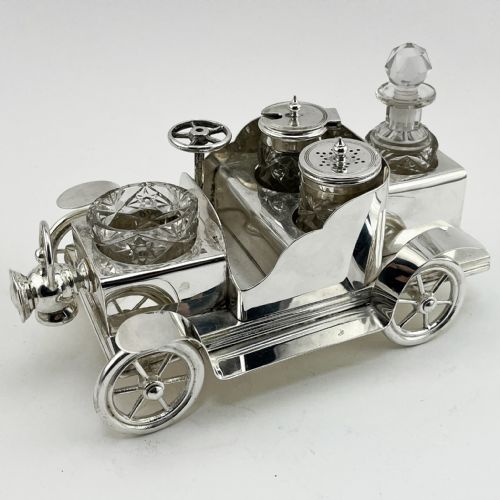
- A matched collection of bottles and jars housed within a metal frame for condiments, oils, or vinegars. Examples on record range from small car variants to large eight-piece arrangements.
- Old Sheffield Plate
- An early form of plated metal produced by fusing a sheet of silver to a copper ingot before rolling. This technique predates modern electroplating methods.
- Ice Tube
- A cylindrical glass or metal insert placed inside a jug to chill liquids from within. It keeps drinks cold without direct contact with melting ice.
Silver Plate Cut Glass Decanter: Frequently Asked Questions
What is a tantalus?
A tantalus is a locking wooden or metal frame designed to hold decanters securely in place. It prevents people from pouring drinks without the key.
These locking frames became popular in the Victorian era for keeping expensive spirits safe on sideboards. The bottles can be viewed clearly, hence the name derived from the mythological figure.
What is Old Sheffield Plate?
Old Sheffield Plate is an early method of fusing a thin layer of silver onto a copper base through heat and pressure. Items made this way predate nineteenth-century electroplating.
You can sometimes spot a subtle copper line along the edges where the silver sheet meets the base metal. This manufacturing technique indicates an earlier date of origin.
How do I date these pieces?
Dating relies on stylistic clues, mounting techniques, and maker marks stamped onto the silver plate. Victorian and Edwardian examples often feature distinct aesthetic influences.
Heavier cast mounts and deep glass cutting typically point to the nineteenth century. Examining the shape of the handle and hinges helps narrow down the production decade.