



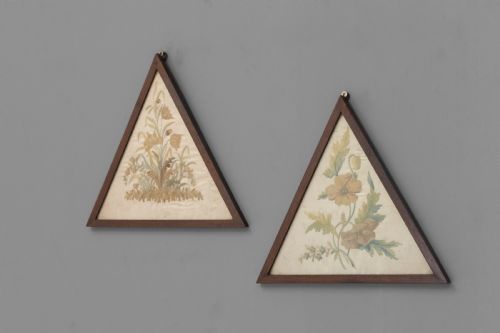


Victorian Silk Needlework
Victorian silk needlework brings tactile depth to interiors through framed pictures, samplers, and fitted sewing furniture worked by hand.
Victorian Silk Needlework
Victorian silk needlework encompasses a range of framed textile art, samplers, and utilitarian objects associated with sewing and home display. The items appearing on this page span the nineteenth century, including pieces from the Georgian, Victorian, and Edwardian eras.
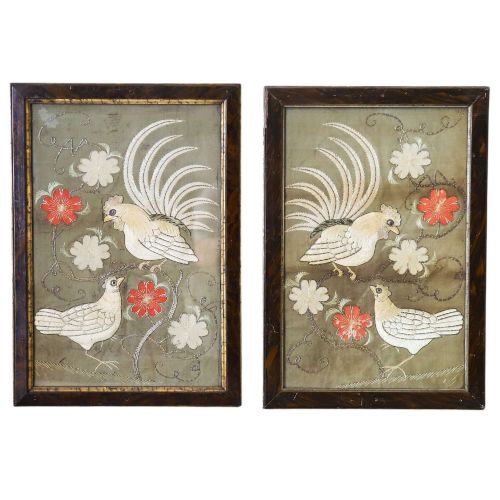
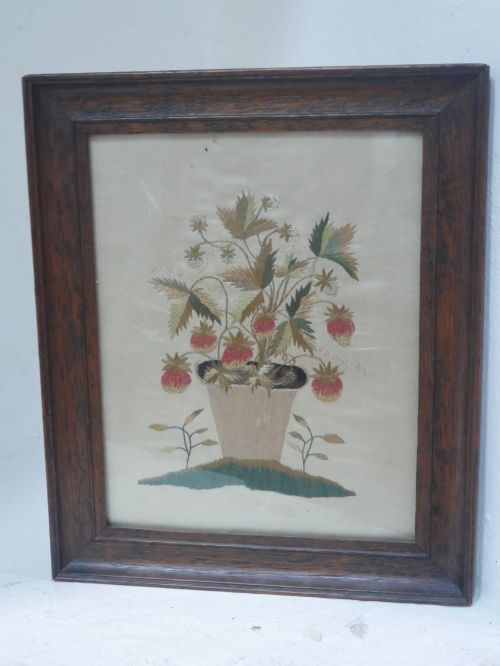
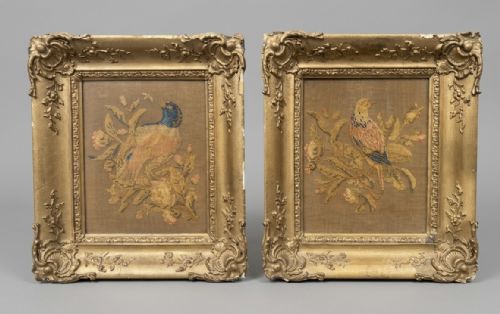
Framed needlework pictures depict horses, birds, flowers, and topographical scenes, while samplers record names, ages, and dates executed in thread on linen or canvas grounds. Functional sewing tables and fitted boxes incorporating silk elements also form part of this material.
Materials and construction
Makers utilised silk thread, wool, and linen as foundations for stitching, often mounting completed panels within wood frames made from rosewood, satinwood, or coromandel, sometimes enhanced with glass panels and brass fittings.
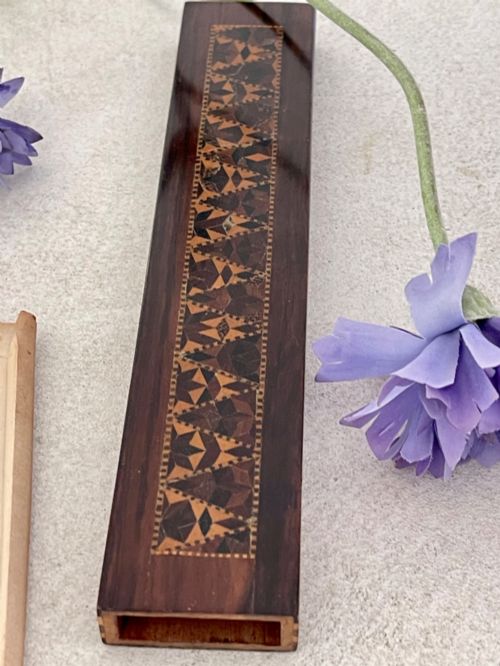
Techniques combine fine embroidery stitches with silk patchwork, watercolour additions, and intricate woodwork such as Tunbridge ware inlay and mother-of-pearl embellishments on sewing furniture.
Listings feature eighteenth-century, nineteenth-century, and early twentieth-century pieces, spanning Georgian, Victorian, and Edwardian periods.
Judging quality
Quality rests upon the fineness of the stitch execution, the complexity of the design, and the integrity of the original frame or housing. Well-preserved textiles retain their vibrant thread colours and tight tension across the linen or silk ground.
The sophistication of the timber work on accompanying sewing tables or frames distinguishes standard utilitarian items from finer examples produced during the period.
Iida Takashimaya Company
The Victorian Silk Needlework Glossary
- Sampler
- A piece of needlework demonstrating various stitches, alphabets, or motifs, often worked by young makers with their names and dates.
- Skein holder
- A small wooden or decorative accessory used for holding skeins of thread or silk during needlework practice.
- Firescreen
- A standing panel, frequently featuring embroidered silk or needlework, placed before a fireplace when not in use to protect the room from heat.
- Suzani
- A type of embroidered tribal textile originating from Central Asia, worked with silk thread on a ground.
- Tunbridge ware
- Woodwork decorated with minute mosaic patterns made from differently coloured natural woods, typical of nineteenth-century decorative items.
Victorian Silk Needlework: Frequently Asked Questions
What is victorian silk needlework?
Victorian silk needlework refers to hand-worked textile items created during the nineteenth century using silk threads on linen, canvas, or wool grounds. These pieces include framed pictures, samplers, and decorative panels.
Many examples feature specific pictorial subjects such as landscapes, animals, or botanical studies, while others record the names and ages of young makers.
How were samplers used?
Samplers served as practical exercises for young people to demonstrate proficiency in various embroidery stitches, alphabets, and numbers. They functioned as permanent records of skill and lineage.
Completed samplers were frequently framed and displayed in domestic interiors as decorative and sentimental records of accomplishment.
What materials are common?
These items rely on silk thread, linen, wool, and cotton stitched onto fabric grounds. Wooden frames often incorporate rosewood, satinwood, or coromandel.
Accessory items and sewing tables frequently feature brass hardware, glass panels, and mother-of-pearl inlay alongside the textile components.
How do you date them?
Dating relies on inscribed dates within samplers, stylistic markers of the frame and timber, and subject matter characteristic of the nineteenth century. Details such as clothing styles and lettering formats offer additional clues.
Many pieces carry explicit dates or maker inscriptions that anchor their production within specific decades of the 1800s and early 1900s.