



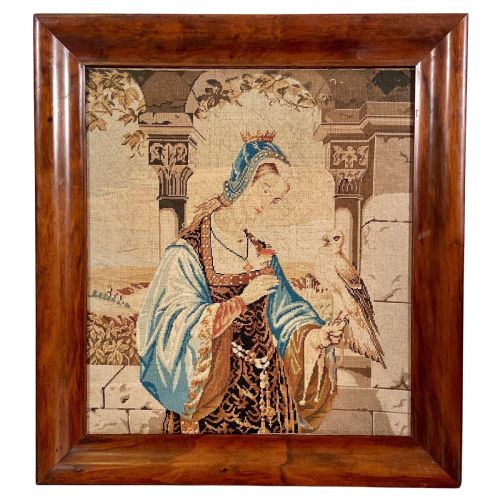
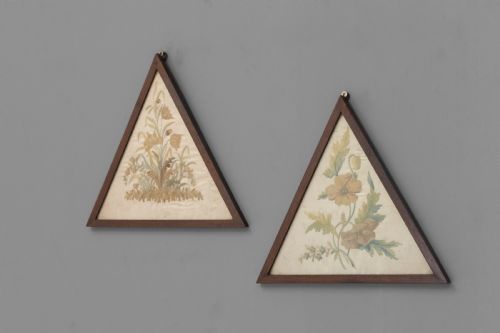


Victorian Embroidered Picture
A victorian embroidered picture brings fabric and thread together to record portraits, animals and historic scenes behind glass.
Victorian Embroidered Picture
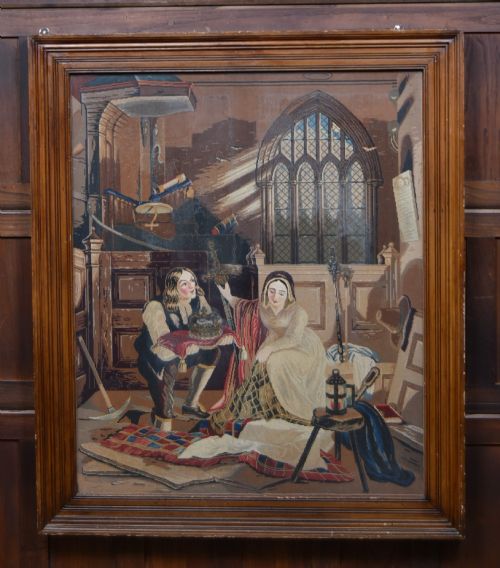
When you search for a victorian embroidered picture, you encounter framed textile works spanning domestic needlework and formal tapestry. These pieces originate primarily from the nineteenth century, including dated examples from the middle and late decades.
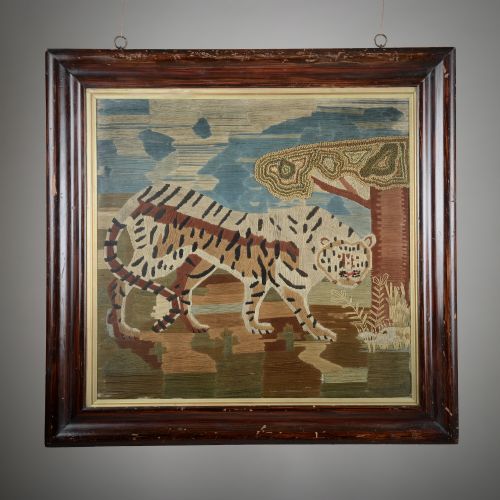
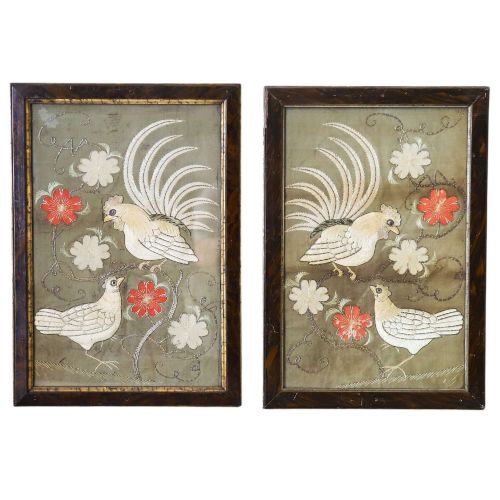
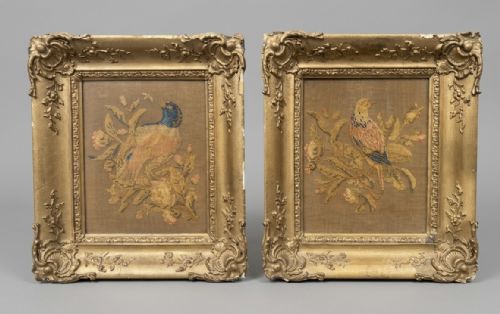
The objects take many forms, from needlework samplers and floral panels to narrative depictions of horses, birds, and classical figures. Most examples survive within period wooden, gilded, or faux tortoiseshell frames.
Makers range from young girls working alphabet samplers to skilled artisans producing wool work tigers and silkwork portraits. Continental and English pieces appear frequently, showing distinct regional tastes across the period.
How they were made
Makers utilised wool, silk, canvas, and linen as the primary foundations for their needlework. Stitches were worked onto these textiles using various thread weights to build up texture and pictorial depth.
Gilded wood, standard wood, glass, and gold leaf formed the protective and decorative enclosures for the finished panels. Frames were selected to complement the subject matter, whether floral, religious, or military.
Listings feature wool, silk, canvas, and linen housed behind glass in wooden, gilded, and faux tortoiseshell frames from the nineteenth century.
What varies in quality
The precision of the stitchwork and the complexity of the design separate simpler domestic efforts from accomplished pictorial panels. Mastery of shading, particularly in wool work and silk embroidery, defines the finer examples.
The preservation of the original frame and the glass protection greatly influence the overall integrity of the textile. Pieces retaining their contemporary mounting without major intervention sit at the upper end of the range.
Iida Takashimaya Company
The Victorian Embroidered Picture Glossary
- Needlework sampler
- A piece of fabric worked with various stitches, alphabets, or motifs to demonstrate needle skills. These often include the maker name and a date.
- Gros-point
- A type of needlepoint stitch worked on coarse canvas to create durable and textured patterns. It appears frequently in nineteenth century animal and figure depictions.
- Silkwork
- Embroidery executed primarily using silk threads to achieve a reflective, glossy finish. This technique was favoured for detailed pictorial subjects.
- Tapestry
- A heavy hand-woven or needle-worked textile panel depicting a narrative scene. Examples in this category often reference medieval or classical styles.
Victorian Embroidered Picture: Frequently Asked Questions
How do I date a needlework sampler?
Many samplers include embroidered dates and the age or name of the maker, often a child or young girl working a set exercise.
Style, framing materials, and linen types also help place undated pieces within the nineteenth century.
Were these pictures always framed?
Most surviving textile pictures were mounted behind glass in wooden or gilt frames to protect the delicate threads from dust and moisture.
Some pieces retain original frames made of rosewood or faux tortoiseshell from the period of creation.
What subjects are most common?
Common subjects range from alphabets and religious figures to animals such as horses, tigers, and birds. Military commemorations and horse racing scenes also appear among the nineteenth century works.
How should I clean the glass on these frames?
Clean the exterior glass carefully with a standard glass cleaner applied to a cloth rather than directly sprayed. Avoid allowing any liquid to seep past the frame edge into the textile.