


Victorian Shaving Mirror Stand
A victorian shaving mirror stand brings height, glass, and timber together for the daily ritual of grooming.

Victorian Shaving Mirror Stand
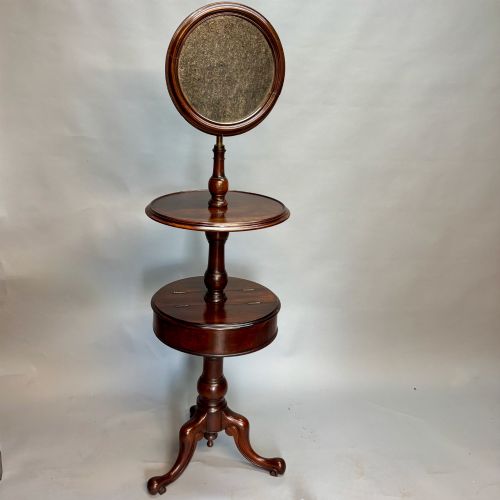
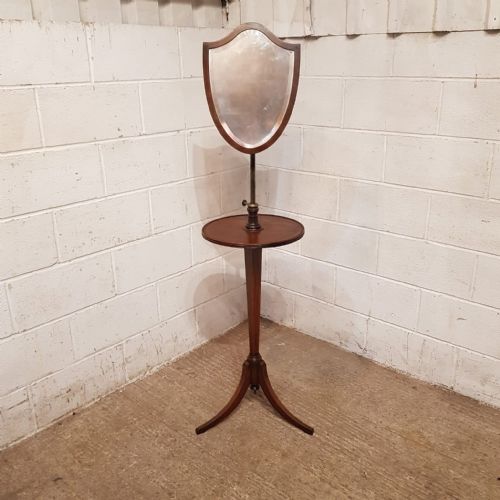
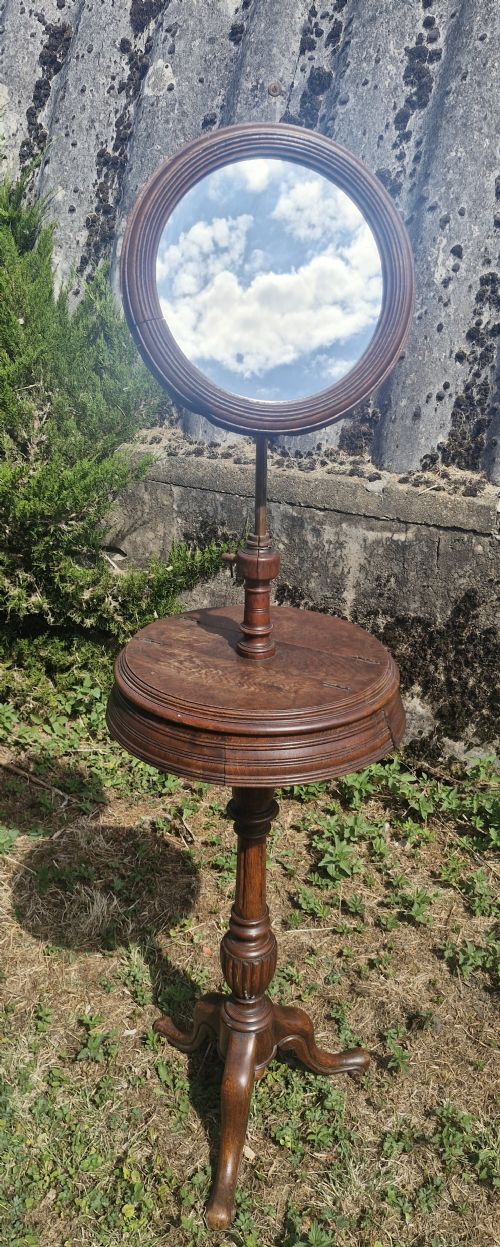
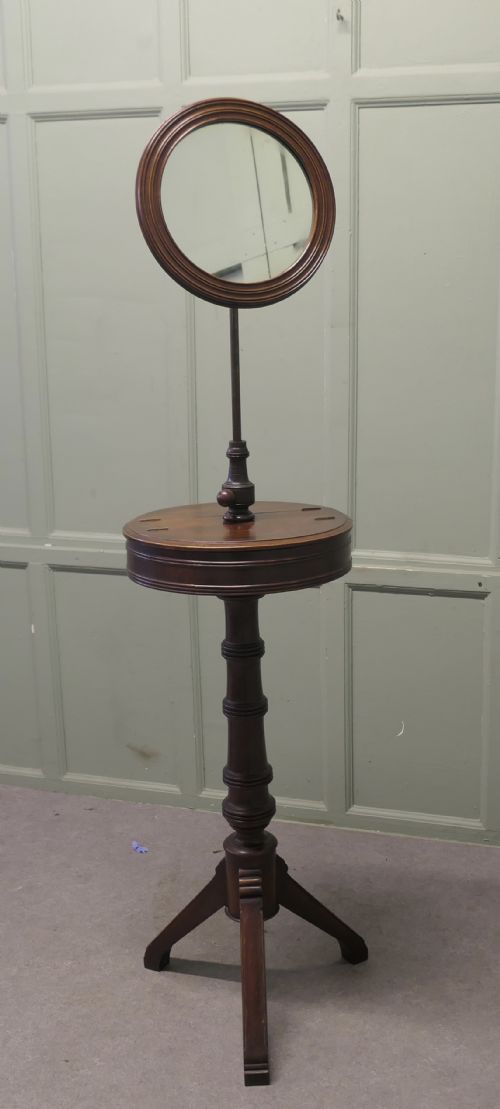
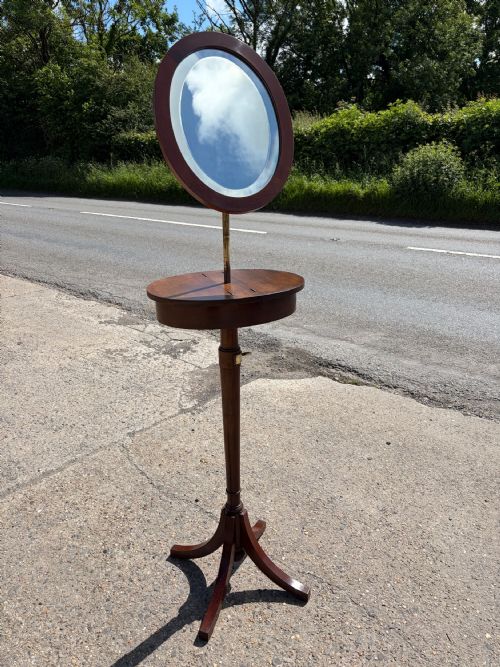
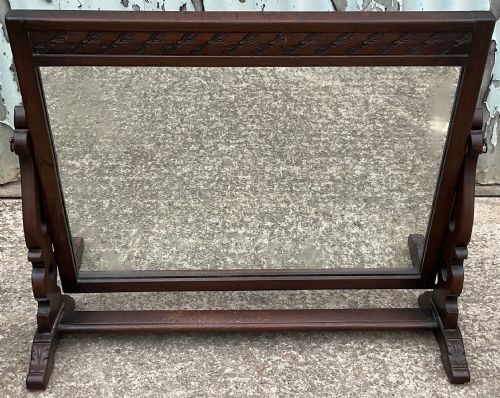
A victorian shaving mirror stand is a specialised piece of domestic furniture designed to hold a tilting or adjustable glass at a comfortable height for grooming. These pieces appear most frequently in mahogany, oak, and walnut, taking the form of freestanding tripod bases or table mirrors with integrated stands.
The selection here encompasses objects originating from the nineteenth century, including pieces featuring telescopic brass columns and pivoting circular frames. Buyers encounter variations ranging from simple utilitarian stands to elaborate gentleman's shaving cabinets equipped with storage drawers.
How they were made
Cabinet makers constructed these stands using dense hardwoods such as mahogany, oak, and walnut, often paired with turned brass fittings and adjustable screw mechanisms. The glass panels are set within wooden or brass frames designed to pivot smoothly on lateral pivots or slide vertically along metal rods.
Tripod bases utilise shaped cabriole or splayed legs joined by central pillars, providing stability for the heavy glass above. Surface finishes rely on traditional polish and wax applied directly to the timber to highlight the natural grain.
Mahogany and oak dominate the timber selections across these listings, alongside walnut, ash, and satin birch.
What varies in quality
The sophistication of the mechanical adjustment separates standard examples from finer workshop productions. Smooth operation of telescopic brass columns and secure friction hinges indicate superior initial construction.
Selection of timber grain and the depth of the original glass plate further distinguish individual items. Pieces retaining stamped maker marks or sophisticated joinery represent the higher tier of surviving examples.
Thomas Rubergall·J. Shoolbred
The Victorian Shaving Mirror Stand Glossary
- Telescopic
- A vertical mechanism allowing the mirror height to extend or retract through the use of sliding tubes and tightening screws.
- Tripod base
- A three-legged support structure commonly utilised on freestanding floor models for balanced weight distribution.
- Pivoting frame
- A mirror mount suspended on two opposing axis pins that enables the glass to tilt forward or backward.
- Gentleman's shaving stand
- A dedicated furniture form combining an adjustable mirror with supportive trays, drawers, or small cupboards for grooming accessories.
Victorian Shaving Mirror Stand: Frequently Asked Questions
How do I adjust the mirror height?
Many examples utilise a telescopic brass rod secured by a thumbscrew or friction collar. Loosening this mechanism allows the upper section to slide upward or downward before tightening to hold the desired position.
Heavier floor-standing models rely on the precise balance of the weighted stem and tripod base to maintain stability at various elevations.
Where were these stands used in the home?
These pieces found their place primarily in bedrooms, dressing rooms, and private chambers where morning grooming took place. Their portable nature allowed them to be positioned near windows to capture optimal daylight.
Tabletop versions sat atop existing chests or dressing tables, while tall tripod models stood independently on the floor.
Are the mirror plates original?
Mirror glass frequently experienced breakage or silver degradation over long periods of use. Replacement glass remains common in antique examples while retaining the original timber or brass framing.
Close inspection of the glass edges and backing often reveals indicators of age or subsequent reglazing.
How do I care for the timber finish?
Maintenance requires regular application of a quality beeswax to nourish the antique mahogany, oak, or walnut surfaces. Avoiding direct sunlight and excessive moisture preserves the polish.
Metal components such as brass columns benefit from gentle cleaning without abrasive compounds to retain their warm patination.