




Victorian Serpentine Sideboard
When choosing a victorian serpentine sideboard, you encounter elaborate credenzas and cabinets defined by sweeping curved fronts and rich timber veneers.
Victorian Serpentine Sideboard
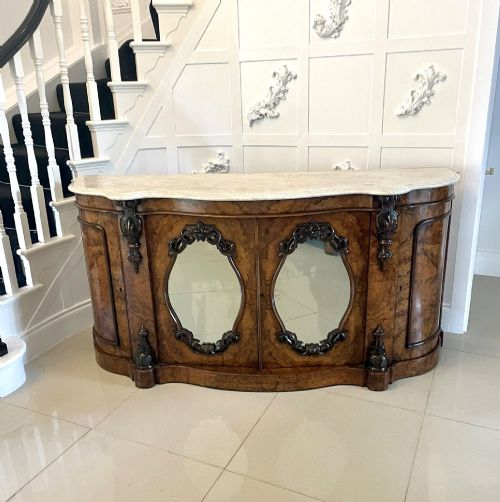
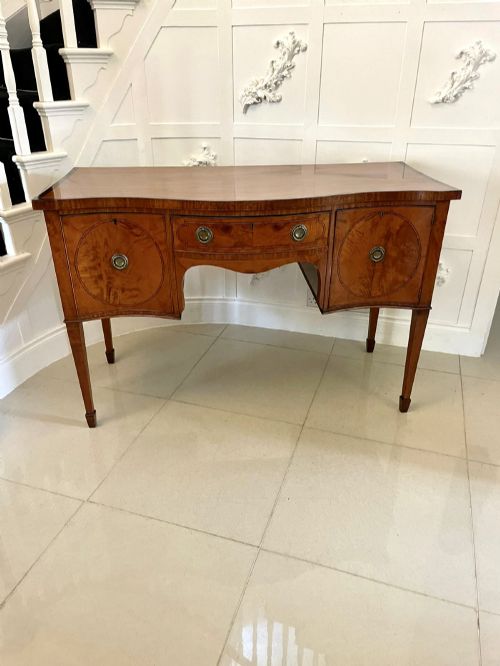
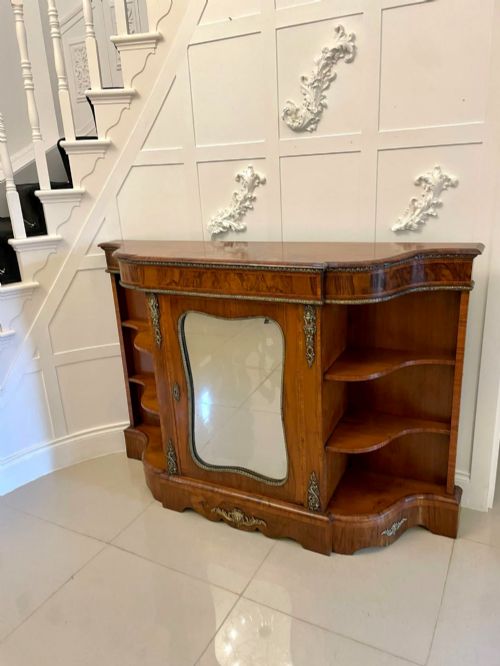
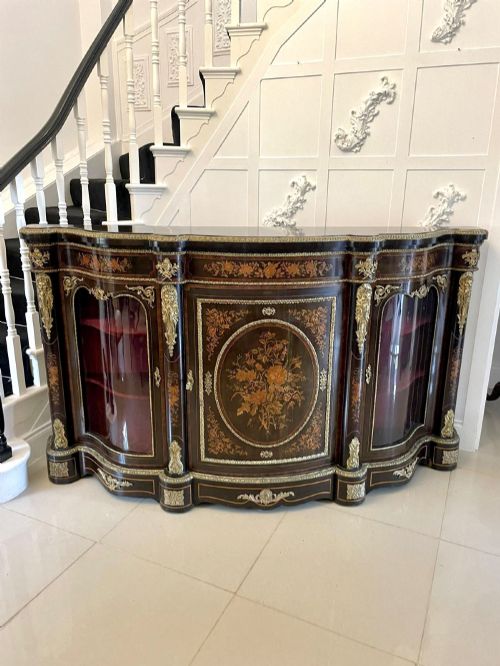
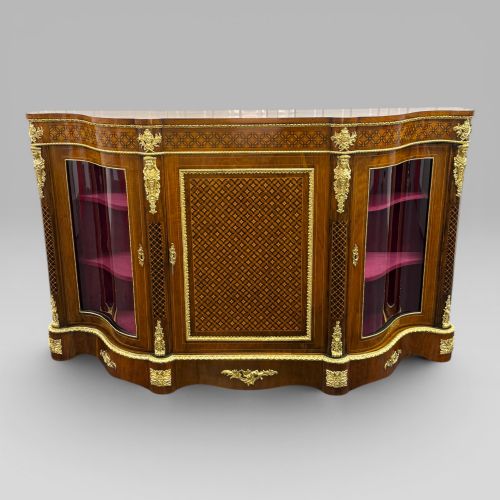
A victorian serpentine sideboard combines storage with display, frequently taking the form of a credenza or low cabinet designed for principal reception rooms. The curving serpentine outline defines the front facade, bending outward at the centre and inward toward the edges.
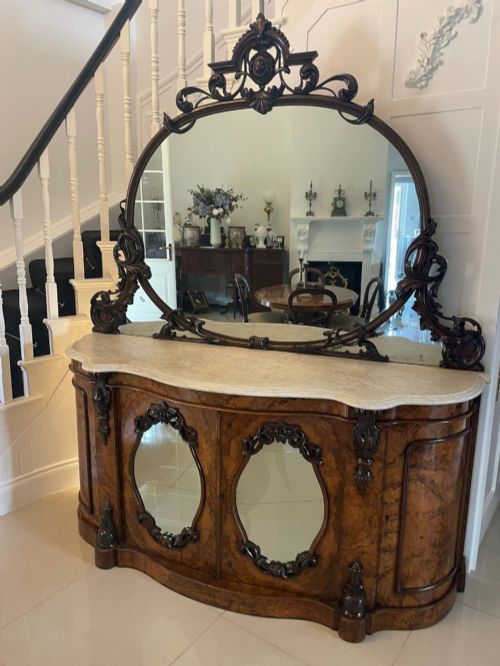
Makers produced these pieces throughout the nineteenth century, utilising walnut, burr walnut, mahogany, and rosewood. Surviving examples often incorporate glazed doors, mirrored backs, or marble tops.
Materials and construction
Cabinet makers applied decorative veneers like burr walnut and satinwood over solid foundational timbers, enhancing the grain pattern across the curved surfaces. Marquetry inlay and floral painted details frequently decorate the primary doors and panels.
Ormolu mounts, brass detailing, and gilt bronze elements accent the corners, frames, and pillars. Marble tops, cut to follow the serpentine contour, appear on numerous credenzas and console tables from the period.
Some Victorian credenzas hide internal cellarette drawers designed specifically for keeping vintage wine bottles cool and secure.
Craftsmanship and distinction
The precision of the serpentine curve and the intricacy of the marquetry inlay determine the standard of an individual piece. Superior examples exhibit tightly figured burr walnut veneers matched across symmetrical doors.
Higher tier pieces integrate cast ormolu mounts and sculpted mirror backs that complement the architectural lines of the cabinet. Lesser examples rely on plainer timber surfaces with minimal decorative hardware.
Maison Gagneau·Gillows
The Victorian Serpentine Sideboard Glossary
- Serpentine
- A furniture shape featuring a curved front with a convex centre flanked by concave wings. This contour requires precise carpentry to fit doors and tabletops.
- Credenza
- A low cabinet or sideboard used for display and storage, popular in Victorian drawing rooms. These items often feature glazed side compartments alongside central doors.
- Ormolu
- Gilded bronze mounts applied to furniture as decorative accents. The technique involves treating brass or bronze with a mercury and gold mixture.
- Marquetry
- Inlaid wood designs forming pictorial or geometric patterns on cabinet surfaces. Craftsmen used contrasting veneers such as satinwood, walnut, and exotic woods.
- Boulle
- A style of marquetry using brass and tortoiseshell inlaid into dark carcase wood. This French technique influenced nineteenth century revival furniture.
Victorian Serpentine Sideboard: Frequently Asked Questions
What is a serpentine sideboard?
A serpentine sideboard is a nineteenth-century storage cabinet featuring a distinctively curved front edge. These pieces were built primarily from hardwoods and used in formal dining rooms and drawing rooms.
Cabinet makers shaped the wood to undulate outward and inward, creating a dynamic visual profile. They often included cupboards, drawers, and mirrored backsplashes.
How do I clean marble tops?
Marble surfaces require gentle cleaning with warm water and a soft cloth to avoid scratching the polished stone. Acidic substances must be kept away from the marble to prevent permanent staining.
Dry the surface thoroughly after wiping to maintain the natural sheen. Avoid harsh chemical detergents or abrasive pads.
Where should I place a credenza?
Credenzas function best against a sturdy wall in a dining room, hallway, or living space where their decorative fronts can be appreciated. Their low profile makes them suitable for positioning beneath large paintings or mirrors.
Ensure the room humidity remains stable to protect the delicate wood veneers and marquetry. Avoid direct sunlight to prevent fading on walnut and rosewood surfaces.
Are these pieces original Victorian?
Authentic pieces date from the nineteenth century, typically constructed during the Victorian or Napoleon III revival periods. Examination of the interior secondary timbers and construction joints helps confirm the age.
Revival styles from later decades also exist in the marketplace, echoing the earlier cabinet-making traditions. Reviewing the materials and mounting techniques assists in determining the exact manufacturing era.