




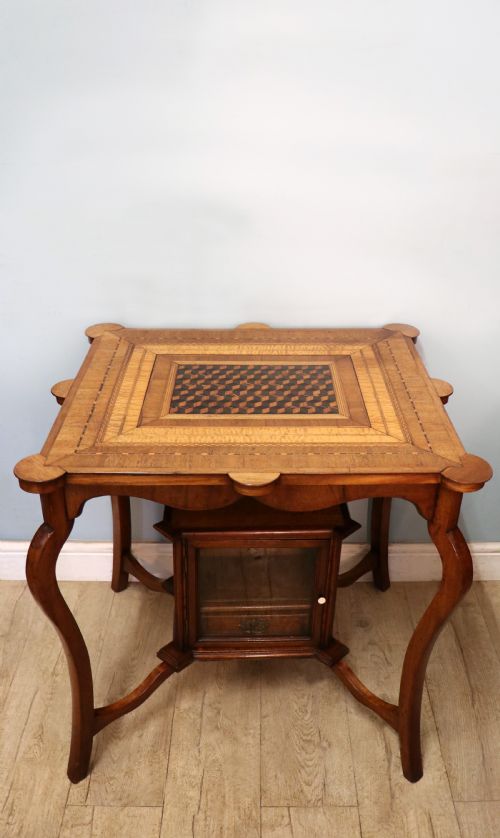


Victorian Parquetry Cabinet
These nineteenth-century pieces combine precise geometric wood veneers with substantial cabinetry, offering both decorative presence and practical surface space.
Victorian Parquetry Cabinet
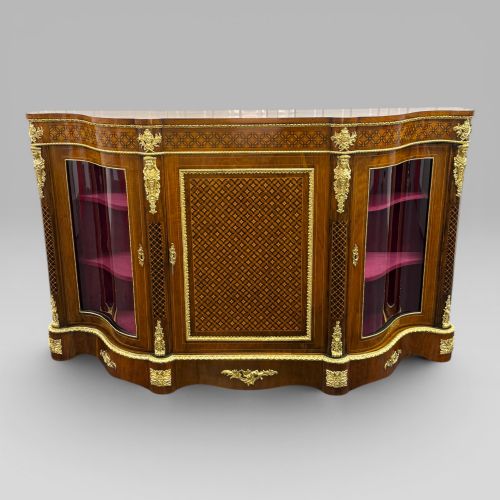
A Victorian parquetry cabinet brings together geometric wood patterns and solid nineteenth-century timber frames, often configured as credenzas, pier cabinets, or display units. These items serve primarily as focal points in reception rooms or hallways, providing enclosed storage alongside decorative display surfaces.
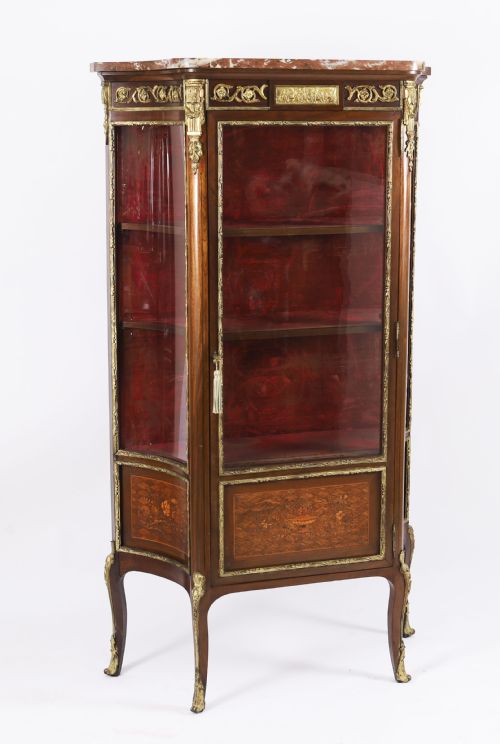
The versions most commonly met on this page span the Victorian era alongside French and Louis revival movements of the nineteenth century. Buyers frequently encounter pieces incorporating marble tops and gilt metal mounts alongside patterned wood surfaces.
Construction and Materials
Cabinet makers constructed these pieces using dense timber carcases of walnut or kingwood, applying finely cut geometric veneer patterns across the exterior surfaces. This technique allowed artisans to create intricate surface designs while maintaining structural stability across doors and panels.
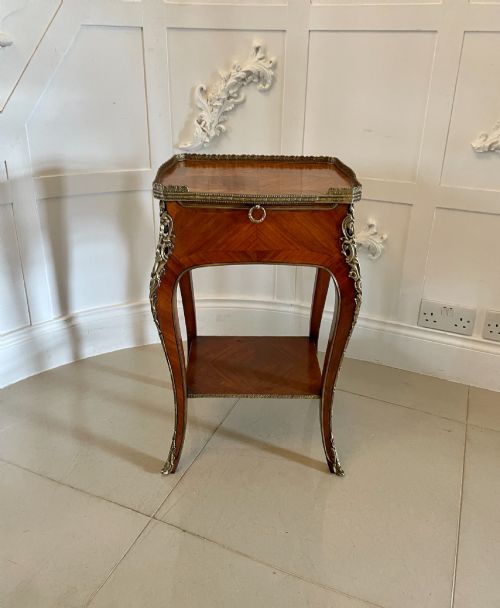
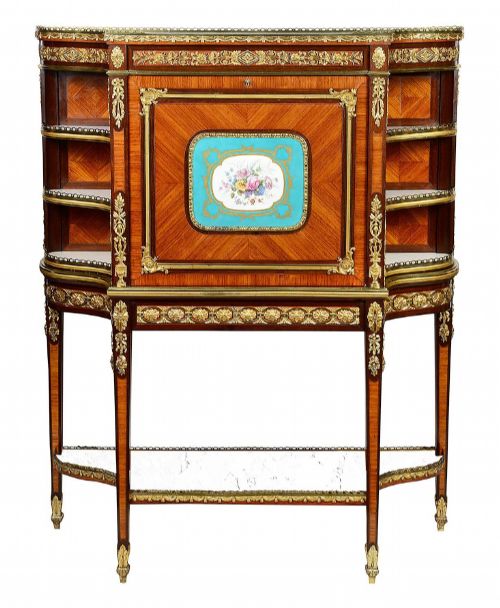
Many examples incorporate cast or chased ormolu mounts and polished marble top slabs fitted directly to the timber frame. Brass details reinforce corners and frame glazed doors, combining heavy metalwork with delicate woodworking.
Listings feature nineteenth-century kingwood, walnut, and marble alongside brass and ormolu mounts.
Markers of Quality
Quality rests upon the precision of the timber matching and the crispness of the parquetry geometry across complex curves and flat planes alike. Superior examples maintain tight joints between contrasting wood species without visible gaps or filler.
The integration of mountings also separates standards, where hand-chased ormolu secured with original screws indicates higher workshop execution than cast brass pinned superficially to the carcase.
Maison Gagneau·Blake London
The Victorian Parquetry Cabinet Glossary
- Parquetry
- Geometric mosaic woodwork formed by small pieces of veneer applied to a structural panel to create repeating patterns. This technique predates the Victorian era but reached high popularity during French revival periods.
- Ormolu
- Gilded bronze mounts applied to furniture for decorative enrichment around keyholes, corners, and friezes. The metal is cast and then finished with mercury gilding or modern electroplating.
- Credenza
- A low cabinet enclosed by doors, frequently fitted with glass panels or flanked by curved display compartments. Originally an Italian serving table, the form evolved into a formal nineteenth-century drawing-room piece.
- Kingwood
- A dense, heavy exotic timber featuring dark violet-brown tones with lighter golden streaks. Cabinet makers favoured this wood for high-end parquetry and banding due to its striking natural contrast.
Victorian Parquetry Cabinet: Frequently Asked Questions
What is a Victorian parquetry cabinet?
A nineteenth-century storage or display piece featuring geometric wood veneer patterns across its exterior surfaces. These cabinets often include marble tops and metal mounts.
They function as decorative focal points while offering enclosed shelving for books, ceramics, or correspondence.
How do I clean marble top cabinets?
Wipe marble surfaces using a soft cloth dampened with warm water and mild, pH-neutral soap. Avoid acidic cleaners, vinegar, or harsh detergents that etch the polished stone.
Dry the surface thoroughly immediately after cleaning to prevent water spots and protect the porous finish.
Where should I place a credenza?
Position these low cabinets against a principal living room wall where their proportions can balance large artwork or mirrors. Ensure adequate clearance for doors to open fully without striking adjacent furniture.
Keep them away from direct sunlight and strong heat sources to protect the delicate wood veneers and polish.
How do I identify French revival styles?
Look for serpentine forms, elaborate ormolu mounts, and contrasting kingwood or walnut veneers influenced by Louis XV and Louis XVI aesthetics. These nineteenth-century interpretations lean towards decorative opulence.
Examine the construction methods and secondary timbers inside the cabinet to confirm the nineteenth-century manufacturing date rather than later reproduction.