


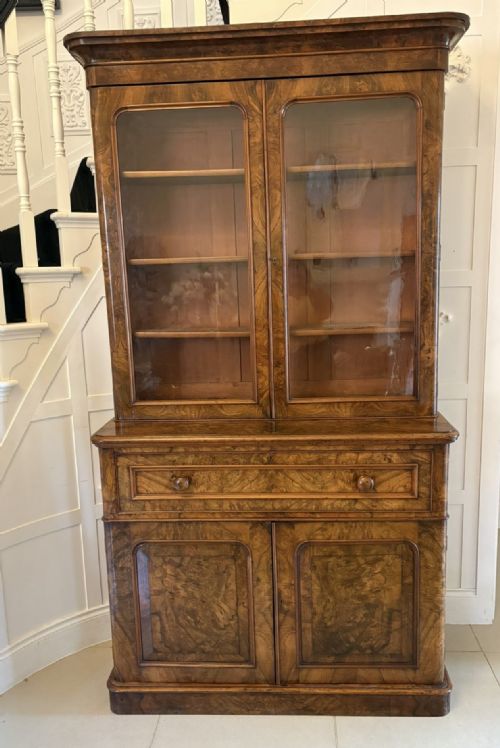

Victorian Secretaire Cabinet
A victorian secretaire cabinet combines a display bookcase or chest with a drop-front writing surface, offering concealed fitted drawers for correspondence and daily storage.
Victorian Secretaire Cabinet
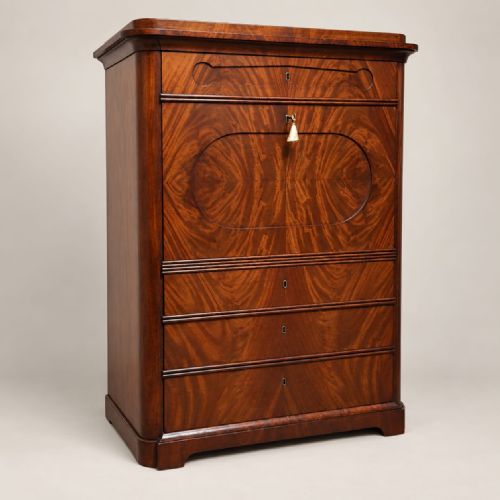
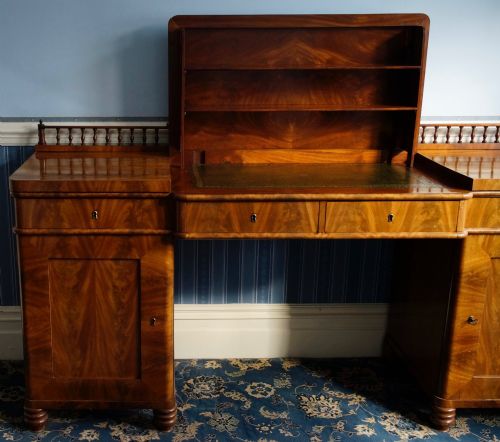
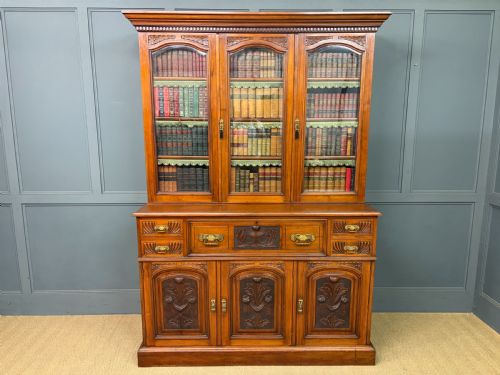
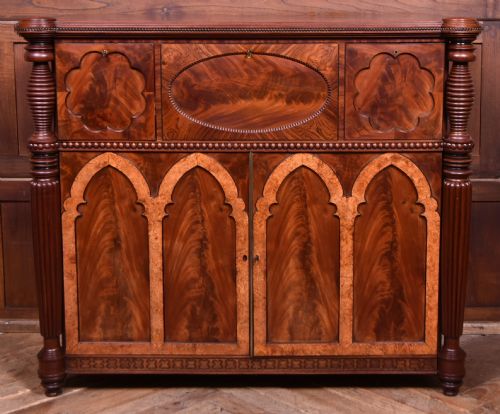
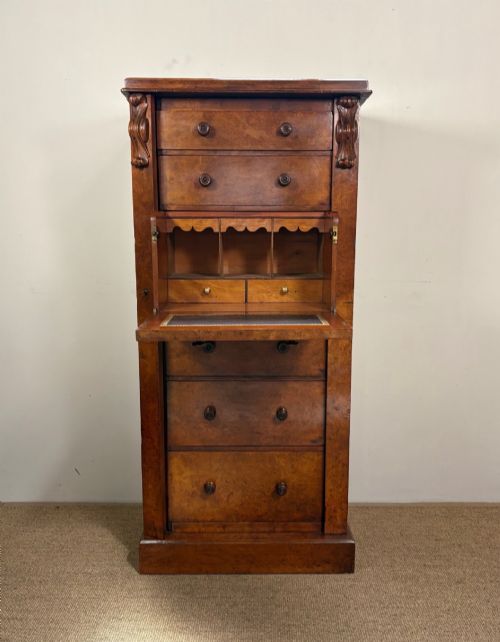
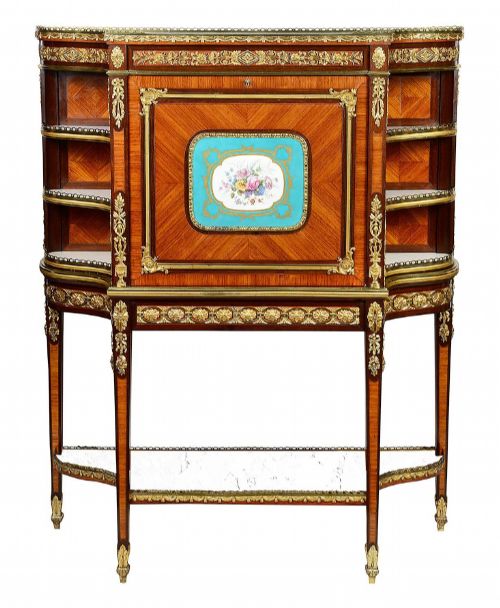
A victorian secretaire cabinet appears in several distinct forms across this selection, ranging from tall bookcase combinations and cylinder desks to upright abattants and Wellington chests. These pieces served domestic and study needs by providing a secure, fold-down writing surface alongside traditional storage for books or linens.
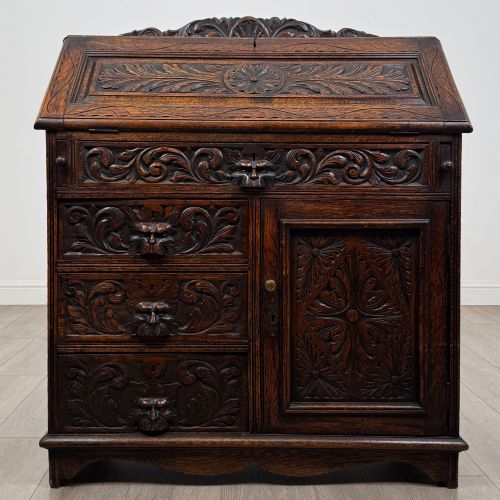
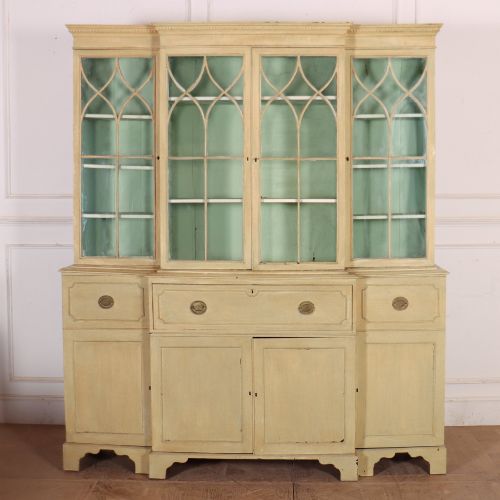
The version most commonly met on this page is the large mahogany or walnut secretaire bookcase featuring glazed upper doors above a fitted writing drawer. Alongside these, buyers encounter smaller walnut music cabinets, oak bureau bookcases, and occasional campaign chests housing hidden writing compartments.
Materials and construction
Cabinetmakers built these pieces using solid foundational timbers such as mahogany, oak, and pine, frequently applying decorative veneers of burr walnut, rosewood, amboyna, or figured walnut to the primary display surfaces. Brass hardware, leather writing inserts, and occasional ormolu mounts complete the structural assembly.
The defining mechanical feature involves the fall-front or drawer mechanism that pulls down and supports itself to form a writing desk. This drop-front conceals an internal arrangement of small pigeonholes, secret compartments, and miniature drawers assembled with traditional dovetail joints.
Several pieces conceal tiny hidden compartments behind dummy drawer fronts for storing secret love letters.
What separates the standard
The choice of timber veneer dictates much of the visual hierarchy, with heavily figured burr walnut, pollard oak, or amboyna representing the more ambitious commissions compared to plain mahogany or pine. Careful grain matching across drawer fronts and doors signals greater workshop attention.
Internal complexity also distinguishes individual examples, as some feature simple pigeonholes while others incorporate secret drawers, satinwood crossbanding, hand-carved Green Man motifs, or extensive brass inlay. The precision of the drop-front hinges and the smoothness of the internal slide mechanism reflect the original maker's skill.
Gillows·Blake London·Gregory And Co Of London
The Victorian Secretaire Cabinet Glossary
- Secretaire
- A desk or cabinet featuring a pull-out or drop-front drawer that conceals a writing surface and small compartments. This design allowed owners to lock away correspondence.
- Abattant
- An upright wall cabinet with a drop-front writing flap, often associated with continental or later nineteenth-century tastes. It provides vertical storage with a minimal floor footprint.
- Wellington chest
- A tall, narrow chest of drawers secured by a locking side pilaster that fastens over the drawer edges. Some examples incorporate a secretaire drawer within the stack.
- Escritoire
- A light writing cabinet or desk used for handling letters. The term often describes French or late nineteenth-century forms.
- Cylinder bureau
- A desk featuring a quarter-circle rotating wooden cylinder that rolls back to reveal a fitted writing interior. This mechanism covers the desk surface when closed.
Victorian Secretaire Cabinet: Frequently Asked Questions
How do I use a secretaire daily?
Lower the fall-front flap carefully to access the internal writing surface and pigeonholes. Keep the drop-front closed when not in use to protect the leather or wood writing area from dust and sunlight.
Ensure any internal locking pins or secret compartments are fully disengaged before operating the mechanism. Treat the writing surface with care, avoiding excessive moisture or heavy impacts.
Where should I place this cabinet?
Position the cabinet against a stable interior wall away from direct radiator heat or strong sunlight that can dry out walnut and mahogany veneers. Allow sufficient clearance in front of the piece for the drop-front or drawer to open fully.
Tall bookcase variants require level flooring to ensure the upper glazed doors hang straight and latch properly. Smaller variants like music cabinets fit well in studies or hallways.
How do I distinguish between periods?
Early nineteenth-century and William IV pieces often display heavier proportions and dense mahogany solids. Mid-Victorian examples frequently introduce burr walnut veneers and glazed bookcase tops with arched framing.
Late nineteenth-century pieces may incorporate lighter satinwood stringing, brass panels, or eclectic revival styles such as Arts and Crafts or Louis XVI influences. Examine the secondary timbers inside the drawers to confirm the period.