
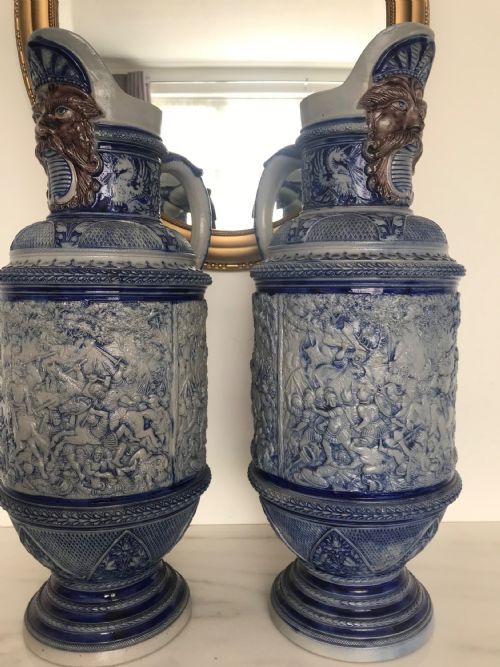


Victorian Salt Glazed Stoneware
These pieces of victorian salt glazed stoneware range from domestic water vessels to elaborate art pottery jugs produced during the nineteenth century.

Victorian Salt Glazed Stoneware
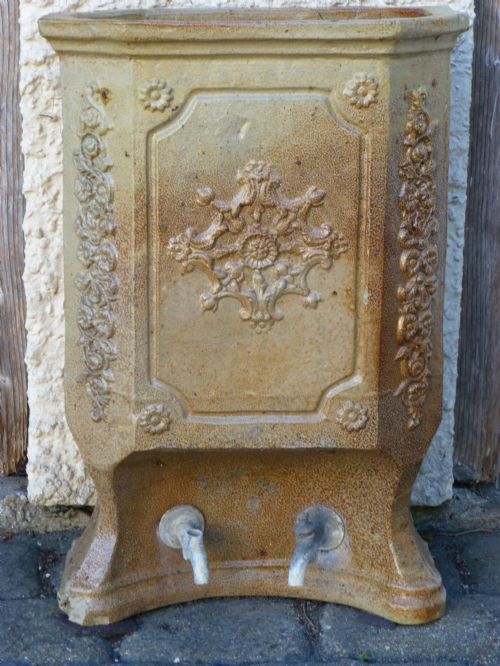
When you search for victorian salt glazed stoneware, you are looking at hard-fired ceramic objects made tough through the application of salt during the kiln firing process. These pieces span utility and decoration, including heavy water filters, garden urns, barrel stick stands, and elaborate jugs.
The domestic forms meet you alongside studio art pottery pieces, particularly those originating from English workshops. Makers used the dense body to create vessels that could hold liquids safely while taking impressed or incised decoration.
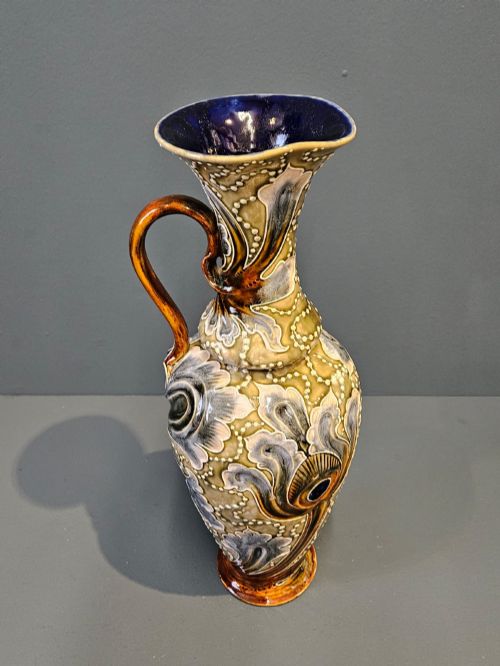
The selection reflects the Victorian period's dual love for sturdy household goods and ornate ornamental ceramics. You will find utilitarian tavern jars sitting alongside delicate vases decorated by named artists.
Materials and Techniques
Potters built these items using dense stoneware clay that was fired at extremely high temperatures until vitrified. Common salt was thrown directly into the kiln fires during the final stages, vaporising to react with the silica in the clay and create a characteristic orange-peel textured glaze.
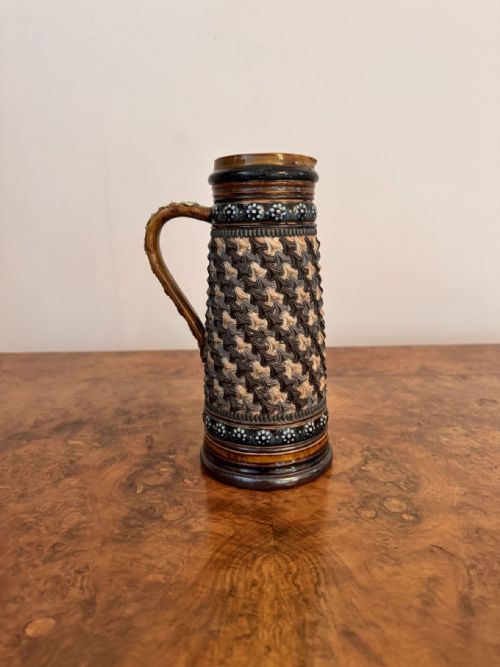
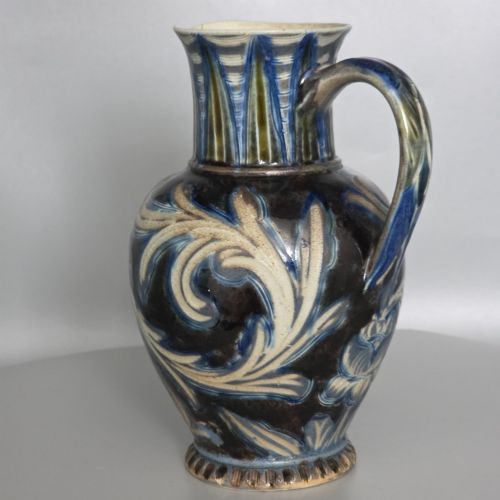
Decoration often involved sprigged reliefs, incised patterns, or cobalt blue pigment painted beneath the salt glaze, as seen on continental pitcher jugs. Workshops also added functional mounts of silver or brass to rims and handles of high-end vessels.
Listings feature nineteenth-century salt-glazed items spanning garden urns, water filtration fountains, puzzle jugs, and artist-signed studio vases.
Judging Quality
Quality in these items rests upon the crispness of the incised or sprigged ornamentation and the evenness of the orange-peel salt texture across the body. Pieces bearing the signatures or monograms of notable studio artists show a higher tier of design and execution than standard factory output.
The presence of hallmarked silver rims or complex forms like puzzle jugs and exhibition pieces elevates an item from a basic utility container to a collector's showpiece.
Doulton Lambeth·Emma Shute·Emily Stormer·Simon Peter Gerz·Florence Barlow·L. Lumley·C & A Painter
The Victorian Salt Glazed Stoneware Glossary
- Salt Glaze
- A glossy, translucent ceramic finish with a texture resembling an orange peel, formed by throwing common salt into the hot kiln. The sodium reacts with the clay body to create a durable, impervious coating.
- Sprigged
- A decorative technique where separately moulded clay reliefs are applied to the wet surface of a vessel before firing. These often depict hunting scenes, floral motifs, or commemorative crests.
- Puzzle Jug
- A drinking vessel with a perforated neck that prevents normal drinking, requiring the user to sip through a specific hollow spout or handle to avoid spilling. They date back centuries and remained popular novelty items.
- Harvest Jug
- A large, bulbous pitcher traditionally used in agriculture for carrying ale or cider during harvest work. They frequently feature detailed sprigged hunting scenes and brown salt-glazed surfaces.
- Stoneware
- A robust, vitrified pottery type fired at high temperatures until non-porous and impermeable to liquids. It rings like stone when struck and requires no interior glaze for holding water.
Victorian Salt Glazed Stoneware: Frequently Asked Questions
What is salt glazed stoneware?
Salt glazed stoneware is a dense, vitrified ceramic material fired at high temperatures with common salt introduced into the kiln. This chemical reaction forms a durable finish with a pitted, orange-peel texture.
The resulting ware is completely waterproof and resistant to acids, making it ideal for storing liquids, water filtration, and heavy outdoor use.
How do I date these pieces?
Dating relies on maker stamps, specific patent marks, stylistic markers like Art Nouveau or Arts and Crafts motifs, and recorded artist monograms. Nineteenth-century registry marks also provide exact registration years.
Comparing the manufacturing style and mounting metals, such as silver rims, helps narrow down the production decade within the Victorian era.
Were these items used daily?
Many of these objects served practical roles in nineteenth-century homes, businesses, and taverns, including water filtration urns, ginger beer bottles, and spirit barrels. Others functioned as garden planters, umbrella stands, or decorative table jugs.
Even exhibition pieces and art pottery vases reflected the period's blending of utility with aesthetic display in domestic interiors.
How should I clean my stoneware?
Clean salt glazed stoneware gently using warm water and a mild detergent with a soft cloth or sponge. Avoid harsh scouring pads that can scratch the glazed surface or damage historical silver mounts.
Dry the piece thoroughly afterward, paying attention to recessed incised decoration where moisture might linger.