

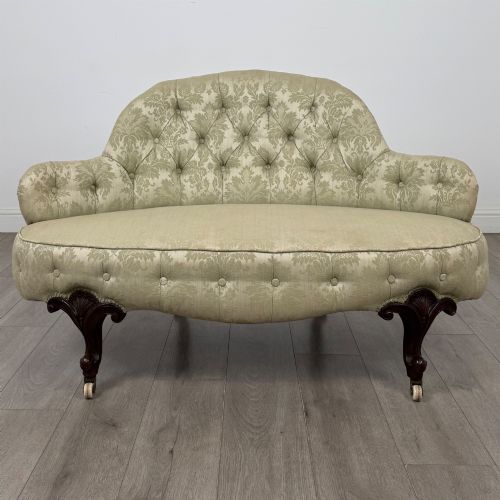
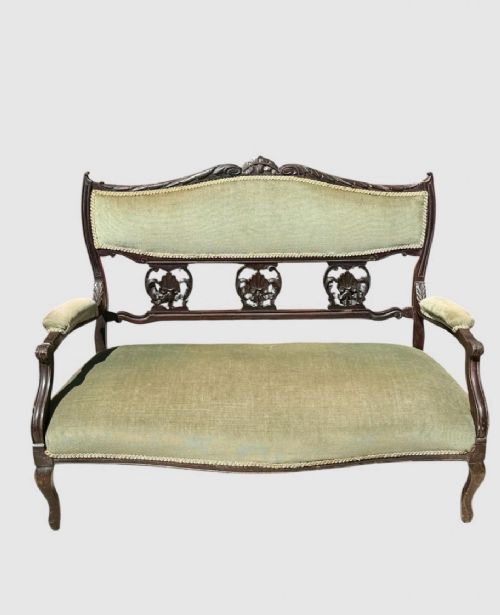


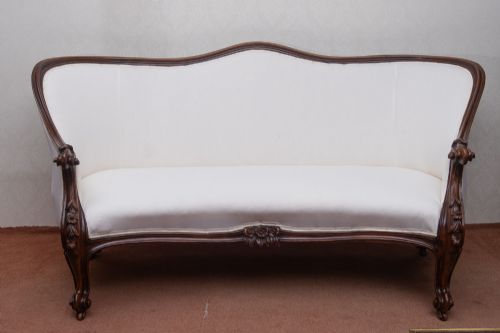
Victorian Salon Couch
These Victorian salon couch pieces bring period elegance to a room, offering a comfortable seat framed in rich woods like mahogany and walnut.
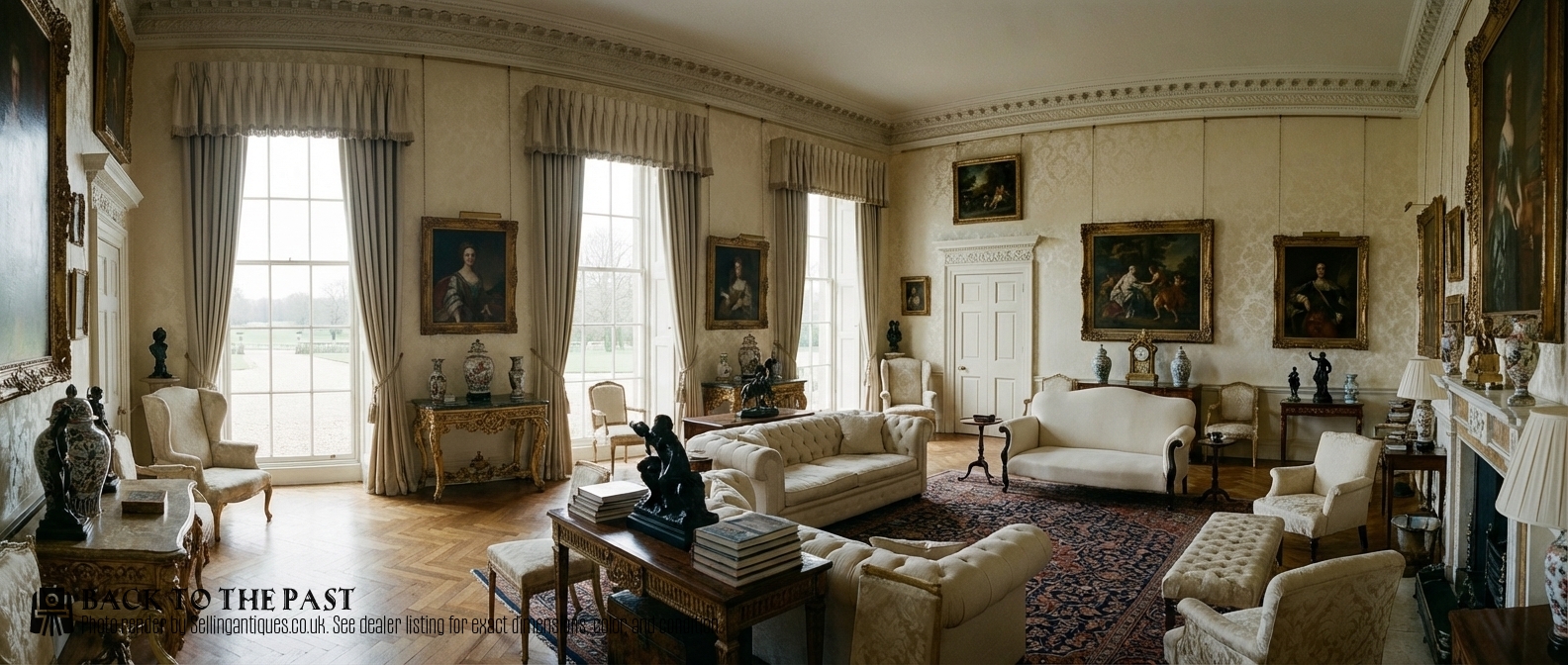
Victorian Salon Couch
Buyers will encounter robust timber frames paired with plush textiles, ranging from walnut framed settees to mahogany double ended sofas. These pieces served as formal reception seating in nineteenth-century homes and continue to function as statement focal points in modern interiors.
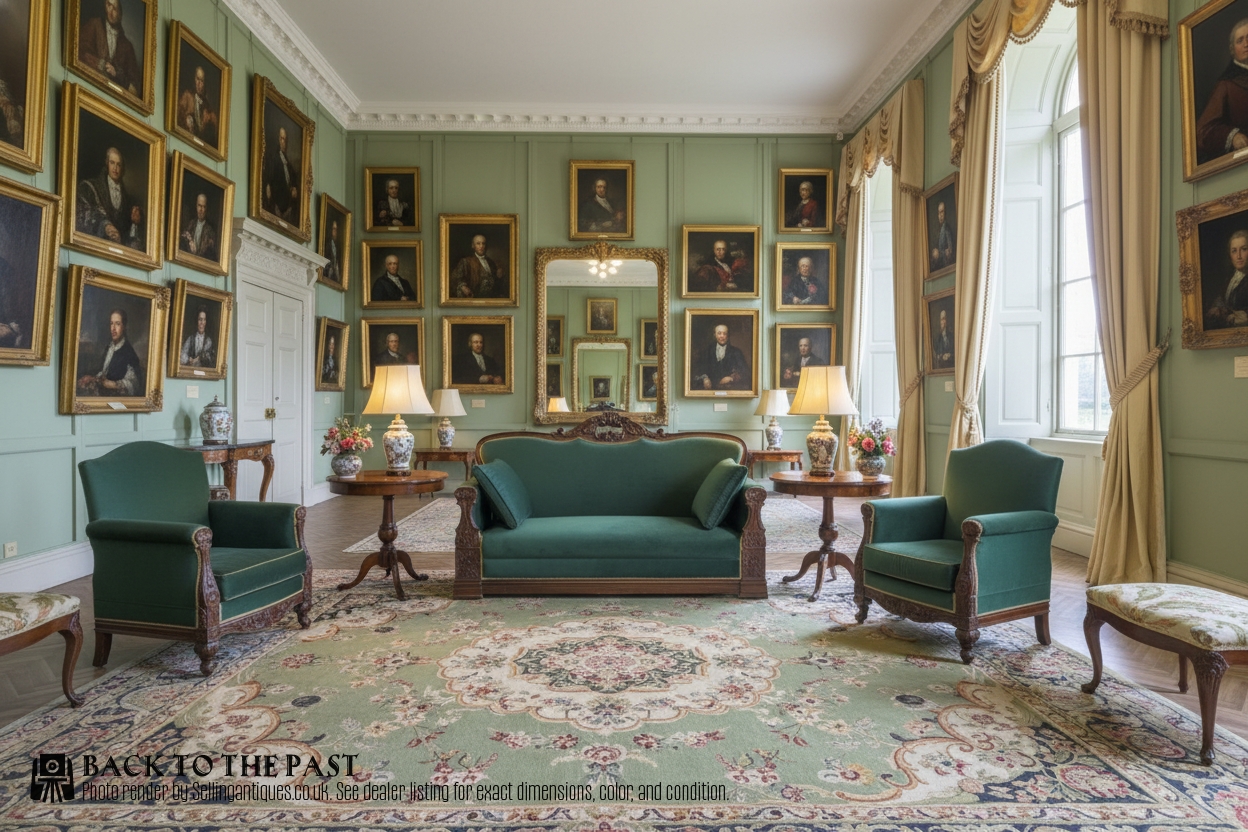
Materials and construction
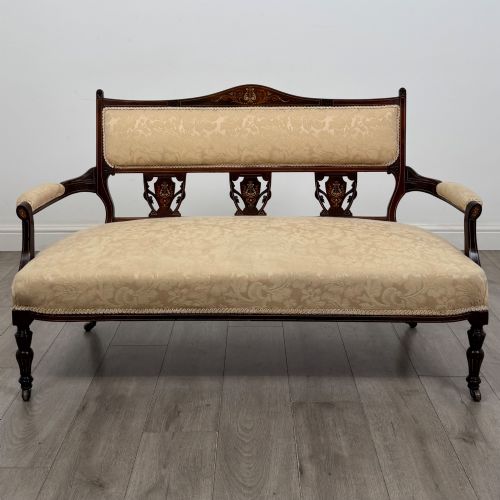
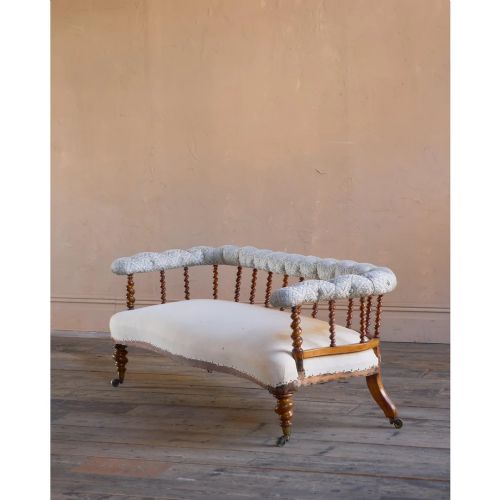
Craftsmen built these frames using solid hardwoods, predominantly mahogany and walnut, frequently incorporating intricate carved details, inlay, and ebonising. Brass castors and ceramic components often support the feet, whilst exposed timber framing defines the structural silhouette.
Upholstery techniques relied on sprung settee bases padded with textiles such as velvet, damask, brocade, and fabric. Many pieces demonstrate meticulous hand-carving alongside marquetry inlay in satinwood or other decorative veneers.
Victorian Salon Couch Retail Price Guide 2026
Typical asking prices for victorian salon couch among the pieces listed under this phrase on Sellingantiques today, from the lower quarter to the upper quarter. They describe what is for sale here now, not the wider market.
The listings feature pieces primarily from the Victorian and 19th Century periods, constructed from walnut, mahogany, and brass.
Judging quality in salon seating
Quality rests upon the crispness of the timber carving and the selection of cabinet timbers such as figured walnut or rich mahogany. Finer examples display harmonious proportions, sophisticated marquetry inlay, and substantial frames rather than simple mass-produced turning.
The sophistication of the stylistic revival also dictates value, with elaborate Rococo Revival curves or marked Aesthetic Movement lines commanding attention over plain forms. Original brass hardware and superior textile choices further elevate a piece.
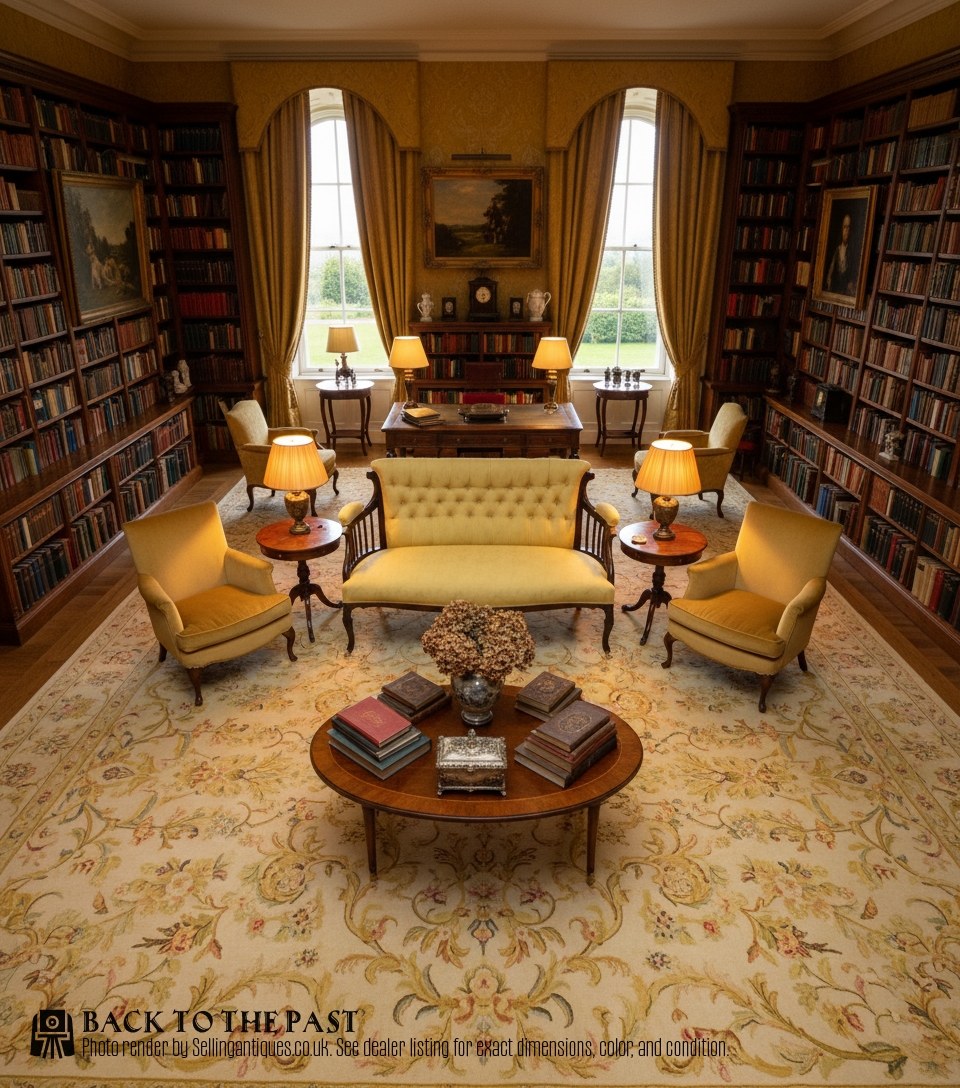
C. Hindley & Sons·Morison & Co - Edinburgh
The Victorian Salon Couch Glossary
- Cameo back
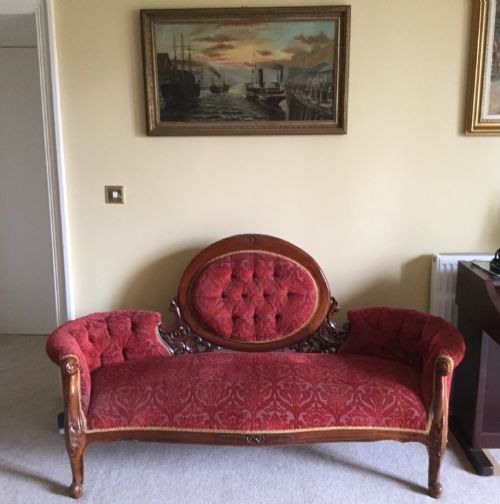
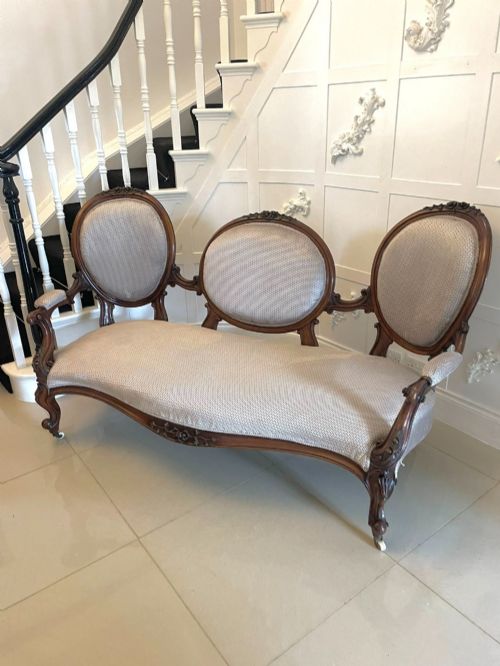
- A chair or sofa back featuring an oval or shield-shaped upholstered panel surrounded by carved wood, resembling a cameo brooch.
- Double ended sofa
- A seating form with scrolled or raised ends of equal height at both sides, allowing a person to recline comfortably from either direction.
- Rococo Revival
- A mid-nineteenth-century style inspired by eighteenth-century French design, characterised by exuberant asymmetrical curves, naturalistic floral carving, and scrolled feet.
- Aesthetic Movement
- A late-nineteenth-century design approach emphasising simplicity, Japanese artistic influences, and ebonised wood finishes.
- Marquetry
- Decorative patterns formed by fitting together thin veneers of various coloured woods and other materials onto a structural carcass.
Victorian Salon Couch: Frequently Asked Questions
How do I style a Victorian salon couch today?
These pieces suit both traditional drawing rooms and contemporary living spaces as statement seating. Pair them with neutral walls to let the rich timber frame and upholstery stand out.
Ensure the scale of the couch complements surrounding furniture without overcrowding the floor plan. They work particularly well as standalone window seats or conversational pieces.
Were these couches used for sleeping?
Whilst some double-ended designs allowed for daytime lounging, these couches were primarily designed for formal reception rooms and social calls. They provided upright or semi-reclined seating for entertaining guests rather than overnight sleeping.
The sprung bases and padded upholstery offered comfort during long periods of conversation.
How do I identify a Rococo Revival piece?
Look for pronounced C-scrolls, asymmetric floral carvings, and flowing organic lines in the walnut or mahogany frame. The woodwork often mirrors mid-nineteenth-century interpretations of earlier French royal aesthetics.
Cameo backs and cabriole legs ending in scroll or lion paw feet frequently accompany these forms.
Can I reupholster a Victorian settee?
Reupholstering is common and allows owners to refresh worn textiles while preserving the historic timber frame. Choosing historic fabric types like damask, velvet, or brocade maintains period accuracy.
Consult a specialist upholsterer who understands traditional sprung base construction to retain the proper profile.