



Victorian Ruin Artwork
Victorian ruin artwork captures decaying classical and medieval architecture, offering collectors atmospheric scenes of past grandeur rendered in watercolours and oils.
Victorian Ruin Artwork
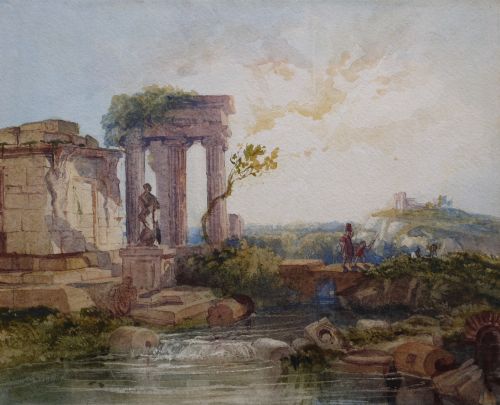
Victorian ruin artwork comprises paintings and works on paper depicting decayed abbeys, castles, and classical antiquities from the nineteenth century. Buyers exploring this category will frequently encounter watercolour paintings, oil paintings, and framed fine art pieces.
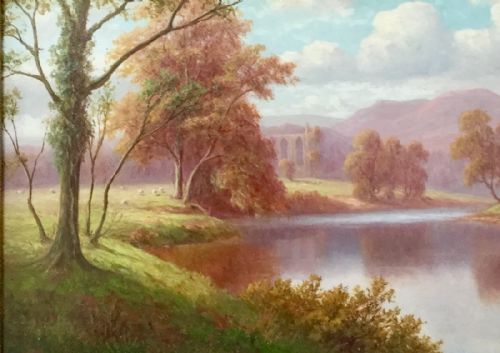
The subjects range from domestic English landmarks like Rievaux Abbey and Bolton Abbey to classical Mediterranean sites such as the Colosseum and Tivoli. These pieces reflect the nineteenth century fascination with antiquity, landscape painting, and the Grand Tour.
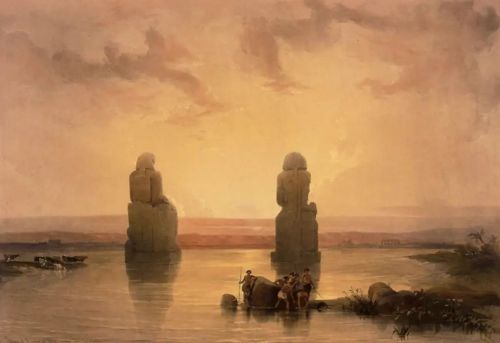
Most examples date from the Victorian era and the surrounding decades, utilising paper, wood, and canvas supports. Works span styles including Victorian Classical, Orientalism, and traditional landscape painting.
Materials and techniques
Watercolour pigment and ink on paper dominate these listings, often supplemented by gouache highlights to define architectural masonry and atmospheric light. Artists also employed oil paint on canvas and board to capture richer coastal and landscape scenes.
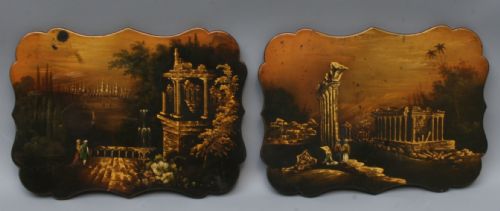
Many works incorporate protective glazing and are housed in period wooden frames, occasionally enhanced with gold leaf detailing. Papier mache panels also appear as a distinctive support for decorative painted scenes.
Some Victorian artists painted picturesque ruins on unexpected surfaces like papier mache panels, proving the era loved its antiquity portable.
Quality variations
The distinction between standard works and finer examples lies in the precision of architectural perspective and the handling of atmospheric light. Superior pieces demonstrate confident brushwork in rendering crumbling stone and landscape depth.
Condition of the paper support and the vibrancy of surviving pigment significantly influence the visual impact of watercolour works. Original framing and documented artist attribution further elevate the standing of individual pieces.
Richard Principal Leitch·David Roberts·George Gregory·R.P. Noble·John Sowden·Peter Toft·Tom Dudley·William Crouch·Everett Watson Mellor·Henry Bright
The Victorian Ruin Artwork Glossary
- Watercolour painting
- A work created using water-soluble pigments on paper supports, frequently utilised for British landscape and architectural subjects. This medium allows for transparent washes that create delicate atmospheric effects.
- Grand Tour
- A cultural journey undertaken by wealthy young Europeans through France and Italy to study classical antiquities. Artworks depicting Roman and Middle Eastern ruins were popular souvenirs of this travel tradition.
- Gouache
- An opaque water-based paint often used alongside transparent watercolour to add bright highlights to architectural details. It provides solid coverage and rich colour depth in nineteenth-century works.
- Orientalism
- An artistic style depicting scenes from the Middle East and North Africa, influenced by nineteenth-century travel and exploration. These compositions often feature exotic architecture and sunlit ruins.
Victorian Ruin Artwork: Frequently Asked Questions
What subjects appear in these ruins?
Artworks typically depict decaying abbeys, coastal castles, and classical Roman monuments. Scenes range from Yorkshire monasteries to Italian and Middle Eastern antiquities.
Artists focused on the romantic atmosphere of crumbling architecture set within natural landscapes.
Are these works painted on paper?
Many examples consist of watercolours or gouache applied to paper supports. Some pieces are executed in oil paint on canvas or board.
Papier mache panels also serve as a base for decorative painted scenes.
How should I frame a watercolour?
Watercolours require conservation framing with UV-filtering glass to prevent pigment fading. Acid-free mounts protect the paper from discolouration over time.
Keeping works away from direct sunlight preserves the delicate washes.
When were these artworks created?
The pieces span the nineteenth century and the early twentieth century. Most date specifically from the Victorian period through to the nineteen twenties.
Styles reflect contemporary landscape traditions and Grand Tour influences.