
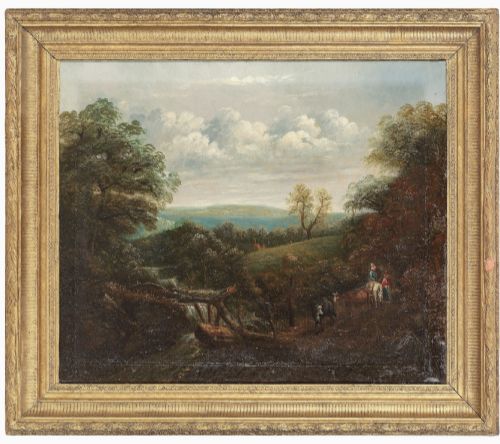


Norwich School Landscape
These norwich school landscape works capture the open skies, rivers, and windmills of Norfolk through the eyes of provincial masters.
Norwich School Landscape
A norwich school landscape represents a regional movement of artists working primarily in Norfolk during the nineteenth century, focusing on local topography, riversides, and rural life. Buyers encounter works ranging from intimate graphite drawings to substantial oil paintings on canvas and wood panel.
The compositions frequently depict familiar local landmarks such as windmills, country paths, river cottages, and coastal scenes. These pieces reflect the distinct landscape and atmospheric conditions of East Anglia.
Factors of Quality
Quality rests in the handling of light and atmospheric depth, distinguishing accomplished compositions from stiffer topographical records. The sureness of the brushwork in oil or the transparency of wash in watercolour determines the visual success of the piece.
Condition of the pigment and the support surface plays a part, alongside the presence of original or period framing that complements the work without overpowering the composition.
Norwich School Landscape Retail Price Guide 2026
Typical asking prices for norwich school landscape among the pieces listed under this phrase on Sellingantiques today, from the lower quarter to the upper quarter. They describe what is for sale here now, not the wider market.
Recorded subjects span riverside cottages, windmills, coastal boats, and figures on country paths.
Thomas Lound·John Joseph Cotman·Henry Bright·John Thistle·Joseph Paul·John Crome·James Stark·George Vincent
The Norwich School Landscape Glossary
- Wood Panel
- A rigid wooden support used by artists as an alternative to canvas. These panels provide a smooth ground for detailed oil painting.
- Watercolour Pigment
- Finely ground colour suspended in a water-soluble binder. It is applied to paper to achieve translucent washes of tone and light.
- Graphite
- A form of carbon used for drawing lines and underdrawings. It provides precise detail before or beneath the application of paint.
- Gilt Wood
- Wood carved and coated with a thin layer of gold leaf. Frames of this material were standard for finishing fine paintings of the period.
Norwich School Landscape: Frequently Asked Questions
What defines a Norwich School landscape?
These works depict the rural scenery, rivers, and architecture of Norfolk, produced by a closely linked group of artists inspired by their local surroundings.
The style prioritises direct observation of nature, atmospheric skies, and everyday rural life over classical or idealised compositions.
How should I display these watercolours?
Watercolour paintings require protection from direct sunlight to prevent the fading of delicate pigments on paper. Framing behind conservation glass ensures stability in domestic environments.
Keeping them away from damp walls preserves both the paper support and the original gilt wood frames.
Are these works painted on panel or canvas?
Artists of this group utilised both oil on canvas and oil on wood panel, depending on the scale and required surface texture. Smaller outdoor studies frequently appeared on wooden panels.
Watercolour and graphite works were consistently executed on various grades of paper.
How do I identify the period of a piece?
Dating relies on recorded artist lifespans, stylistic shifts within the nineteenth century, and contemporary framing methods. Victorian examples often show distinct mount styles and framing techniques.
Inscribed signatures, dates on reverse panels, and archival records further clarify the timeline.