

Antique Landscape Drawing
An antique landscape drawing captures the topography and rural scenes of earlier centuries through the direct touch of graphite, ink, pastel, or watercolour on paper.
Antique Landscape Drawing
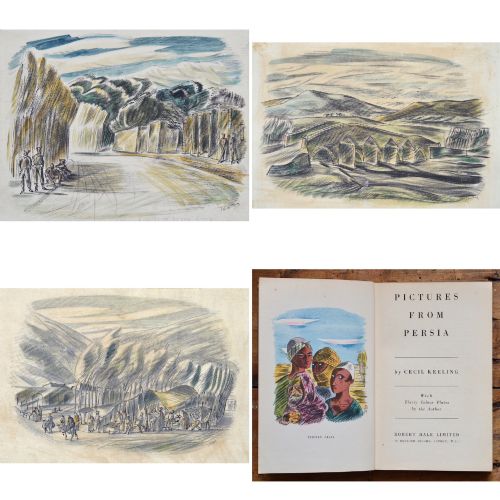
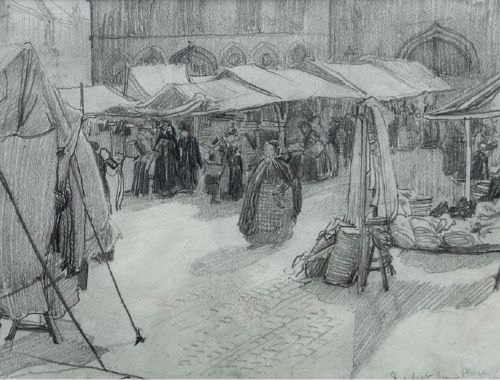
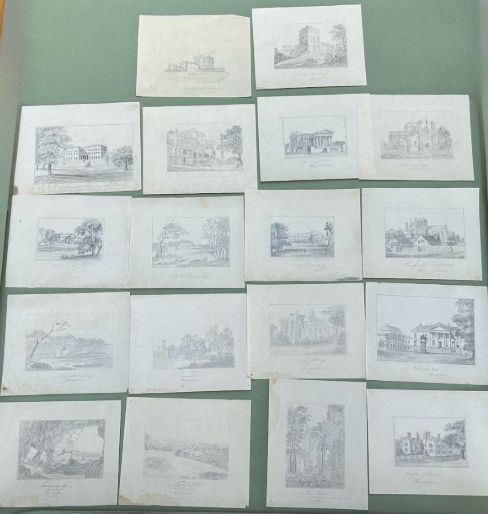
When searching for an antique landscape drawing, collectors encounter works on paper executed in media such as pencil, charcoal, pen and ink, pastel, and watercolour. These range from rapid topographical sketches made during the eighteenth and nineteenth centuries to finished watercolours and pastels from the early twentieth century.
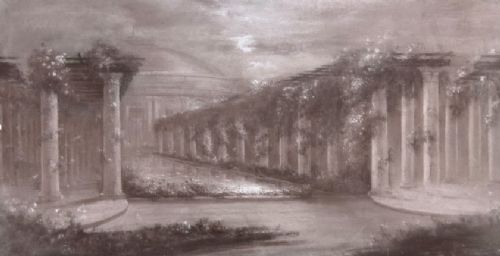
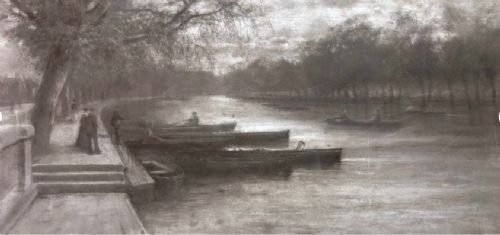
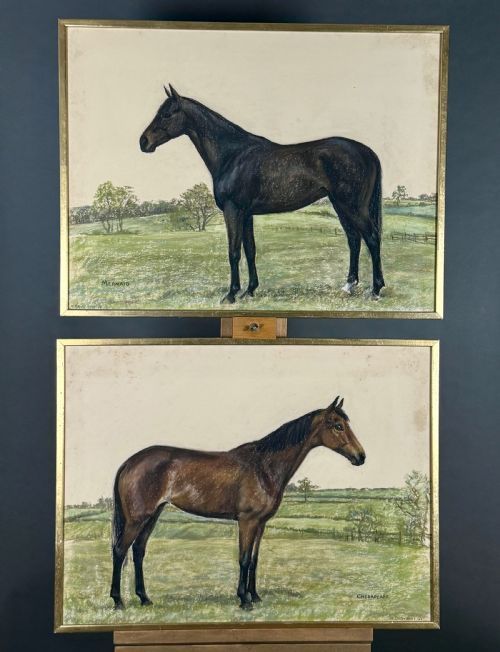
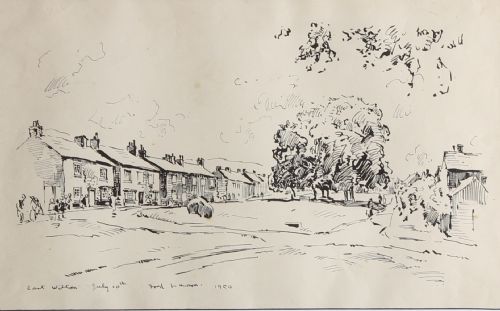
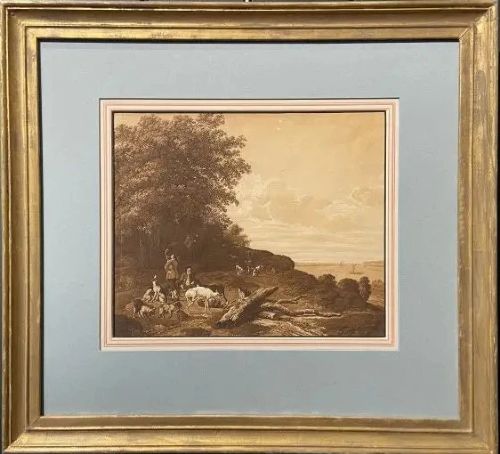
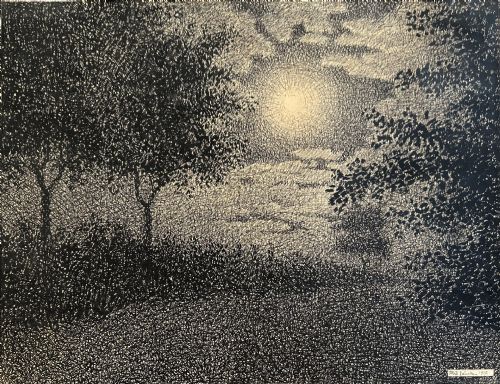
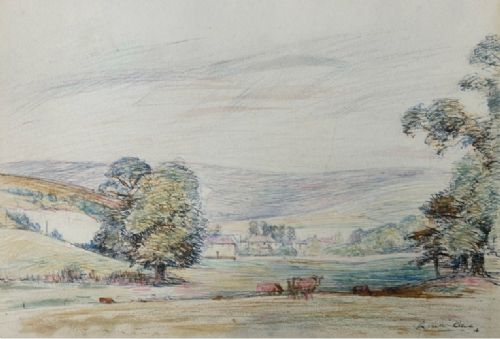
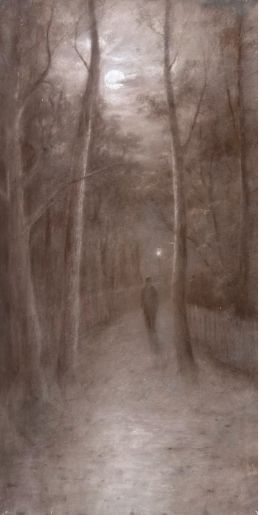
The subjects span British pastoral scenes, regional river valleys, and coastal harbours, alongside Continental views recorded during the Grand Tour. Works vary from intimate pencil studies of trees and architectural ruins to dramatic moonlight street scenes and pastoral meadows.
Pieces frequently reflect specific regional schools or the direct influence of nineteenth-century tonalism and British impressionism. Surviving works often bear artist signatures, historical exhibition labels, or early twentieth-century gallery provenance.
How They Were Made
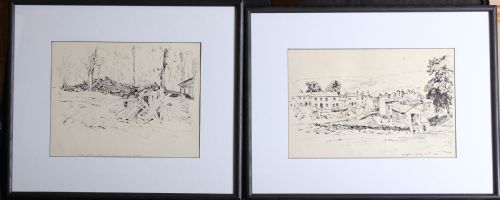
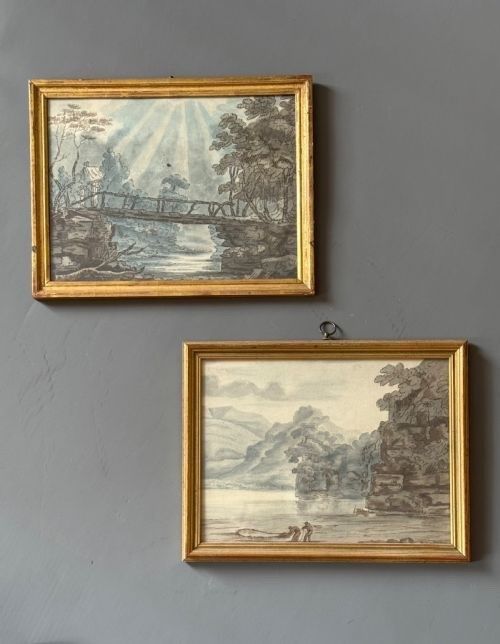
Draftsmen relied primarily on paper supports, applying graphite, charcoal, or pen and ink to capture immediate lines and tonal contrast. Wash and watercolour were frequently layered over pencil outlines to build atmospheric depth in skies and foliage.
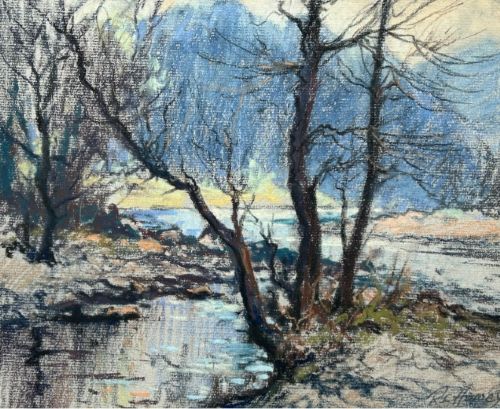
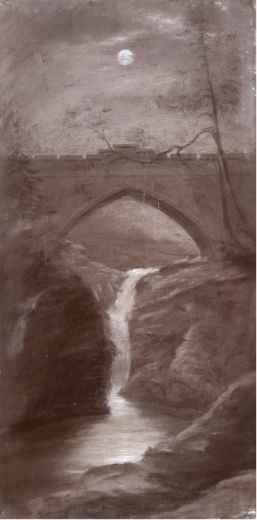
Pastel and mixed-media applications provided richer colour surfaces, particularly in depictions of changing light during evening or moonlight scenes. Works were secured within glazed wooden framing to protect delicate dry pigments and paper fibres from environmental degradation.
Several sheep, cows, and farmers persist in observing rural quietude across these centuries of paper.
What Varies in Quality
Quality rests upon the sureness of the hand and the economy of line used to define natural forms, distance, and light. A skilled draughtsman achieves spatial depth and atmosphere with minimal strokes, whereas weaker works rely on heavy, laboured outlines.
The preservation of the paper support and the stability of fugitive pigments dictate the longevity and visual integrity of the drawing. Well-preserved sheets retain crisp ink tones and vibrant pastel or watercolour hues without excessive fading or foxing.
William Manners·Charles James Lauder·John Charles Maggs·Charles H Poingdestre·Edward Dayes
The Antique Landscape Drawing Glossary
- Graphite
- A form of carbon used as a drawing medium in pencils, allowing for varied tonal shading and fine linear detail. It gained widespread use in British sketching from the eighteenth century onward.
- Wash
- A diluted layer of watercolour or ink applied with a brush to create smooth, transparent areas of tone. Draughtsmen utilised washes to establish shadows and dramatic atmospheric effects in landscape studies.
- Pastel
- A dry medium composed of powdered pigment and a binder, shaped into sticks. It permits rapid application of rich colour and soft blending, frequently employed for atmospheric sky and meadow scenes.
- Provenance
- The documented history of ownership, exhibition, and attribution associated with an artwork. Recorded provenance often includes historical gallery labels or stamps on the reverse of the frame.
- Grand Tour
- The traditional journey through continental Europe undertaken by upper-class scholars and artists to study classical antiquities. Drawings and watercolours resulting from these travels typically recorded Italian architecture and landscapes.
Antique Landscape Drawing: Frequently Asked Questions
What materials were used?
Artists utilised paper supports combined with graphite, charcoal, ink, pastel, and watercolour pigments. Many works incorporated mixed media to enhance textural contrasts within architectural and rural scenery.
Protective framing with glass and wooden surrounds was standard practice for preserving these fragile works on paper against atmospheric damage.
How are periods identified?
Periods are determined through paper characteristics, framing styles, artist signatures, and contemporary inscriptions or gallery labels. Stylistic markers such as nineteenth-century tonalism or Georgian topographical conventions also point to specific eras.
Archival records and historical exhibition provenances frequently corroborate the dating inscribed on or attributed to individual sheets.
Where were they made?
Production spans British rural counties, urban centres, and Scottish highlands, alongside continental European locations visited during travel. Artists recorded local landmarks such as river valleys, coastal harbours, and classical ruins abroad.
Many sheets originated as field sketches executed directly on location before being mounted or framed for exhibition.
How should they be displayed?
Works on paper require conservation mounting using acid-free materials to prevent chemical degradation over time. Glazing protects delicate charcoal, pastel, and watercolour surfaces from dust and atmospheric moisture.
Placement away from direct sunlight prevents the fading of fugitive pigments and discoloration of the underlying paper support.