
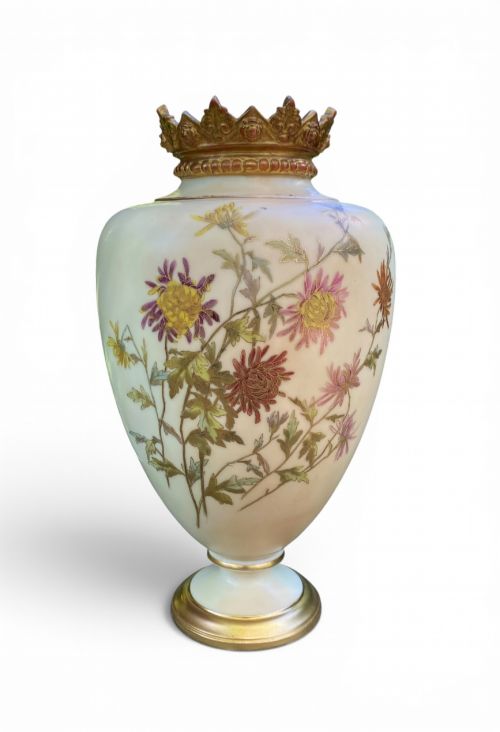


Victorian Royal Worcester Urns
Victorian Royal Worcester urns are porcelain vessels combining painted floral and animal motifs with gilding, prized for their decorative presence and detailed craftsmanship.

Victorian Royal Worcester Urns
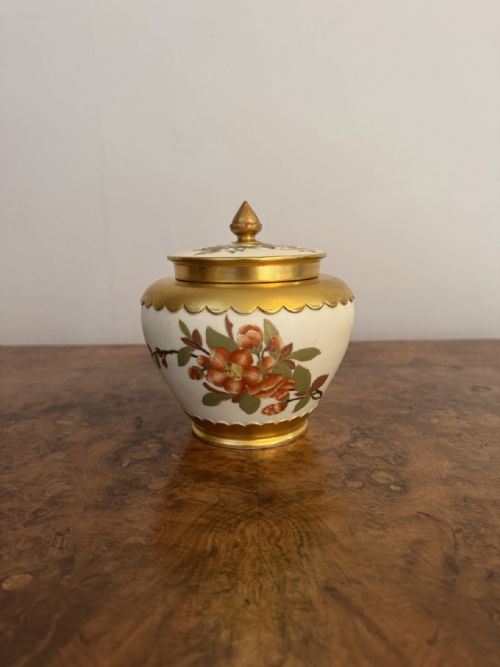
Victorian Royal Worcester urns span the nineteenth century and the Edwardian era, taking the form of vases, potpourri pots, jars, ewers, and vessels. The selection includes blush ivory pieces alongside floral and gilt decorated items.
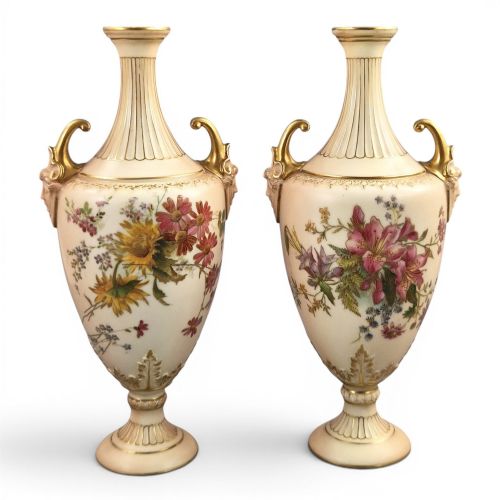
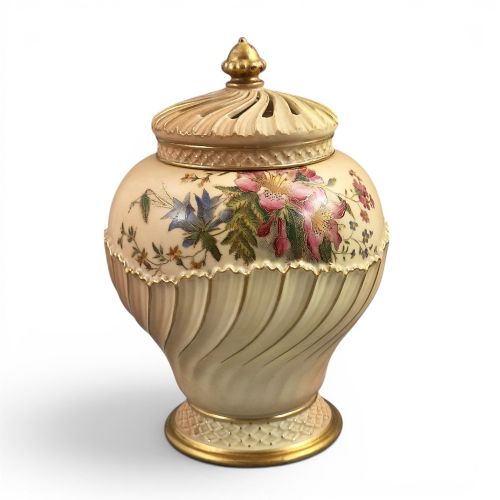
Buyers encounter forms ranging from lidded potpourri jars and crown covers to pedestal vases and handled ewers. These pieces frequently feature hand-painted details such as chrysanthemums, roses, swans, and storks.
Origins trace back to the English manufactory, with periods spanning the 1870s through the 1920s. Styles encompass Victorian Aesthetic Movement, Neo-Classical, and Edwardian designs.
Materials and methods
Makers utilised fine porcelain as the foundational body for each vessel, applying specialised glazes and enamel colours to achieve smooth surfaces. Hand-painting formed the core of the decorative process.
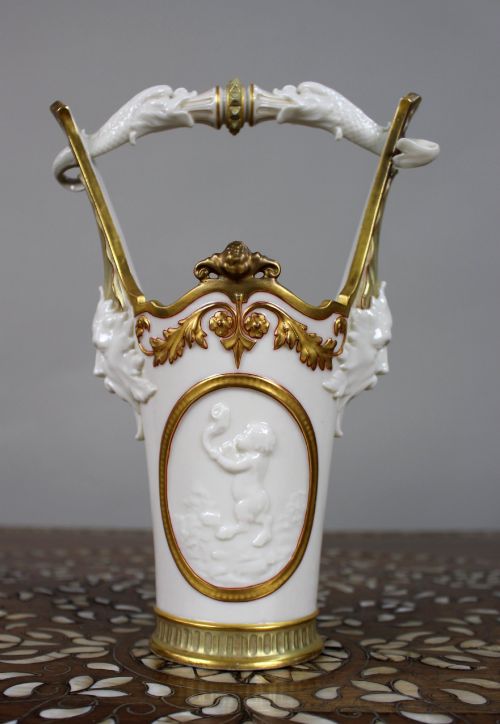
Gilding, gold leaf, and gold gilt provide metallic highlights along handles, rims, and borders. Reticulation and pierced techniques create openwork patterns within the ceramic body.
Swans painted by C Baldwyn glide across several ceramic surfaces, bringing feathered elegance directly to the mantelpiece.
Distinctions in craftsmanship
The skill of the decorator defines the upper tier of these pieces, particularly in hand-painted subjects like swans, birds, and floral arrangements by named artists. Fine brushwork and detailed enamel application elevate the visual depth.
Elaborate production techniques such as reticulation, pierced handles, and intricate gilding distinguish more ambitious outputs from standard painted wares.
Hadley and Sons·A B Daniell and Son
The Victorian Royal Worcester Urns Glossary
- Blush ivory
- A matte cream-coloured ceramic body characteristic of late nineteenth and early twentieth-century Worcester production. This ground serves as a soft backdrop for painted floral motifs.
- Potpourri jar
- A lidded vessel designed to hold dried scented plant materials. Perforated covers allow fragrance to disperse while containing the contents.
- Ewer
- A large jug with a wide spout and handled body, often produced as a pair for decorative display rather than utility. These items incorporate sculptural handles and gilt trim.
- Reticulation
- An openwork ceramic technique where material is cut away before firing to create a lace-like pattern. Master artisans executed this by hand.
- Gilding
- The application of gold leaf or gold paint to ceramic surfaces. This technique emphasises rims, handles, and structural contours.
Victorian Royal Worcester Urns: Frequently Asked Questions
What periods do these pieces date from?
The pieces originate from the late nineteenth century through the Edwardian period, with dates spanning the 1870s to the 1920s.
Production methods and aesthetic styles shifted during this timeframe, moving from Victorian interpretations toward early twentieth-century designs.
How were potpourri jars used?
Potpourri jars held dried flower petals and spices used to scent Victorian and Edwardian interiors.
The pierced covers allowed the fragrance to diffuse into the room while concealing the botanical mixture inside.
What is blush ivory?
Blush ivory refers to a soft, matte cream ceramic ground developed by the factory. It provides a warm background for hand-painted floral decorations.
Pieces with this finish frequently feature gilt accents along the rims and handles.
Are painted motifs hand-done?
Many decorative elements on these ceramics involve hand-painting by studio artists. Subjects include chrysanthemums, roses, storks, and swimming swans.
Signatures from specific painters occasionally appear on the work.