

Victorian Rosewood Tea Table
When you search for a victorian rosewood tea table, you encounter versatile fold-over surfaces that anchor period drawing rooms with rich timber and clever mechanics.
Victorian Rosewood Tea Table
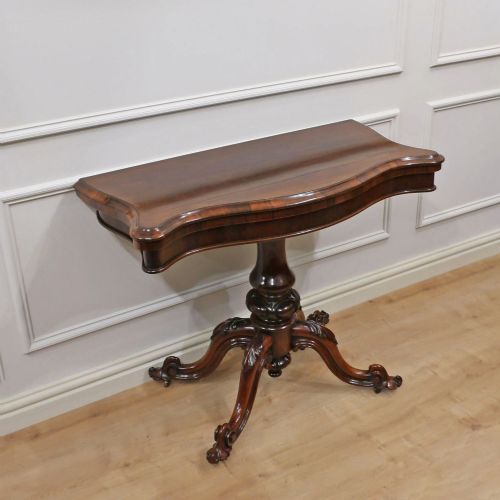
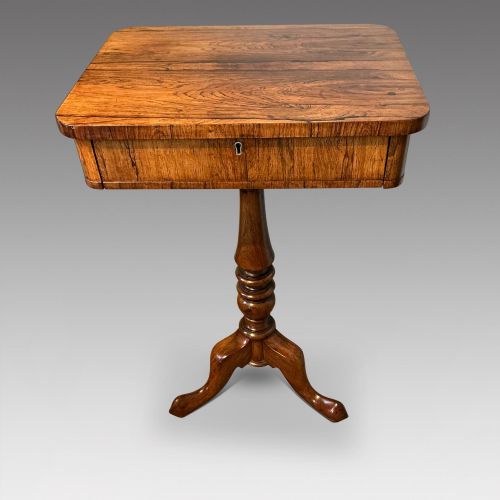
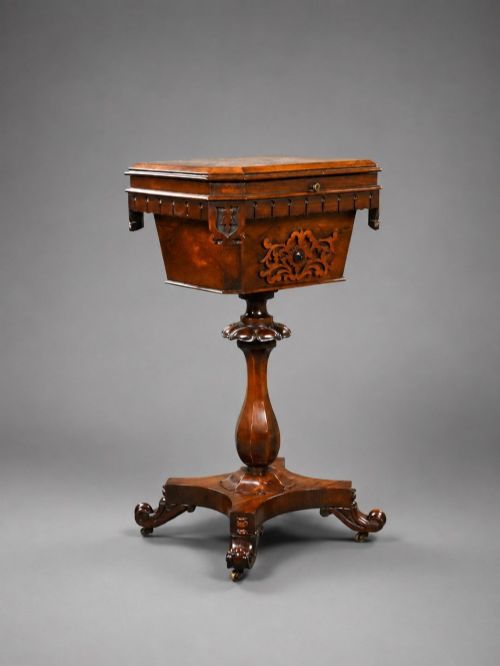
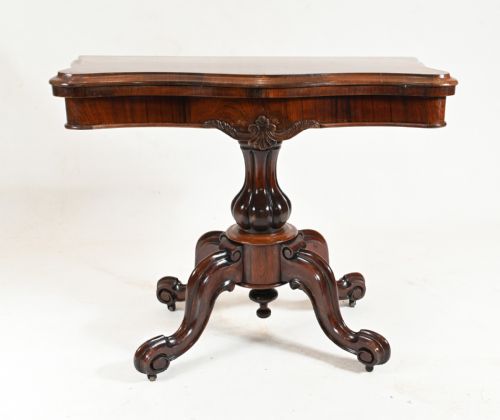
A victorian rosewood tea table combines a hinged, fold-over top designed for parlour entertaining with the deep, dense grain characteristic of nineteenth-century cabinet work.
The selections span standard tea tables alongside closely related card, games, and occasional tables from the wider Victorian period.
Makers from this era utilised the folding top mechanism to provide a dual-purpose console that sat flat against a wall until evening service.
Materials and Construction
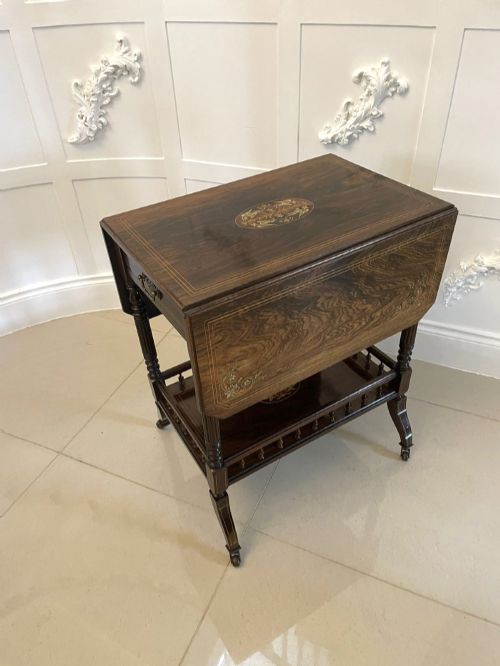
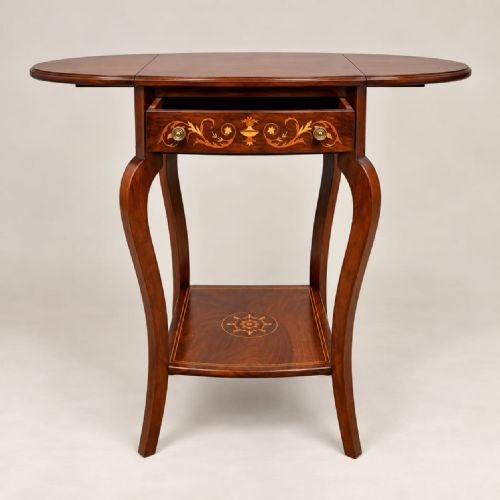
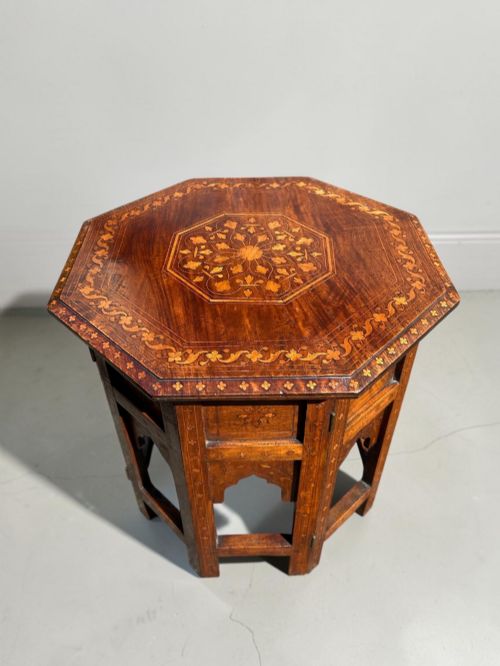
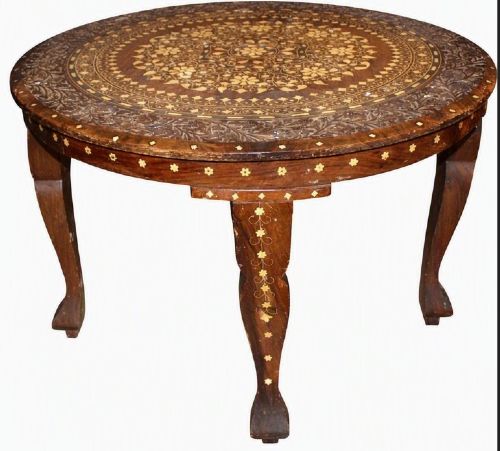
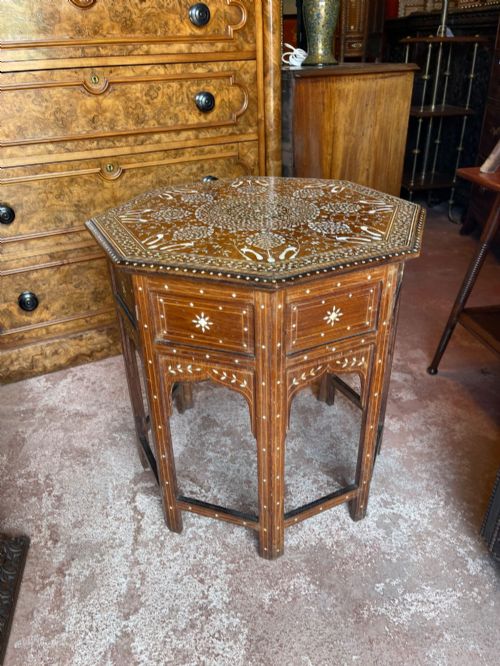
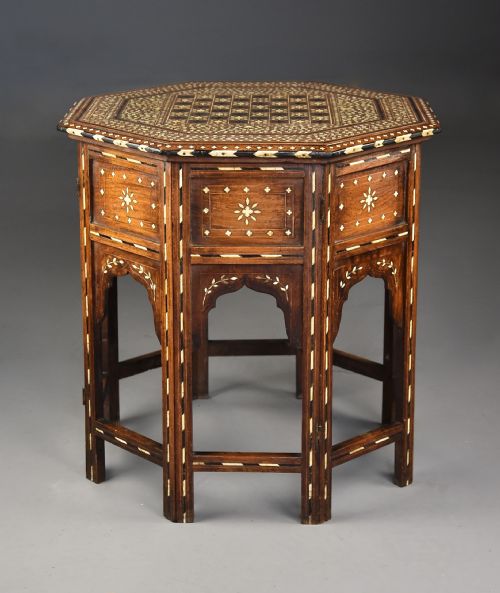
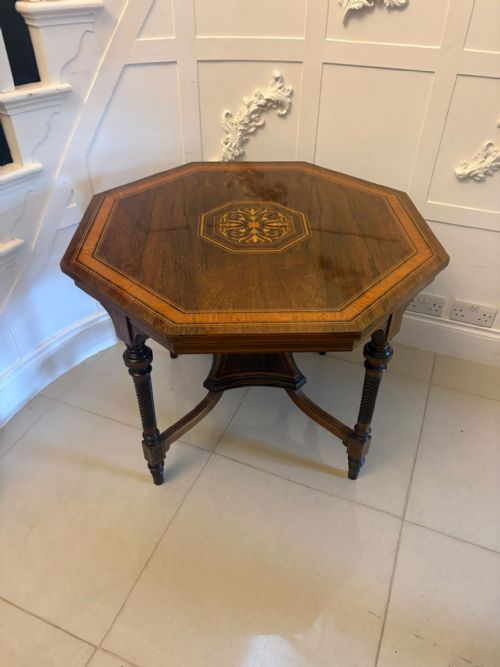
Cabinet makers relied upon solid rosewood alongside veneers applied to stable secondary timbers, often embellished with boxwood, satinwood, or mother-of-pearl inlay.
Structural integrity depended on heavy pedestal bases, swivel-top pivots, and brass hinges that concealed the fold-over leaf mechanism.
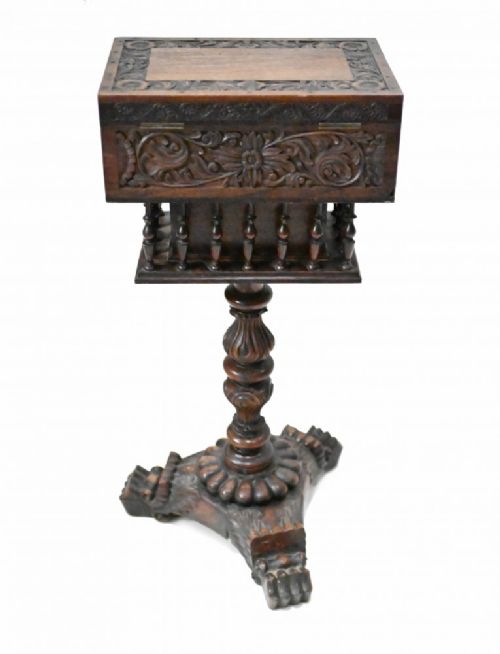
Peacocks carved into exotic timber whisper tales of distant nineteenth-century drawing rooms where guests sipped tea over secret compartments.
Assessing Quality
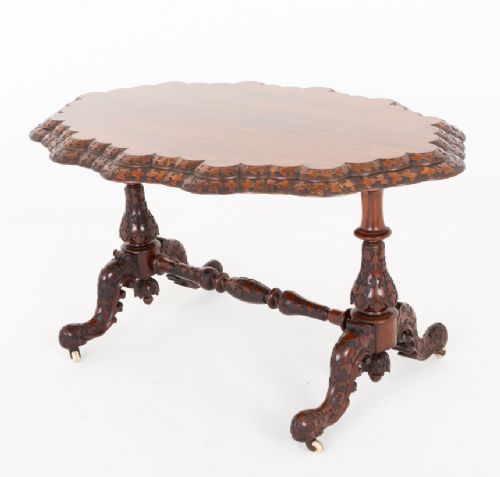
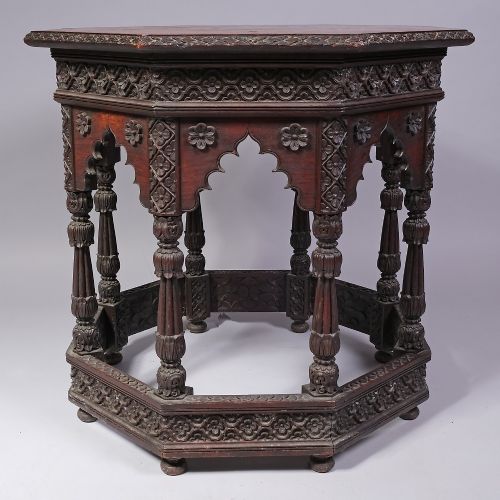
Superior examples demonstrate crisp carving in the rosewood timber and precise matching of grain across the fold-over top leaves.
The weight of the base, the smoothness of the swivel mechanism, and the subtlety of marquetry separate standard production from master workshop output.
Liberty & Co·Edwards & Roberts
The Victorian Rosewood Tea Table Glossary
- Fold-over top
- A hinged surface that doubles in area when opened for tea or games. This clever design allows a compact console to transform into a larger table.
- Marquetry
- Decorative patterns created by fitting thin pieces of wood veneer into a background panel. Artisans use contrasting timbers like boxwood and satinwood to achieve pictorial detail.
- Teapoy
- A small pedestal table or box originally designed to hold containers of loose tea. In nineteenth-century interiors, these served as decorative stands in the drawing room.
- Sutherland table
- A narrow drop-leaf table with hinged flaps that fold almost vertically. The slender underframe supports the leaves when raised for service.
Victorian Rosewood Tea Table: Frequently Asked Questions
How do you open a tea table?
The top leaf swivels ninety degrees on its pedestal pivot before folding outward to reveal a finished surface supported by the frame.
This reveals a concealed well underneath the top in certain models, originally intended for storing cards or tea accessories.
Where were these tables placed?
They stood flat against drawing room walls when closed, serving as display consoles for ornaments and lamps during the day.
Opened up, they moved towards the centre of the room to accommodate evening hospitality and social gatherings.
What is the difference between a tea and card table?
Tea tables generally feature plain or veneered folding tops intended for serving refreshments, while card tables often contain lined playing surfaces.
Many surviving nineteenth-century examples combine both functions, serving interchangeably for tea service and evening games.
How do you care for rosewood surfaces?
Maintain the timber by applying traditional beeswax sparingly and buffing with a soft cloth to preserve the natural grain.
Keep these tables away from direct sunlight and heat sources to prevent the rosewood veneer from drying and lifting.